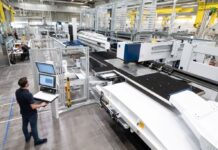
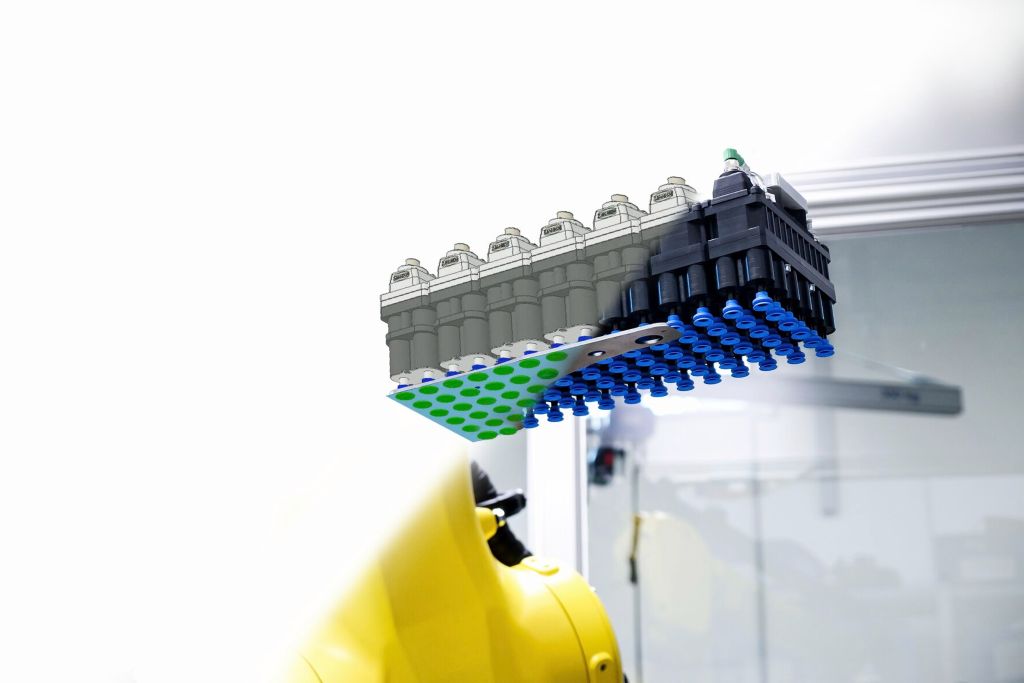
Designers know the problem, for example, with workpieces in a 2D laser cutting application: They need to check for each sheet metal part where the optimal gripping points are, which gripper is suitable, and how to control the suction cups. The new Digital Engineering Service has already proven itself in a sample customer analysis. For 30 sheet metal parts, the construction time was reduced from five days to one day. This savings increases with the variety of sheet metal parts.
The tool operates as a pure web service; users do not need to install any software. They access the website, upload their CAD data, and start the analysis. The system supports all common CAD formats such as DXF, STEP, or X_T. It automatically converts even curved sheet metal parts into 2D data. Those who do not have CAD models can generate the data using a selection mask and individual dimensions.
Millions of gripping points calculated in seconds
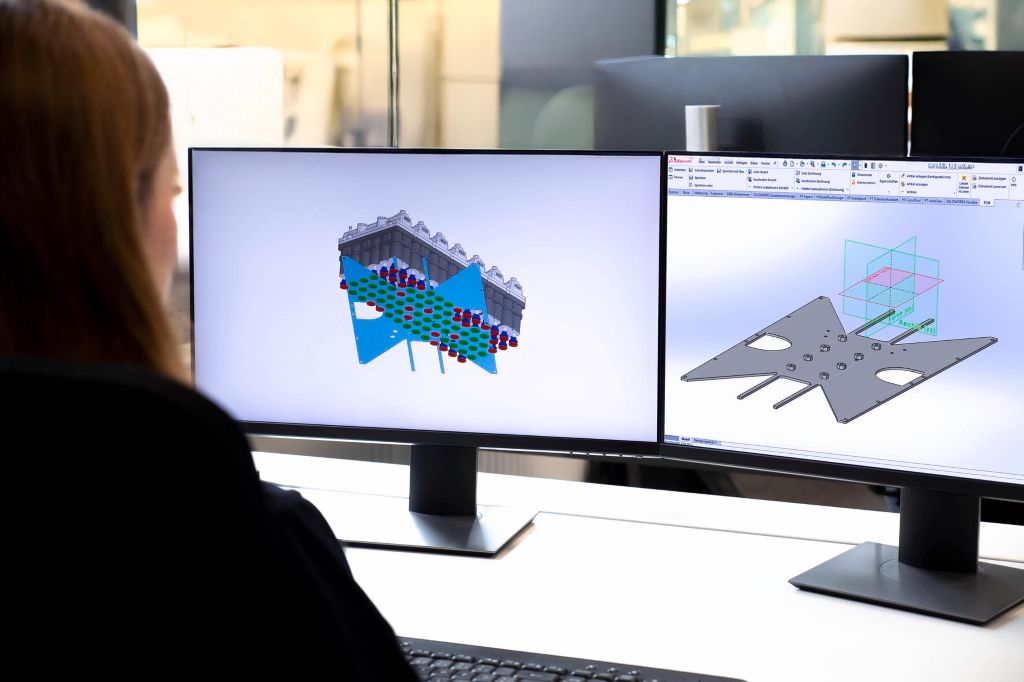
With a quantity of between ten and 20 workpieces, the manual design of grippers quickly becomes unmanageable. With 100 or more workpieces, no designer can keep track of all variants and calculate optimal gripping points. This is where the Digital Engineering Service shows its strengths. The technology is based on the finite element method (FEM), a mathematical procedure for structural analysis. The system identifies around one million possible gripping points per component.
It checks which configuration achieves the highest coverage and fits optimally to all different workpieces. It then suggests three variants and recommends the best gripping solution.
From upload to result
The percentage of workpieces that can be handled with the gripping solution is displayed – not all components can always be handled with just one solution. For example, someone who primarily processes sheets that are 20 x 20 centimeters but moves two-meter-long components twice a day needs different systems for that. The new Schmalz solution identifies such cases and shows which sheets the optimized gripper cannot capture.
The user sees the gripping points that the system has set for each workpiece. The analysis PDF also informs them about which component achieves what coverage, whether there are deviations from the norm, and if individual sheets are critical. A video sequence visualizes the results. With just a few clicks, a reliable design of a solution tailored to the respective workpieces can be created. The result can then be conveniently downloaded or directly requested as a gripping solution. The technical sales team checks whether the solution fits the requested task.
The Matrix surface gripper FMG as the centerpiece
For handling differently shaped sheet metal parts, the Matrix surface gripper FMG is particularly suitable. It is modularly expandable and can be configured in many variants. The Digital Engineering Service selects the appropriate components from this toolkit for the specific application case. The suction cups can be controlled individually, allowing for the creation of custom surface grippers with maximum flexibility. And because the suction cups only extend where they are really needed, the system operates without misgrips and saves energy. Inactive areas are sealed, and the air-saving regulation keeps consumption low. Even in the event of a power failure, the workpiece remains securely fixed. The Matrix surface gripper FMG is particularly convincing in combination with the Digital Engineering Service – together, they unleash their full potential in high-mix-low-volume processes in sheet metal processing, such as loading and unloading laser, continuous, and bending machines.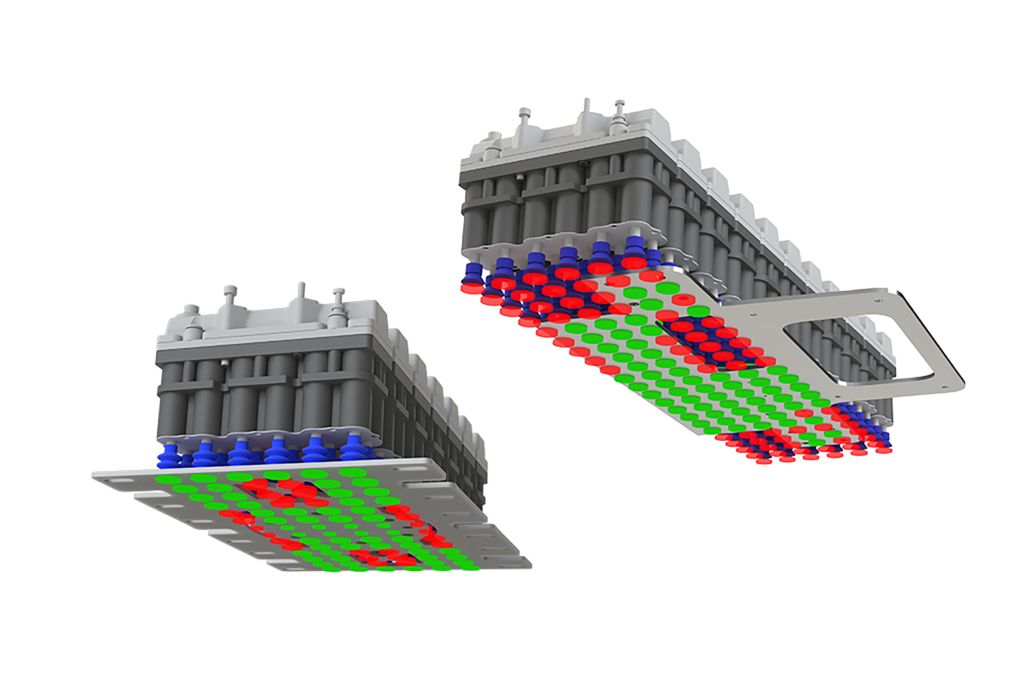
Areas of application: Special machine construction and system integrators
Especially machine builders and system integrators benefit from the new Digital Engineering Service. This allows for the simple and needs-based design of the appropriate gripper – for a cost- and energy-efficient sustainable solution. A individually configured system is not oversized but focuses on the core functions that are actually needed.
If the parts portfolio changes during the machine's lifecycle, Schmalz recommends a new analysis. The service then checks whether the existing gripper still fits the new workpieces or whether another system works more efficiently and thus reduces costs. All calculations are performed on servers in Germany. The terms and conditions regulate the GDPR-compliant handling of the CAD data.
80 percent time and 2,500 euros cost savings
In a case with, for example, 30 different components, the service reduces the construction time by at least 80 percent. The manual design takes about a week, while the automated process completes it in less than a day. Schmalz estimates a savings potential of around 2,500 euros for this project, based on typical hourly rates in construction.
The system currently works with 2D sheet metal parts in any dimensions. During CAD upload or dimension entry, an automatic suitability check of the transmitted data occurs. This check primarily relates to the quality of the CAD data and the compatibility of the file format. The tool grows dynamically; Schmalz is gradually expanding the parameters.
Innovation leader Schmalz offers the service free of charge. Customers save a lot of design work and the hassle of sifting through the product catalog. The solution complements the optimization idea of the vacuum specialist: System integrators and machine builders receive a tool with which they can easily perfect their systems themselves – energy-efficient and sustainable.
Contact: