
Simulation is evolving into a key pillar of industrial automation. According to Global Market Insights, the global market for digital twins reached a volume of 13.6 billion US dollars in 2024 and is expected to grow to 18.9 billion US dollars by 2025. Forecasts predict a market volume of over 400 billion US dollars by the mid-2030s, primarily driven by use cases in manufacturing, automation, and virtual commissioning. Simulation, which has long been established as a proven method in engineering, is now increasingly becoming a strategic lever across the entire automation lifecycle.
Together with Visual Components, part of the KUKA Group since 2017, the KUKA Group is advancing the use of industrial simulation in engineering, planning, commissioning, and lifecycle management – thereby creating measurable added value for customers, partners, and the manufacturing industry as a whole. "Simulation is no longer an optional engineering tool – it is a strategic competence," says Christoph Schell, CEO of the KUKA Group. "With Visual Components, we enable our customers and partners to reduce risks, shorten time-to-market, and unlock new efficiency potentials across the entire automation lifecycle."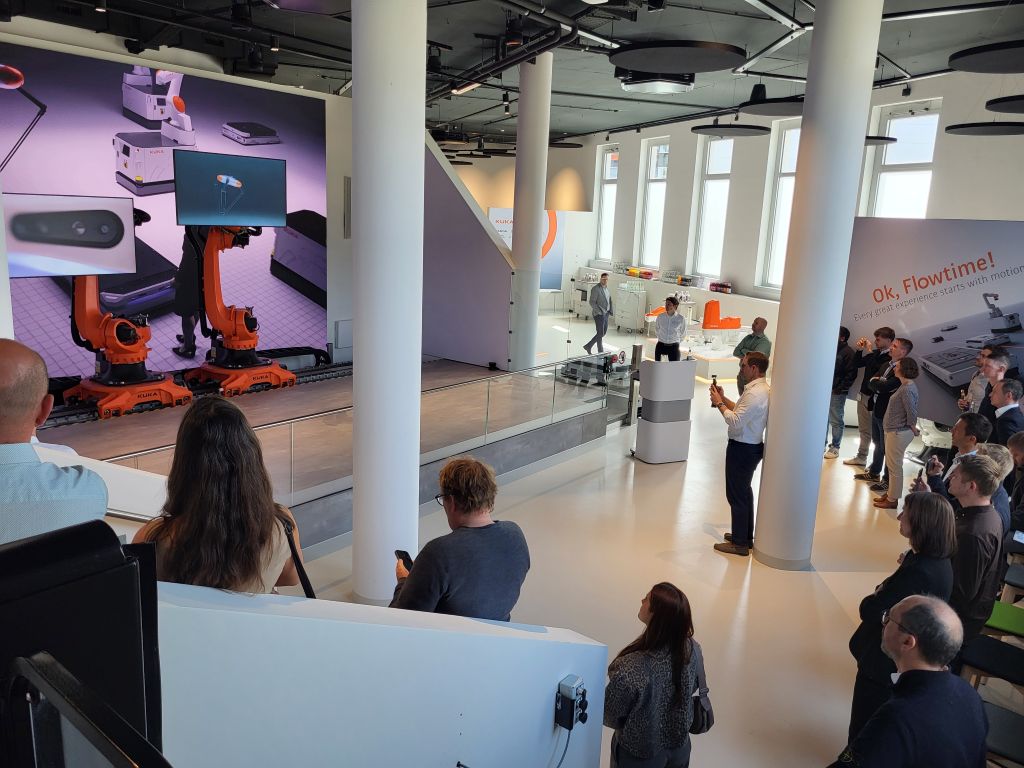
The ecosystem of the KUKA Group brings together international customers, system integrators, and technology experts to illustrate how simulation-controlled approaches are changing the way automation solutions are designed, validated, and implemented. A simulation event at KUKA's headquarters in Germany highlighted this strategic focus, supported by partners of Visual Components such as TWINZO, RIIICO, DUALIS, REALTIME ROBOTICS, Flexcon, and Team CMC in the field of industrial simulation.
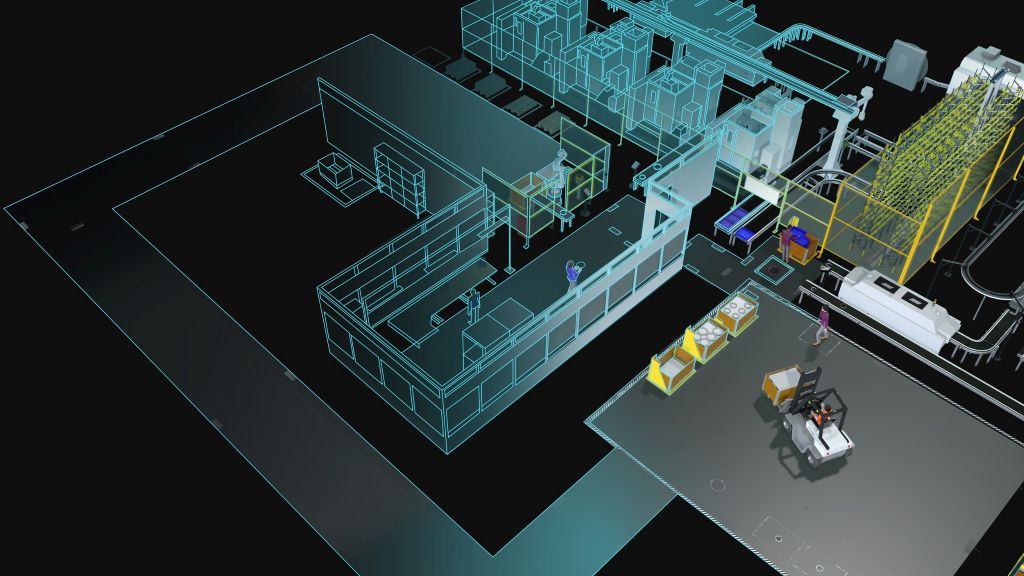
Visual Components, which launched a comprehensive software update with Visual Components 5.0 in March, plays a key role: its simulation platform enables high-resolution digital twins, collaborative planning, and informed decision-making at a very early stage – long before physical systems are built.
From Planning Tool to Strategic Advantage
Industrial simulation is rapidly evolving from a niche product for planning assistance to a crucial competitive advantage. By combining KUKA's automation expertise with the advanced manufacturing simulation software of Visual Components, customers can design, scale, and optimize production systems virtually with high accuracy and reliability. "This approach allows manufacturers to validate layouts and robot concepts at an early stage, identify bottlenecks, and optimize cycle times before commissioning, improve collaboration between engineering, production, and management, and reduce costly changes during installation and ramp-up," says Mikko Urho, CEO of Visual Components. For the KUKA Group, this represents a strategic step towards predictive, data-driven automation solutions – in line with the growing demand for flexibility, reliability, and faster innovation cycles.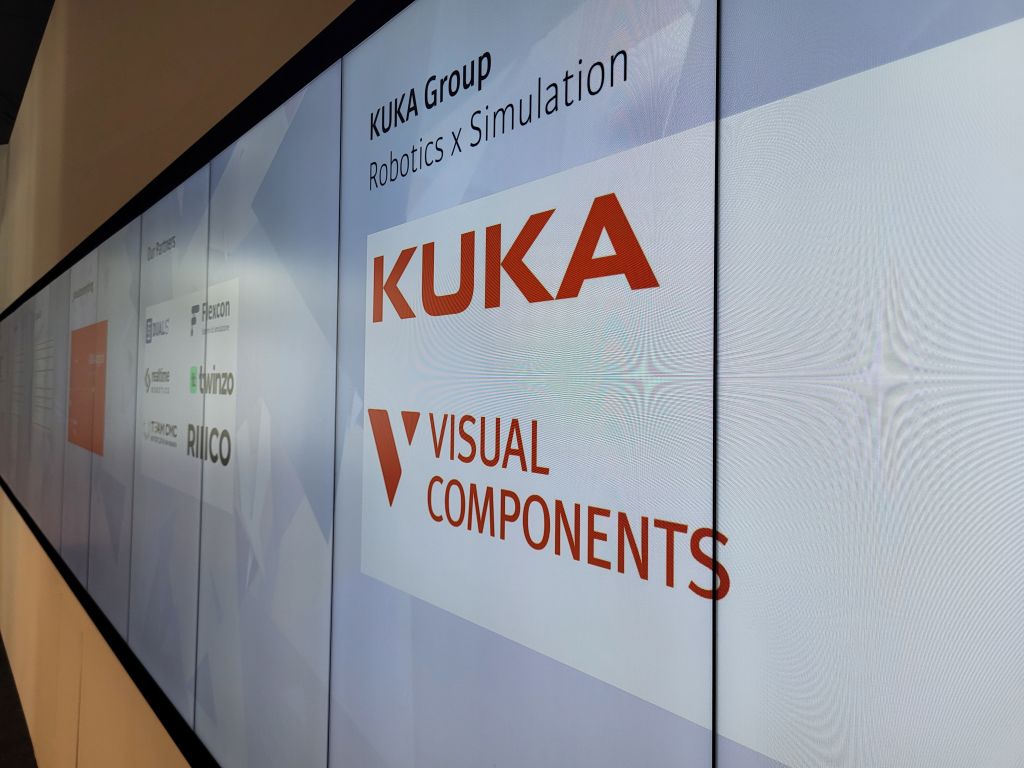
"As a long-standing strategic partner of KUKA, the integration of Visual Components is a natural and complementary step. One advantage lies in the improved visualization of large investments, which allows for a much faster and clearer understanding of the full potential of both mechanical automation and digitalization," says Alexandra Krupp, Director Process Development at Freudenberg Sealing Technologies, a valuable partner in the KUKA ecosystem.
Strengthening the KUKA Group's Partner Ecosystem
The 'Simulation Event' also underscores the KUKA Group's commitment to its global partner ecosystem. System integrators, engineering partners, and technology providers play a crucial role in realizing simulation-controlled automation worldwide at customer sites. "Collaboration with KUKA and Visual Components in developing our production cells has significantly improved both our product and process development. Through simulation and data-driven analysis of our production data, Visual Components enables us to shorten development cycles, increase process efficiency, and bring products to market faster," says Dr. Jürgen Fründ, Project Manager Innovation & Digital Transformation at BENTELER Automotive Components. Visual Components thus serves as a common platform that enables standardized workflows, faster project execution, and closer collaboration across company boundaries.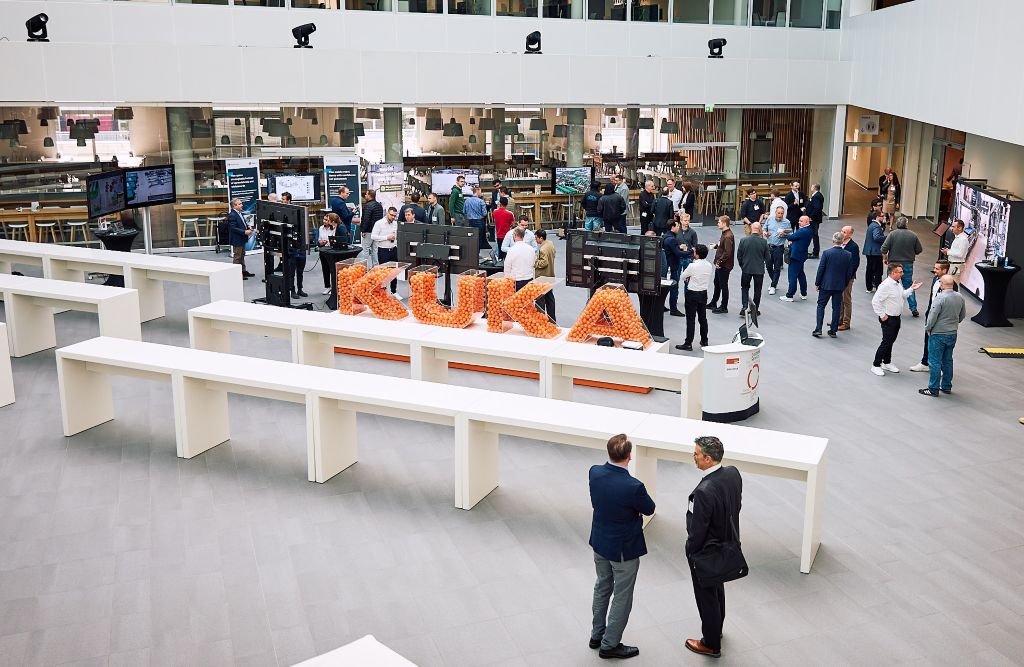
"The use of Visual Components in conjunction with KUKA technology allows us to simulate complete production systems with an unprecedented level of realism," says Matthias Wilhelm, Sales Director for Germany, Austria, and Switzerland at Visual Components. "This fundamentally changes the way we collaborate with customers and implement projects." For end customers, the strategic focus on simulation means more transparency and trust in investments in automation.
"For us, Visual Components is an important building block within the digital engineering toolchain that we are developing. We see high strategic value in using Visual Components and look forward to further expanding the functionality of our product library in the eCatalog," says Matthias Vietz, Software Engineer and Product Owner at Bosch Rexroth.
Automation 2.0: Simulating the Future of Manufacturing
This strategic push in the field of industrial simulation is a core element of the KUKA Group's 'Automation 2.0' strategy. 'Automation 2.0' represents the next evolutionary stage of industrial automation: the transition from individual machines to fully connected, intelligent, and software-controlled production systems. Simulation plays a crucial role in this transformation by enabling virtualization, data-driven decision-making, and continuous optimization throughout the entire lifecycle of automation solutions.
By combining practical automation expertise with powerful simulation technologies like Visual Components, the KUKA Group enables its customers and partners to design, test, and scale flexible production systems faster and with greater confidence. Digital twins, virtual commissioning, and collaborative simulation environments are central components of Automation 2.0 – helping manufacturers respond to complexity, customization, and rapid change with agility and resilience.
Contact: