
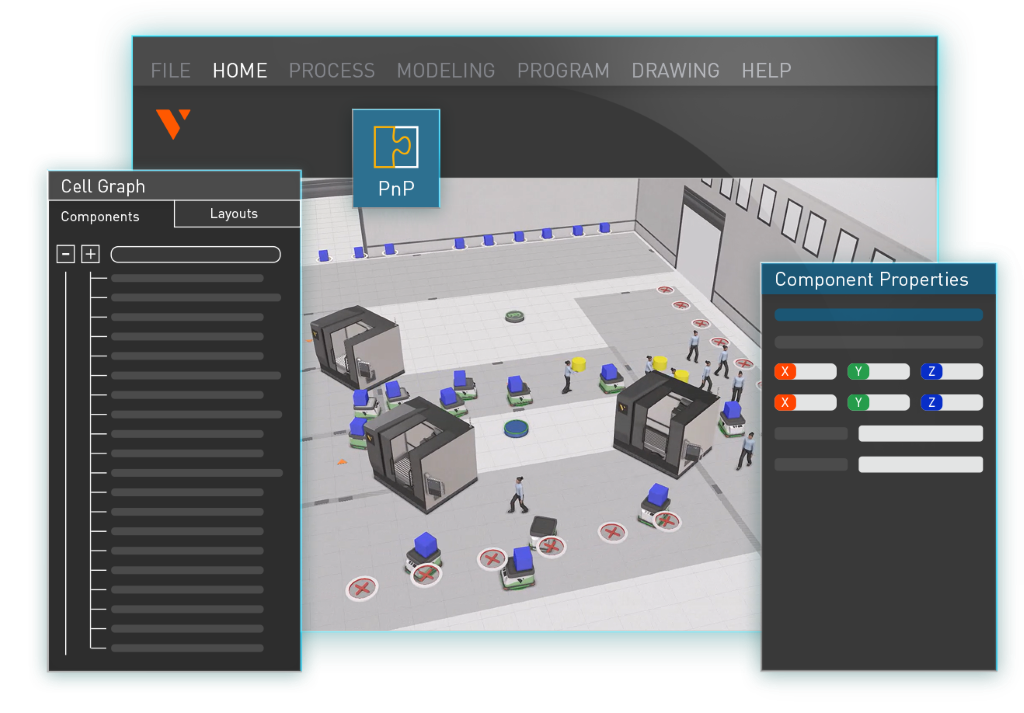
Visual Components, the specialist in 3D manufacturing simulation and robot offline programming, has announced the release of Visual Components 5.1 – a significant advancement in factory simulation aimed at helping manufacturers cope with the increasing complexity of autonomous production environments. The new version introduces highly precise physics simulations and scalable features for robot orchestration, allowing manufacturers to simultaneously simulate hundreds of autonomous mobile robots (AMRs), AGVs, robots, products, and people in complete factory environments.
As factories increasingly evolve into autonomous, connected, and intelligent systems, manufacturers must master complex interactions between robots, mobile vehicles, products, material flows, control systems, and people throughout the production environment. Without sufficient validation prior to commissioning, risks such as traffic congestion, collision hazards, delays in commissioning, programming errors, inefficient layouts, and costly rescheduling arise. Visual Components 5.1 addresses these challenges by enabling manufacturers to simulate real physics, validate control logic, and model dynamic factory processes with unprecedented scalability and accuracy before changes are implemented on the shop floor.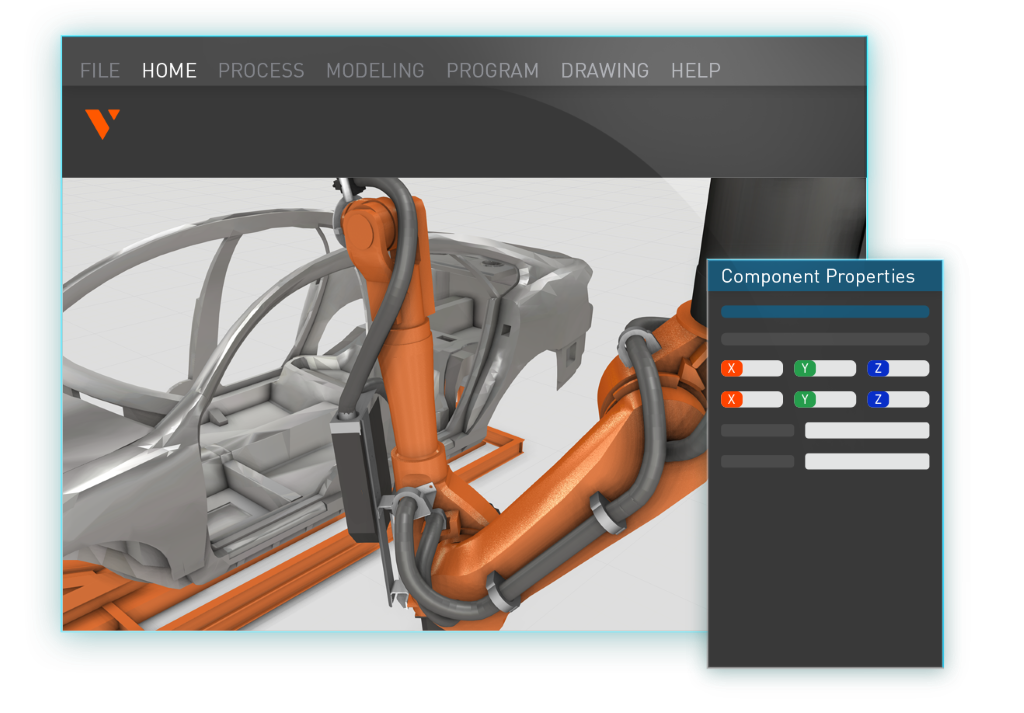
Manufacturers are under increasing pressure to implement more autonomous and flexible production systems, but the complexity of these environments is growing faster than many existing tools can handle,” said Mika Anttila, CTO of Visual Components. “Our customers need to validate how hundreds of moving resources – robots, vehicles, products, and people – interact with each other before anything is installed on the shop floor. With 5.1, we provide them with a significantly more scalable and realistic solution.
Version 5.1 offers concrete benefits for factory planning and operation.
Version 5.1 brings improvements in three central application areas of the platform. In the area of simulation, it enables the operation of hundreds of AMRs and AGVs within a single environment – with advanced collision avoidance and up to 10 times higher performance compared to previous versions. This allows complex scenarios of mobile robotics to be validated in a practical manner for the first time.
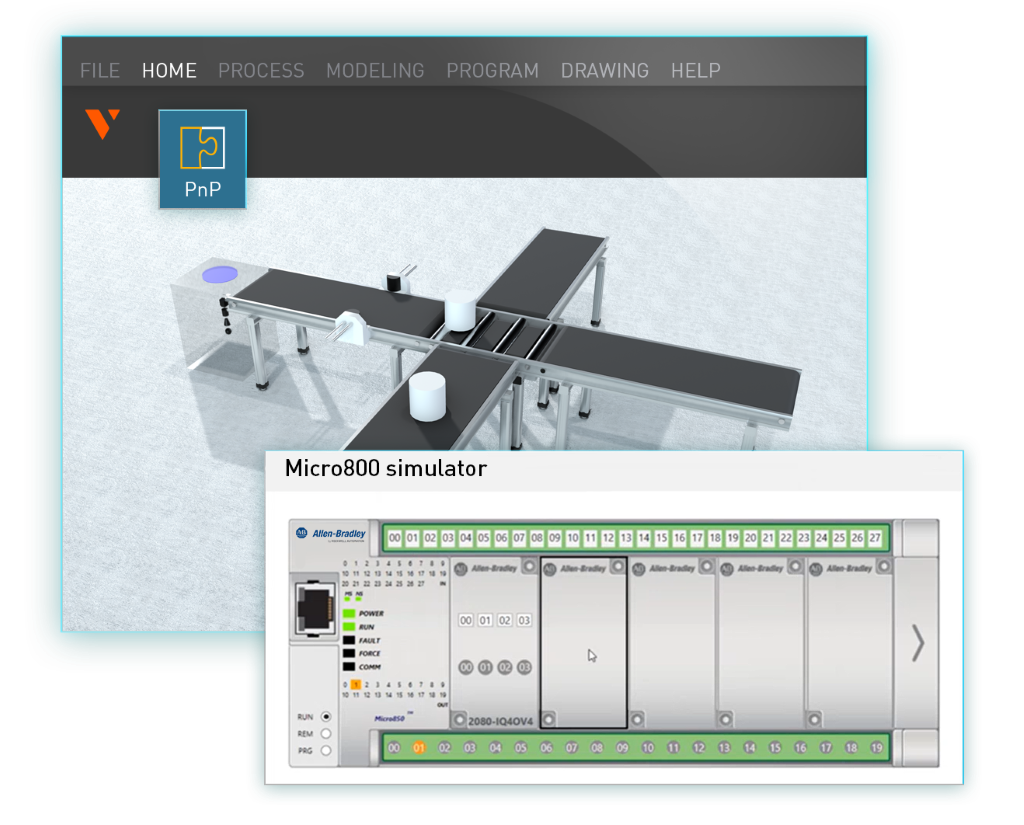
In the area of connectivity, the new version expands support for Allen-Bradley PLCs as well as new plugins for the virtual commissioning of NACHI and Epson robots. This allows large parts of the real production system to be integrated into the simulation process at an early stage.
For teams in the field of offline robot programming, the scripting environment has been updated to Python 3, replacing the previous legacy environment that had increasingly become a limiting factor for developers in creating and maintaining robot programs.
Together, these improvements enable production managers, factory planners, and automation engineers to validate extensive areas of the real system – including mobile fleets, control logic, and robot programs – before changes are implemented on the shop floor.
Unlike many solutions that focus on isolated aspects of automation, Visual Components 5.1 offers a comprehensive platform for factory simulation that allows complete production systems to be simulated – from robotics and material flow to human workflows. This approach enables companies to make informed, data-driven decisions before investing in physical systems. At the same time, it reduces reliance on assumptions and manual adjustments, improves collaboration between engineering, operations, and management teams, and leads to smoother commissioning and shorter time-to-production cycles.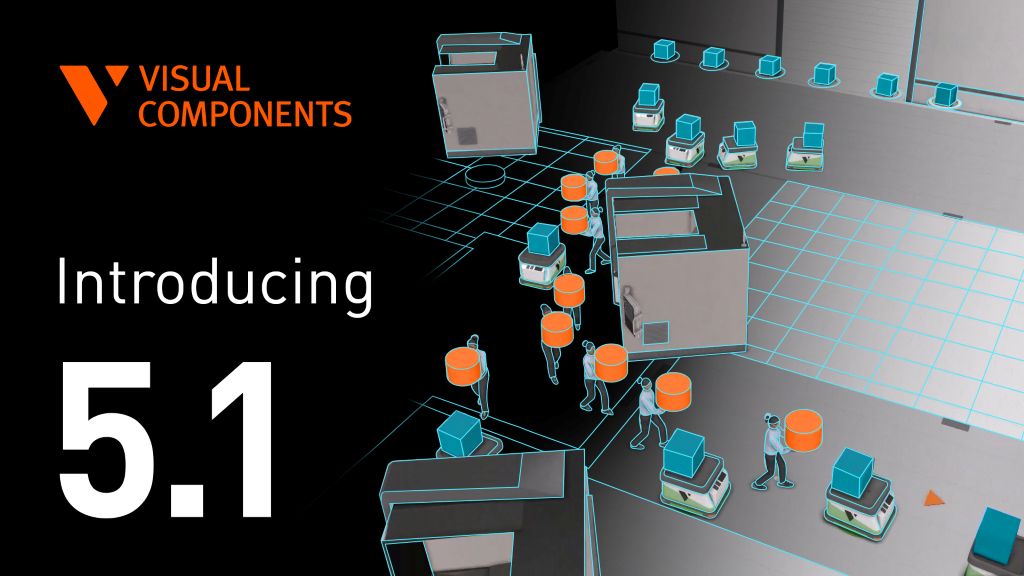
These features are particularly relevant for industries undergoing the transition to more connected and autonomous production environments – including the automotive industry, electronics manufacturing, logistics, and medical technology. Companies that combine traditional robot automation with mobile robotics fleets require more precise validation to reduce commissioning risks across the entire system.
Manufacturing environments are becoming increasingly dynamic. Mobile robotics, automation, and connected production systems create new opportunities but also bring new complexity,” said Matthias Wilhem, Sales Director DACH of Visual Components. “Before investments are made or changes are implemented on the shop floor, manufacturing companies and users need assurance that their plans will work in practice. Visual Components 5.1 helps manufacturers validate complex processes early in the planning process and reduce risks before implementation.
Contact: