
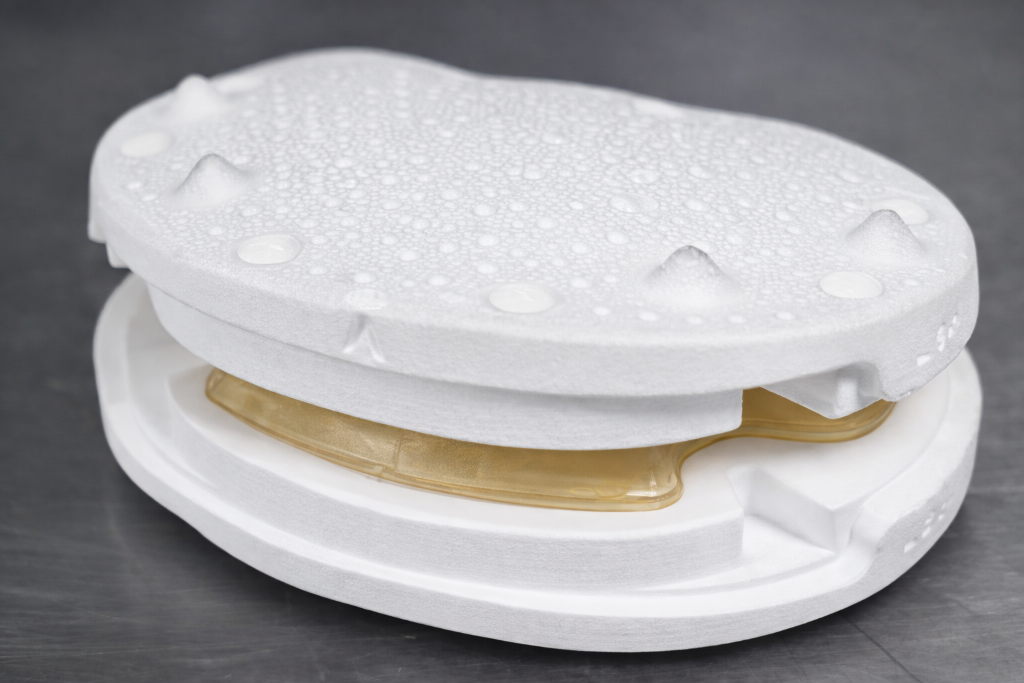
The EvoFlexTM implant from Nivalon Medical, produced at the Youngstown Business Incubator using XJet's additive manufacturing platform NPJ, consists of a bone-like ZTA ceramic that is precisely tailored to the anatomy of each patient – eliminating metal-related complications, preserving natural movement, and setting new standards for additive manufacturing in the medical field.
XJet, a global leader in Direct Material Jetting technology-based 3D printing solutions for manufacturing advanced ceramic and metal components, announced today that Nivalon Medical Technologies Inc., in collaboration with the Youngstown Business Incubator (YBI), has produced the world's first fully patient-specific, motion-preserving spinal implant using its NanoParticle JettingTM solution installed at YBI.
The groundbreaking medical product EvoFlex combines a proprietary architecture of zirconia-reinforced alumina ceramic (ZTA), which has bone-like properties, with a flexible elastomer core to mimic the natural movement of the spine. The result is a new category of spinal implants that take into account both human anatomy and natural biomechanics.
The first application in patients is planned for 2026, including Todd Hodrinsky, the co-founder and CEO of Nivalon.
A personal mission becomes a medical revolution
Conventional spinal implants are mass-produced in standard sizes and therefore cannot be optimally adapted to the individual anatomy of each patient. This leads to suboptimal load distribution, implant displacements, and long-term complications. Metal incompatibilities and unwanted biological reactions pose additional risks.
What began as a personal mission of Hodrinsky and co-founder Marcel Janse has evolved into a new approach in spinal care, replacing metal with bone-like ceramic, standard sizes with patient-specific design, and rigid fixation with natural biomechanics.
"We realized that the problem was not with the surgeons, but with the implants," says Hodrinsky. "We had tried to treat a living biological structure with industrial metal elements that do not behave like bone and cannot follow the natural movements of the spine. It was clear that we needed to develop something fundamentally new and better."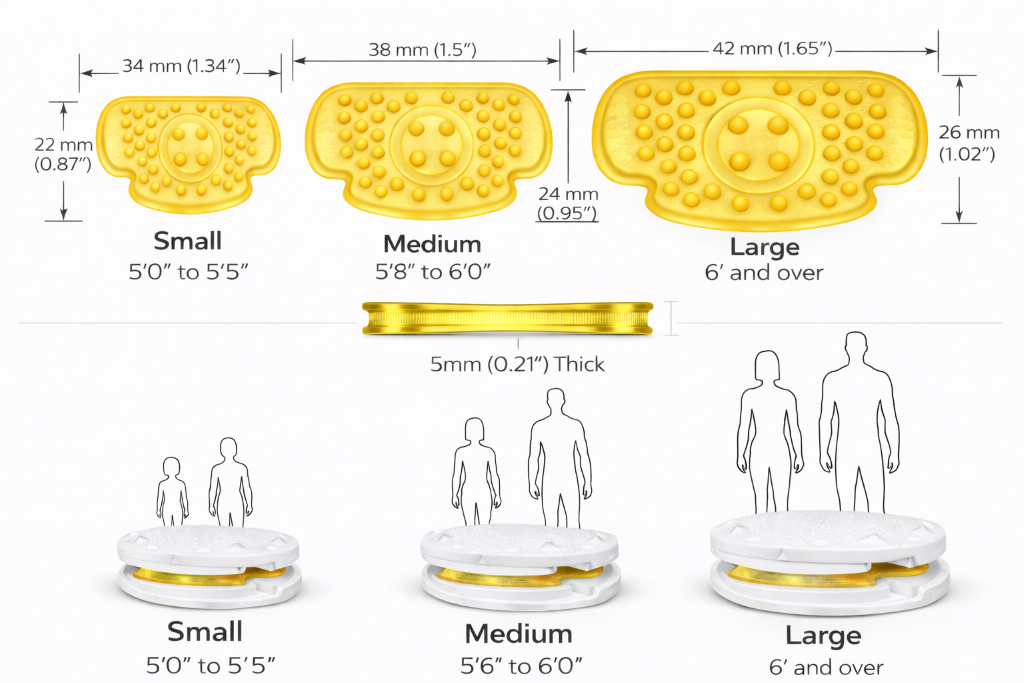
Unlike conventional implants made from standard sizes of metal alloys, EvoFlex from Nivalon is digitally designed based on the CT data of each individual patient and precisely adapted to their individual anatomy using 3D printing. The result is a bone-like ceramic structure that eliminates metal-related complications such as corrosion, ion release, stiffness differences, and imaging artifacts, without compromising the natural movements of the spine.
Clinically validated through independent biomechanical, mechanical, biological, and surgical tests
The platform underwent comprehensive independent preclinical validation in the form of biomechanical, mechanical, biological, and anatomical tests conducted at the University of South Florida (USF) and the Institute for Materials Science at the University of Connecticut (UConn IMS).
At USF, EvoFlex™ implants were tested on the Dynamic Investigation of Spine Characteristics (DISC) simulator with six degrees of freedom under physiological load on the spine. These tests resulted in stiffness curves and motion profiles that closely resemble the natural behavior of the human spine. These results confirm that true motion preservation is achieved with this implant, not just a purely mechanical articulation.
The compression and shear tests conducted at UConn IMS showed significant improvements in structural performance. The new design allows for compressive loads of 14.6 kN, equivalent to a force of about 1,490 kg. These results confirm the capability of the ceramic-polymer architecture under physiological and supraphysiological loads. The shear tests also demonstrated improved interface integrity and controlled failure behavior.
UConn IMS also conducted tests with simulated body fluid (SBF) and SEM-EDX analyses, confirming that the ZTA ceramic not only supports uniform mineral deposition and biologically relevant ion interaction but also exhibits bone-like surface behavior and long-term osseointegration potential. Unlike metals, the ceramic showed a consistent, controlled, and predictable biological response.
Pre- and postoperative surgical planning studies on cadavers also validated the accuracy of Nivalon's digital design platform. In a complex four-stage spinal reconstruction, the system demonstrated precise virtual bone repositioning, complete restoration of sagittal balance, and correct facet joint alignment. These results confirm that the platform is capable of reconstructing and realigning spines with high anatomical precision.
Advanced ceramic manufacturing thanks to the Youngstown Business Incubator
This milestone was achieved as part of a strategic partnership with the Youngstown Business Incubator (YBI) and its programs 'Advanced Manufacturing' and 'Engine Tech'. Using XJet's ceramic 3D printing technology NanoParticle Jetting™, Nivalon was able to develop and manufacture a load-bearing implant architecture for the spine made of pure, high-density ceramic. This represents the most advanced medical application of XJet's NPJ platform to date in terms of application and material innovation.
"We are very proud to see Nivalon and YBI as users of the XJet solution and as innovation drivers, experiencing a breakthrough that has significant implications for implant manufacturing. XJet's goal goes beyond measuring usage metrics: it's about enabling innovations that were previously unattainable and achieving unlimited scalability in real manufacturing that everyone can benefit from. It is an honor for us to be part of this development, and we look forward to seeing Nivalon's and YBI's innovations in the consumer market."
"For us, XJet not only represents the best platform for manufacturing implants from high-performance ceramics – it is also an important factor for our personalized approach," says Hodrinsky. "Unlike many other additive manufacturing processes that rely on polymer-based binders, XJet uses a water-based system that we believe leads to better material properties and higher biocompatibility after sintering. The NPJ platform also achieves exceptionally high resolutions and surface details, which is crucial for replicating the complex anatomical contours of vertebral end plates, including complex lattice structures for bone integration and polymer bonding to the material. This accuracy significantly contributes to a better fit and performance of the implants."
A safe path to market success
The prototype demonstrates the successful transition from research to scalable clinical manufacturing. With two already granted US patents and six pending patents, Nivalon is preparing for NIH Phase II SBIR funding, clinical trials for FDA PMA approval, and the first patient application planned for 2026.
"This is more than a technical achievement – it is something very personal," said Hodrinsky and Janse. "The end plates for my own spine are now finished. This is the difference between a life with chronic pain and returning to normalcy and physical activity."
Contact: