
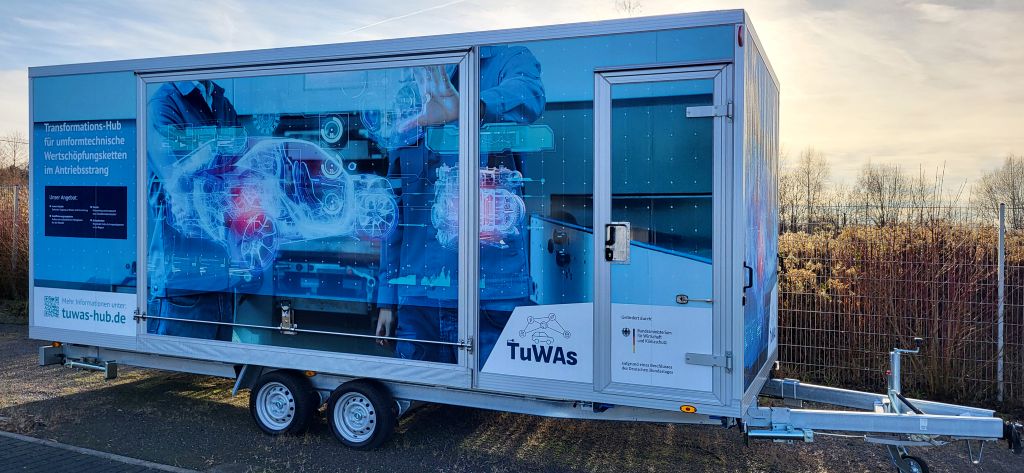
An internal combustion engine typically consists of over 1,000 parts and requires a complex transmission for power transmission. In contrast, electric motors contain only a few hundred parts, and usually, a single gear stage is sufficient for power transmission. Many automotive manufacturers source essential components and parts for the drivetrain from suppliers, making the transition to electromobility particularly relevant for them. The transformation hub TuWAs has developed a toolkit for these companies, including self-assessment, best practices, e-learnings, and a trend radar; this resource is now also available as a mobile offering.
From several workshops and numerous individual discussions over the past three years, the TuWAs team knows where companies in forming technology face challenges. Many suppliers are confronted with the need to explore new application areas with new products, sometimes even outside the automotive industry. Key success factors for the transformation include flexible production, qualified skilled workers, efficient resource management, and a clear strategy for decarbonization. Digitalization can be seen as an important cross-sectional task and enabler.
Recently, the transformation hub has also made its offerings available on-site at interested companies. The TuWAs team is planning a roadshow with fixed dates but is also scheduling individual appointments across Germany starting now. The mobile solution offers the entire range of services of the hub: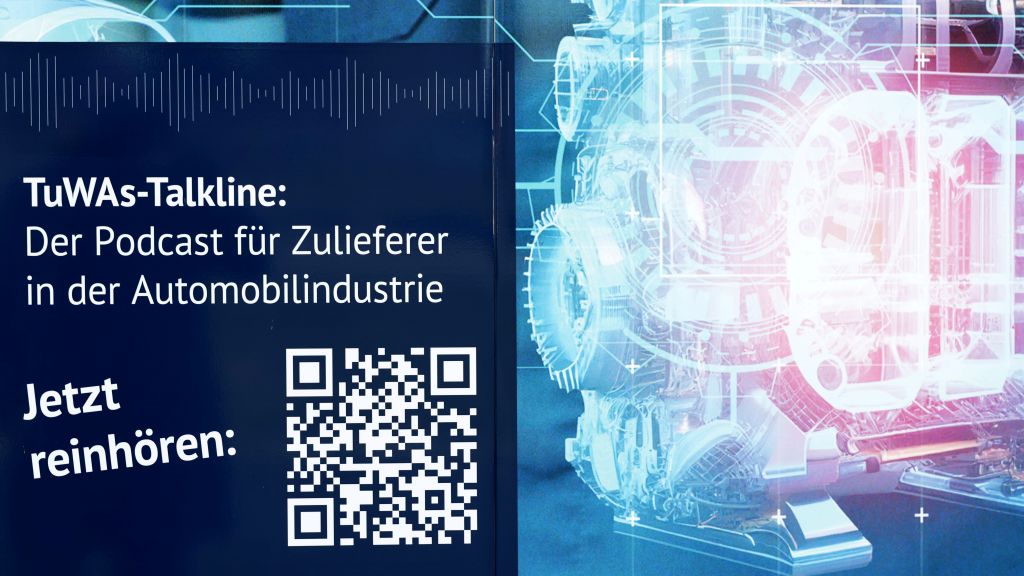
- Location assessment – the TuWAs self-assessment allows an evaluation of where the organization stands regarding people, technology, and organization. As part of a benchmarking process, companies can compare their current status with the requirements needed for structural change and thus gain insight into their need for change. After the analysis, companies receive concrete recommendations for developing skills and strategies to strengthen their position in the transformation of the automotive industry.
- Best practice examples of successful transformation strategies and processes represent success stories that provide orientation.
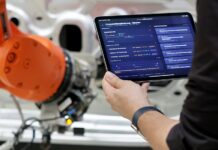
- On board the TuWAs vehicle are also practically applicable 'tools' such as an augmented reality headset, which can assist employees with additional information during assembly processes or when assessing setup processes. RADAR measurement technology for evaluating hot formed parts or building blocks for model demonstrations of a production layout are also available.
- Also part of the onboard tools: example components for companies taking the step into new products or markets, for instance, to seize opportunities in the growth market of micromobility. Specifically on board are components for bicycles.
- Demonstrators for the circular economy must not be missing – as many opportunities for sustainable business models lie in economic disassembly, reprocessing, or repurposing of products.
The contact person for interested companies is the TuWAs project manager at Fraunhofer IWU, Dr. Markus Bergmann. A phone call is enough, and the transformation experts of the hub will do something for suppliers in the automotive industry.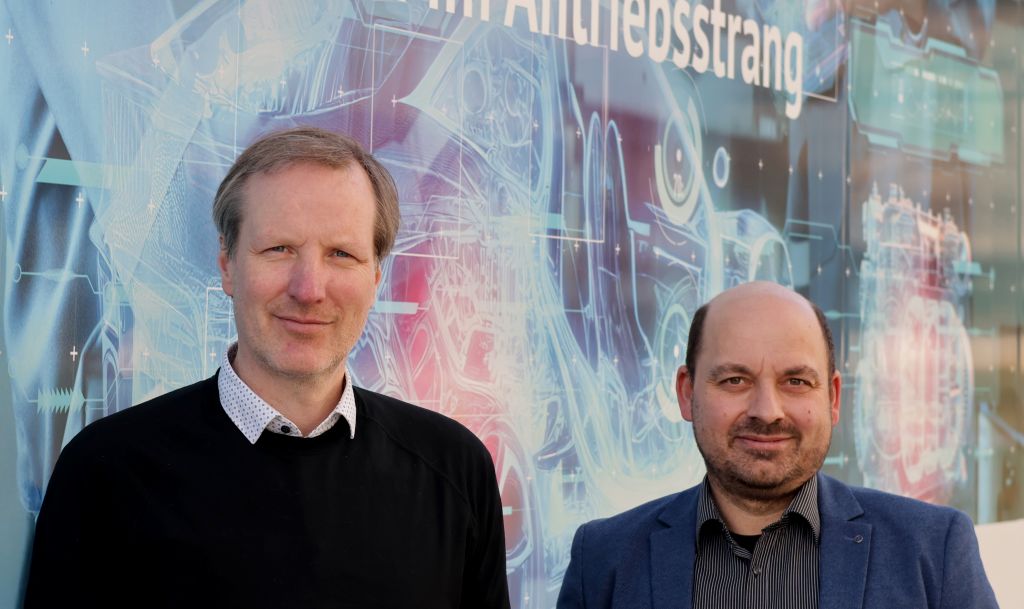
For TuWAs, the transformation hub for forming technology value chains in the drivetrain, funded by the Federal Ministry for Economic Affairs and Energy, research institutions from all over Germany have come together under the leadership of Fraunhofer IWU to form an interdisciplinary team. Fraunhofer IWU provides numerous manufacturing technology competencies and extensive experience in transferring research results within the hub.
Also part of the hub are the Laboratory for Bulk Forming (LFM) of FH Iserlohn, the Advanced System Engineering (ASE) group of the Heinz Nixdorf Institute at Paderborn University, the Research Institute for Rationalization (FIR) at RWTH Aachen, and the Chair of Product Development and Lightweight Construction (LPL) at the Technical University of Munich (TUM).
Contact: