
So far, fine dust from the wear of tires and brakes has been ignored in European emission legislation. Only the Euro 7 standard, which will come into effect at the end of 2026 for newly developed (type-approved) and at the end of 2027 for all newly approved passenger cars and light commercial vehicles, introduces binding limits. The goal: to limit the emission of fine dust particles with a diameter of less than 10 micrometers, which can penetrate deep into the respiratory tract. Such particles are considered particularly harmful to health. A project consortium involving the Fraunhofer IWU now presents a brake disc made of stainless steel that easily meets the strict EU requirements.
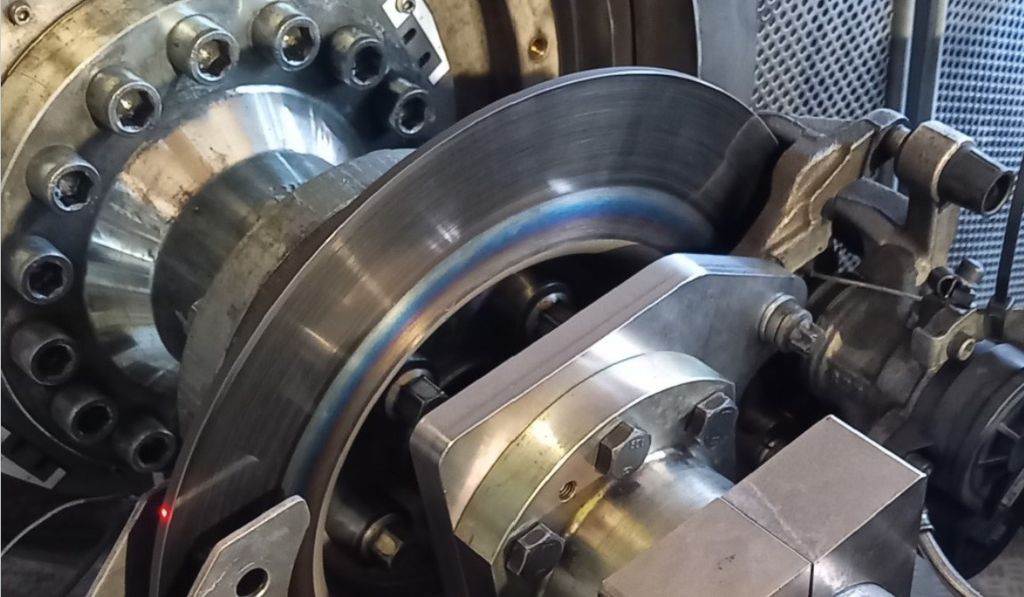
The formed stainless steel brake disc has an extremely low wear rate and a projected lifespan of up to 300,000 km. In a wheel brake with an inorganic brake pad material, wear is reduced by over 85 percent compared to the current standard solution of gray cast iron brake disc and organic friction lining.
Why stainless, hardened (nitrided) steel is particularly suitable
The project team decided early on to use nitrided stainless steel, which is particularly suitable due to its tribological and thermal properties. Positive experiences with stainless steel brake discs in motorcycles also support this choice. Expensive special solutions like carbon/ceramic are only considered for particularly high-priced vehicles; coating gray cast iron is extremely challenging – methods of laser cladding are not yet ready for series production. Structural steel discs, on the other hand, do not meet the requirements for shape stability in temperature ranges above 650 °C; phase transformations occurring in this temperature range can also alter the properties of the steel.
Forming technology production, weight advantages
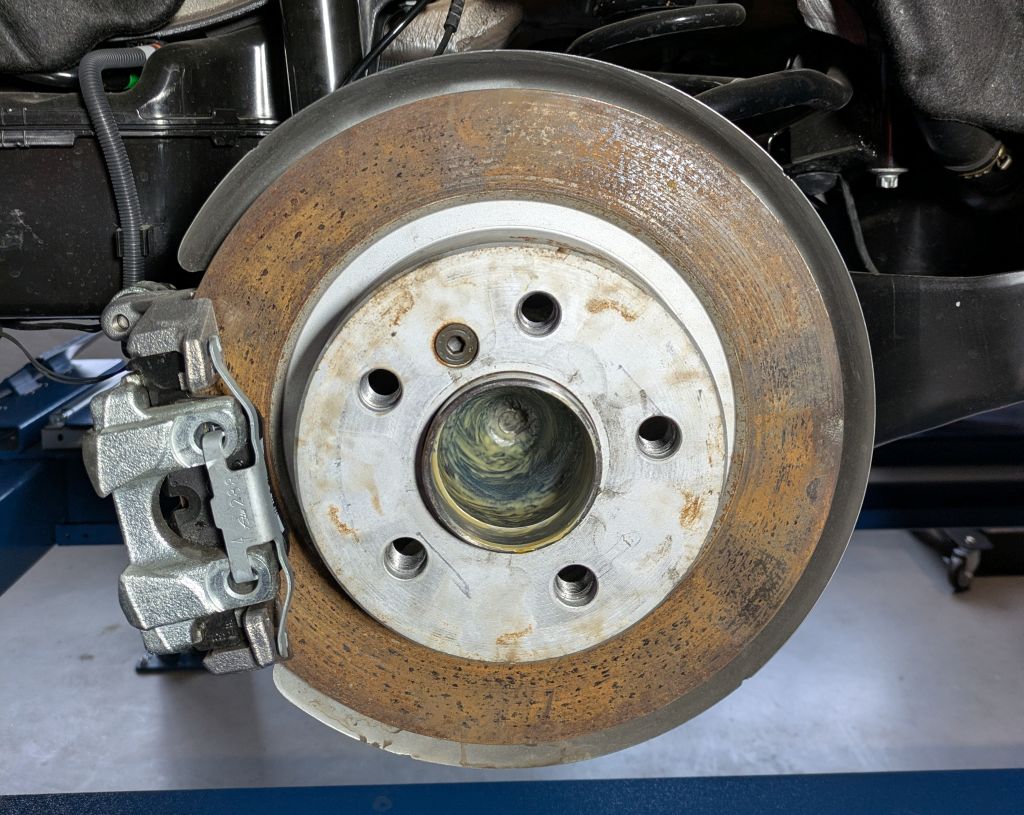
The project team manufactured brake discs with a slightly larger diameter than conventional gray cast iron discs to ensure sufficient area for the required deceleration performance (braking performance). In return, the thickness of a stainless steel brake disc can be lower. Since the starting material for the workpiece is initially in a square format, cutting waste occurs, which can be remelted. Depending on the vehicle, four stainless steel brake discs can be up to 5 kg lighter compared to gray cast iron solutions.
The lower weight not only reduces the vehicle's energy consumption but also decreases the unsprung masses. This allows springs and dampers to work more efficiently, improving vertical dynamics and overall driving behavior.
Option of a lifetime brake, positive cost balance
The manufacturing costs for gray cast iron brake discs only appear low as long as there are no legal requirements for fine dust emissions resulting from brake wear. With the implementation of the Euro 7 standard, however, only 3 mg/km for battery electric vehicles and 7 mg/km for all other drive types are permissible for passenger cars and light commercial vehicles up to 3.5 tons total mass. Here, a conventional wheel brake often has to 'fit', even in combination with high-quality brake pads – such values cannot be achieved. But even without regulatory requirements of the Euro 7 standard, its overall cost balance, based on a vehicle life of up to 300,000 km, is unfavorable. Once the wear limit is reached, it must be replaced (often together with the brake pads), with labor costs often making up the largest share of expenses. A replacement may be necessary after less than 40,000 km of mileage if long vehicle downtimes and road salt (corrosion), short-distance traffic, or a sporty driving style (increased wear, groove formation) have contributed.
First tests passed successfully
The stainless steel brake disc developed by Fraunhofer IWU together with the Chair of Vehicle System Design at TU Chemnitz, ElringKlinger AG, and ANDRITZ AWEBA GmbH has already been successfully tested at the inertia test bench of TU Chemnitz. The brake disc was able to pass the tests according to SAE J2522 (AK-Master) successfully. The test showed very good tribological behavior. The system, consisting of a stainless steel brake disc and inorganic friction material, exhibited approximately 85 percent less wear compared to currently available solutions on the market.
The project partners
The automotive supplier ElringKlinger AG contributed its process know-how in coating and its material knowledge in metal processing to 'Ufo-Brakes'. ANDRITZ AWEBA GmbH is one of the complete providers in the tool sector, offering a range of forming, cutting, and die-casting tools from development to series production. The Chair of Vehicle System Design at TU Chemnitz provided its testing infrastructure and took over the design of the brake disc. Fraunhofer IWU has its roots, not least, in forming technology and conducted accompanying FE simulations as well as the experimental implementation of the forming stages for the brake disc.
Contact: