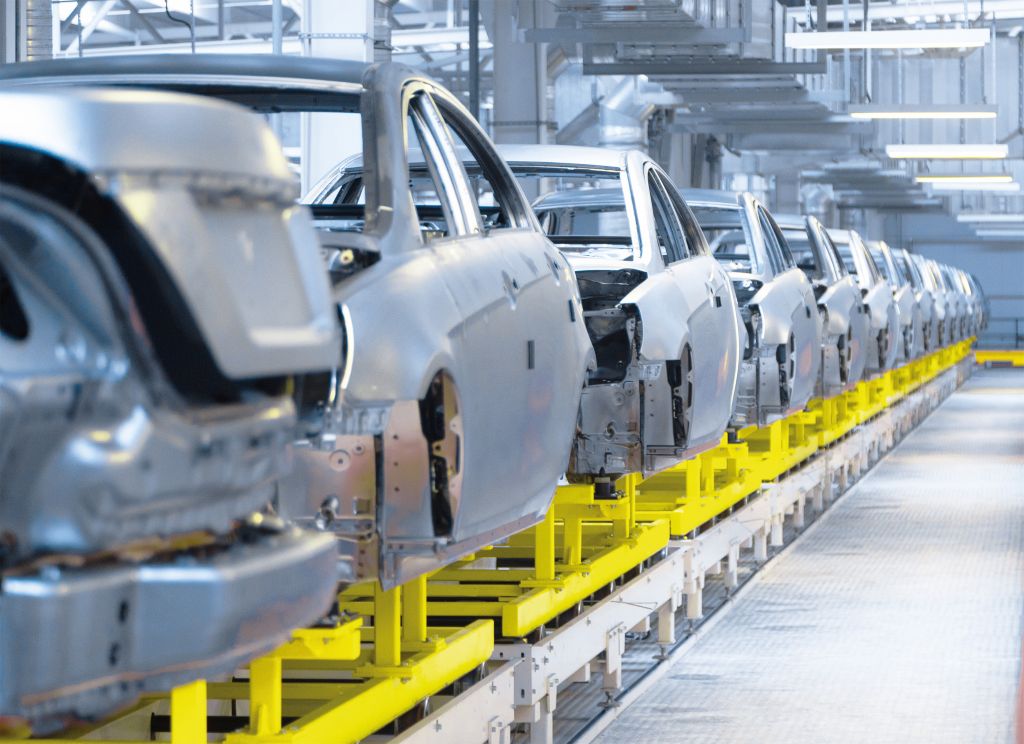
Despite significant dimensional deviations of individual components – the entire assembly consisted of 30 individual parts – a Tier-1 supplier for European automotive manufacturers was able to realize a dimensionally accurate body assembly. This demonstrates that body simulation can be used in innovative ways to successfully solve complex challenges in body assembly.
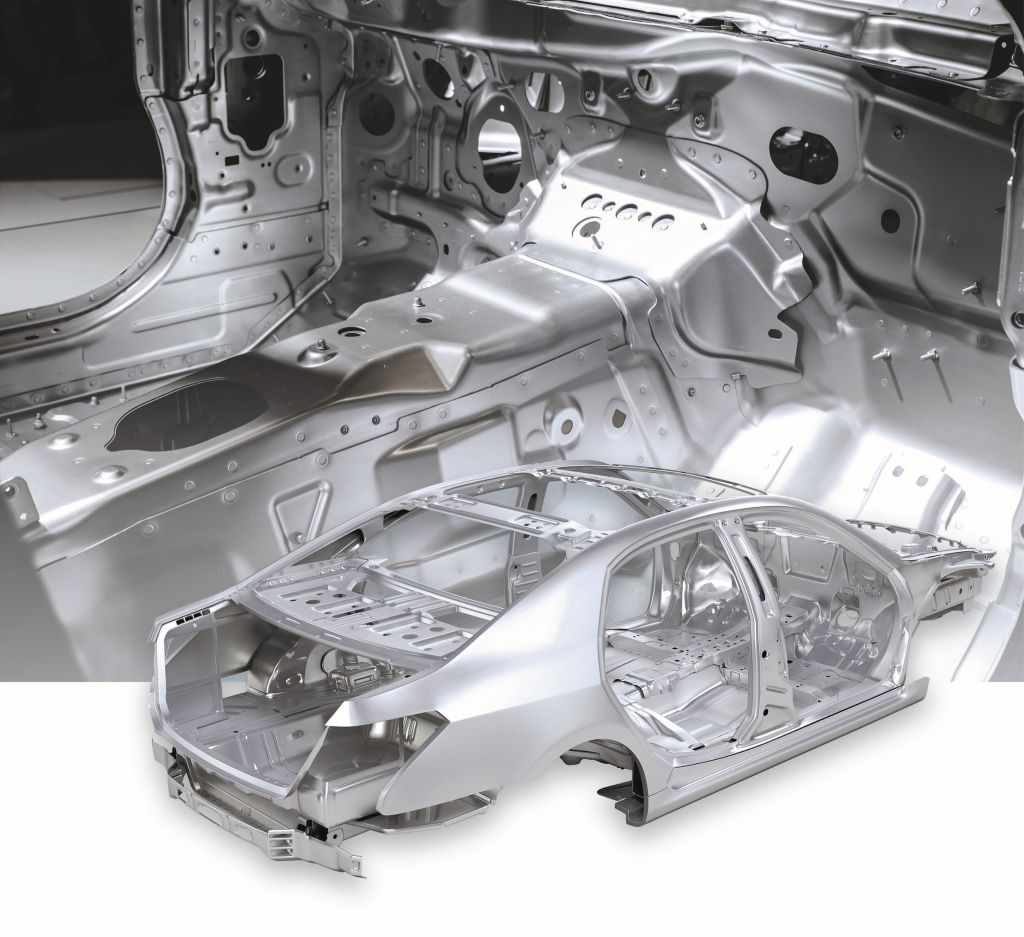
A floor component that is only 0.65 mm thick made of soft steel (similar to the component shown in image 1) posed a significant challenge for the supplier. The simulation of the forming process for this floor component showed that the component was significantly outside the specification. While the allowable springback tolerance was ±0.5 mm, the component had a springback of 6 to 7 mm, and on the opposite side even up to 11 mm. Thus, the deviation exceeded the allowable limit by more than ten times.
This critical difference was later confirmed by initial tool tryouts. Initially, redesigning the component or adjusting the tool seemed to be the only solution, but the unusually high springback posed further challenges.
Experienced professionals know that components within their tolerances do not necessarily guarantee a dimensionally accurate assembly. Even if all individual parts meet the specified tolerances, the resulting assembly outcome can still be outside the allowable limits. Before making changes to the component or tool, the supplier's engineering team decided to conduct a body simulation with the component that was outside the specification. The goal was to examine whether, despite the significant deviations of the floor component, an assembly could be achieved within the required tolerances.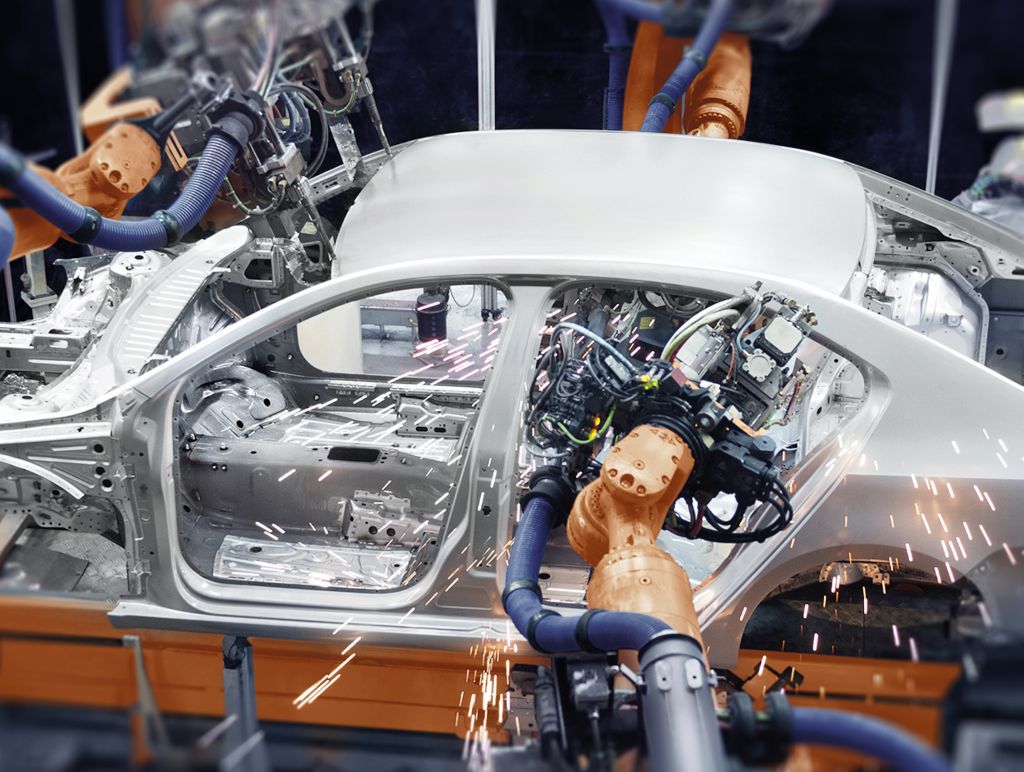
Modern simulation solutions like AutoForm enable the creation of virtual assemblies from a variety of components, even if they were manufactured using different processes, such as sheet metal or hot forming as well as roll forming. Surprisingly, the body simulation showed that the overall assembly would meet the required specifications, even though the floor component itself was significantly outside the allowable tolerances.
This insight opened up a completely new solution path and initially made extensive tool changes unnecessary. To ensure the reliability of the results, the customer subsequently carried out three essential steps to validate the simulation.
In the first step, the engineering team simulated the actual body assembly process based on the nominal geometries. In the second step, the team increased the accuracy of the analysis by replacing the CAD-0 data with the actual results of the forming simulations. In the final step, the results of the second phase were validated. For this purpose, the engineering team used the actual geometries of the components, which were captured using 3D scans.
The successful simulation was followed by success in practice, as the body simulation had accurately predicted the actual results: A correction of the springback of individual components was not necessary to ensure a successful assembly. Measurements on the actual floor assembly confirmed the high agreement with the simulation results. The use of body simulation brought various advantages in this application case.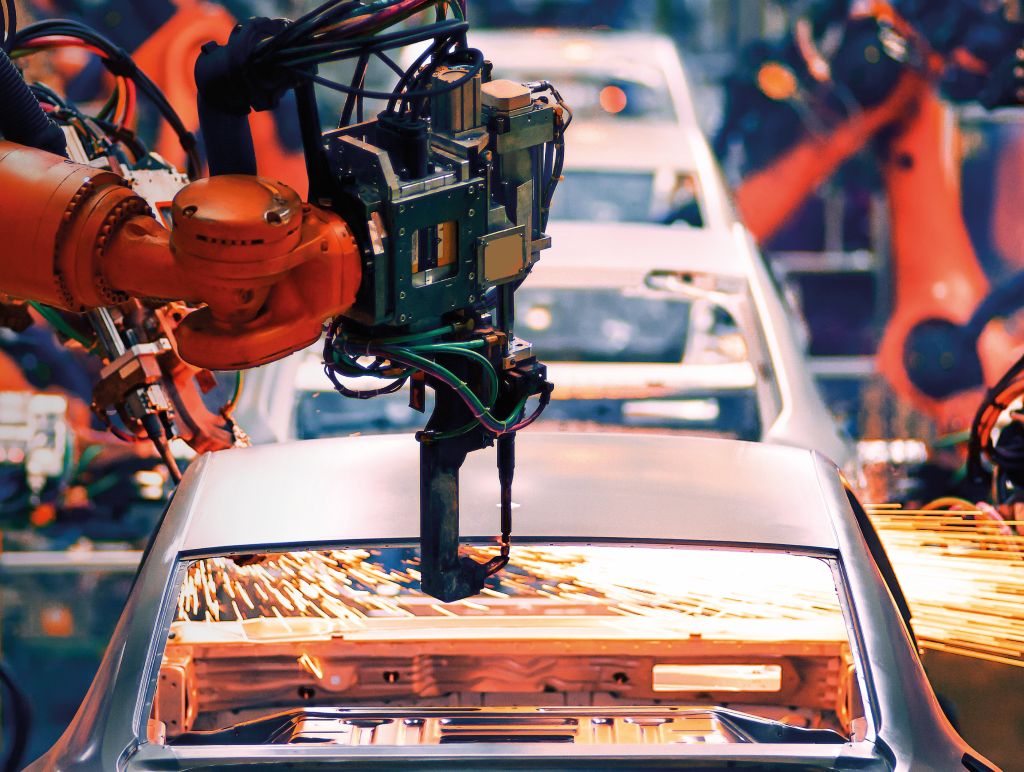
Initially, the engineering team was looking for a solution to reduce the strong springback. However, the body simulation showed that the components would be assembled within the required tolerances during assembly. This allowed the supplier to forgo the compensation and tool rework process as well as the associated tryout loops, saving more than a month of time. Ultimately, the complete digitization of the process allows for the virtual evaluation of various scenarios without incurring the costs of physical trials.
The innovative use of body simulation demonstrates that not all components necessarily need to be within their individual part tolerances for a successful body assembly. This allows for the successful handling of a problem previously considered unsolvable. For the body simulation, the components were directly imported from AutoForm Forming. If real components are available, they can be captured using 3D scanning. The resulting STL files, which describe the actual surface geometry, can then be imported into AutoForm Assembly.
The application case illustrates the added value of modern simulation solutions in tackling demanding manufacturing tasks. Especially since the assumptions regarding tool compensation, the associated rework, and the use of a compensated tool could have irreversibly damaged the tool. In this case, the production of a new tool would have been necessary, with costs estimated at around 130,000 euros. By forgoing tool compensation, significant costs as well as considerable time and labor were avoided.
Contact: