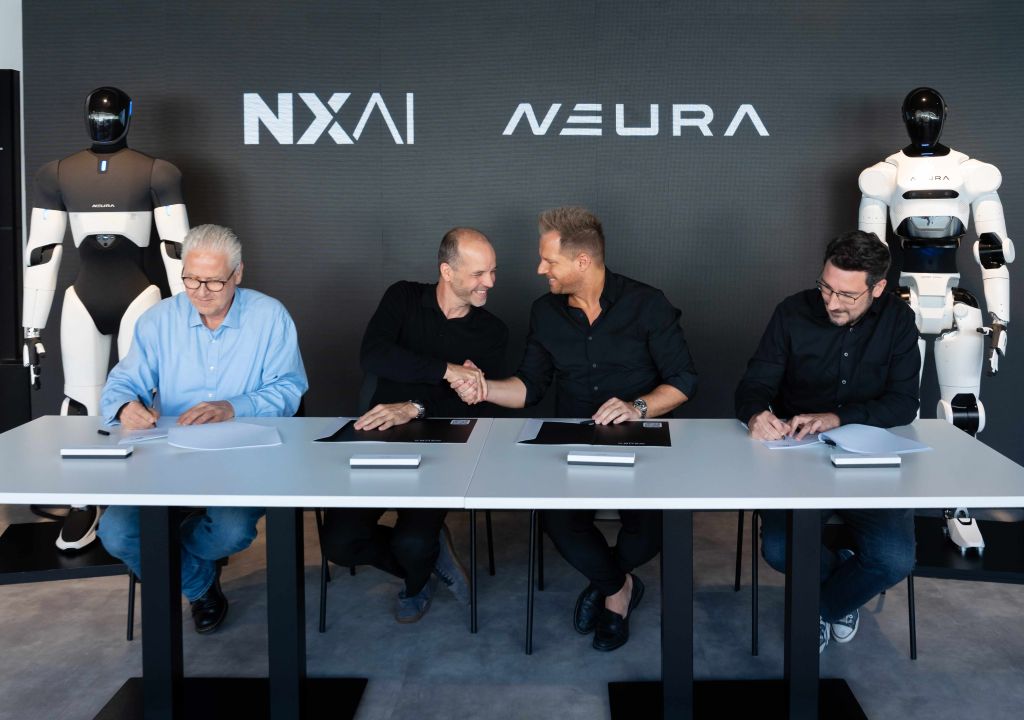
NEURA Robotics and NXAI are working together on a component for the memory of robots. The partnership consists of two parts: the foundation is Neuron AI, NEURA's multimodal foundation model for Physical AI, which combines 3D vision, touch, audio, robot state, and language with a memory function. The partners connect NEURA's Physical AI stack with xLSTM, a recurrent architecture from NXAI that can efficiently maintain and update state over long sequences. Additionally, NXAI plans to provide its own model based on the xLSTM architecture on the Neuraverse platform. It is intended to be available alongside NEURA's own foundation model, Neuron AI.
"A robot that truly helps in everyday life and industry must be able to remember," says David Reger, founder and CEO of NEURA Robotics. "With Neuron AI, we have the foundation. With Neuraverse, we are creating the platform where other strong AI approaches can also find their way into robots. Together with Sepp Hochreiter and NXAI, we are building the memory. Two European strengths, one goal: Physical AI from Europe, together for the world."
"Memory and experiences are prerequisites for robots to reliably solve tasks over many steps," says Prof. Dr. Sepp Hochreiter, founder of NXAI. "xLSTM is built for this, it is fast, memory-efficient, and can maintain state over long sequences. Together with NEURA, we are bringing these strengths into Physical AI, from Europe for the world."
Why Memory is Crucial for Robots
A robot is not a chat. A chatbot answers inquiries one after the other. A robot operates in a loop of perceiving, deciding, and acting, many times per second and sometimes for an entire layer. For this, it needs memory on two levels. The working memory clarifies what is currently happening: Has the component already been inserted? Is the door open or closed? Has the start button already been pressed? The longer-term, episodic memory goes further: A robot that has repeatedly executed a process should be able to draw on previous experiences in the same situation.
More options on a common platform
The planned integration is intended to enable companies to align the NXAI model with the Neuraverse toolchain for their own tasks, test it in the NEURA Gyms, and deploy it on suitable robots. Customers should be able to use different model approaches within the same training and application environment.
Neuron AI remains NEURA's own multimodal foundation model and will be independently further developed. The partnership brings an additional model option to the platform and includes joint research. Companies retain control over their process knowledge and decide for themselves whether to share data and capabilities.
Two disciplines, one common component
NEURA brings the Physical AI stack: its own multimodal foundation models, robotics, sensors, real training data from the NEURA Gyms, and the platform for industrial use. NXAI brings decades of AI research and a fundamentally different approach to recurrent intelligence and memory. Together, the partners aim to make capabilities available more quickly.
In the long term, the goal is for robots not only to perform individual capabilities but to build on experience over time. This aligns with the vision of the Neuraverse and the Robot Skill Economy: capabilities that robots learn from interacting with the real world, improve, and transfer to other machines and environments.
Contact: