
A consistently high process quality as well as savings in energy, resources, and operating costs – demands that water-based cleaning processes must meet today. To implement these requirements safely and efficiently, Ecoclean has developed the innovative Lab-on-a-Chip system. It maintains the quality of cleaning and rinsing baths through automated analyses based on various measurement methods at an optimal level. The new Smart Drying technology enables AI-supported intelligent control and optimization of drying processes using warm air and vacuum.
Increasing demands on component quality lead to more complex cleaning processes. Specified cleanliness standards must be maintained stably and reproducibly. This is increasingly associated with higher documentation requirements for process parameters. At the same time, there is a demand for more energy- and resource-efficient cleaning to reduce the CO2 footprint and costs. In contrast, there is a shortage of skilled personnel with appropriate training and cleaning expertise.
Ecoclean responds to this situation with innovative developments such as the Lab-on-a-Chip (LOC) system and Smart Drying technology for automated monitoring and intelligent control of cleaning quality. These solutions ensure that cleaning and drying processes run optimally and meet documentation requirements through constant parameter recording.
LOC – comprehensive cleaner and bath analyses with just one system
For the analysis of the concentration of cleaning or passivation media as well as bath contamination, various sensors are currently required, tailored to the respective medium or process in the baths. The measurements also typically require numerous manual interventions. The labor-intensive determination of bath quality often results in cleaning media being replenished regardless of consumption. Likewise, bath changes are still sometimes carried out based on time. Both can lead to suboptimal bath and thus cleaning quality as well as resource waste.
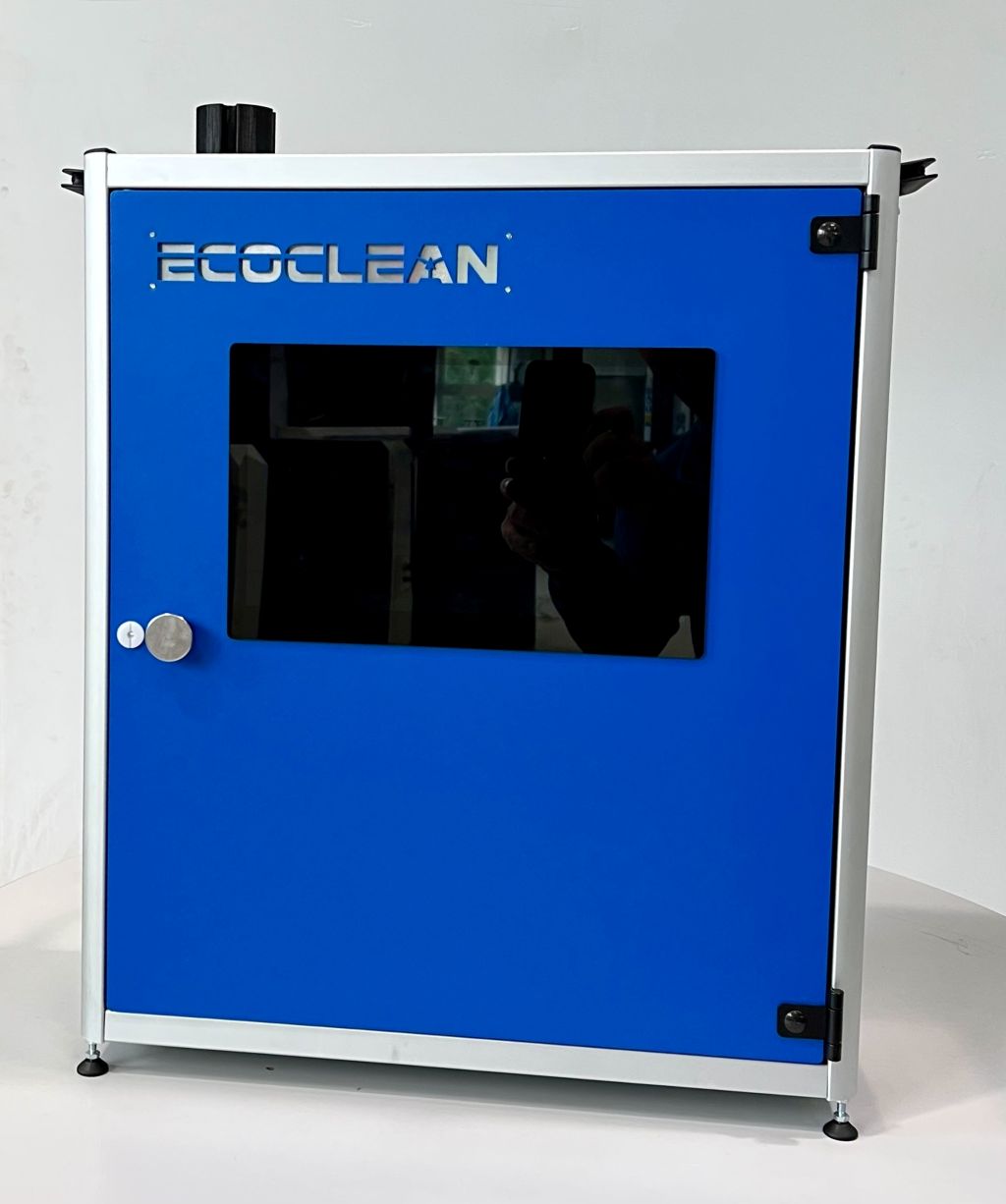
This changes with the new LOC system, which can be integrated into both multi-bath immersion and chamber systems. The combination of various measurement methods in just one system opens up an enormous range for cleaner and bath analysis. And this is done without equipping each bath with different sensors and independently of the cleaning or passivation medium and process used. Sampling is done automatically from the respective stations integrated into the system, which are connected to the evaluation unit.
For determining the cleaner concentration, methods such as titration, pH value, conductivity, and for the first time, measurement of surface tension are available. The latter allows for the separate determination of the surfactant content present in the bath in modular cleaning systems, enabling targeted replenishment of this component. Bath contamination can be measured using fluorescence and conductivity measurements. These measurement methods will be supplemented in the future by methods for determining Total Organic Contamination (TOC) and particle measurement. Which measurements are conducted with the sample taken from the bath can be entered via the system control. Between sampling from the baths, an automatic flushing ensures that the results are displayed unaltered on the screen and, if necessary, corresponding actions, such as replenishing medium or water or changing the bath, are initiated.
In the also available standalone variant, samples are manually taken from the baths to be controlled, and the further procedure is also automated. In both alternatives, the measurement methods can be combined as needed, and additional functions or new measurement methods can be easily integrated.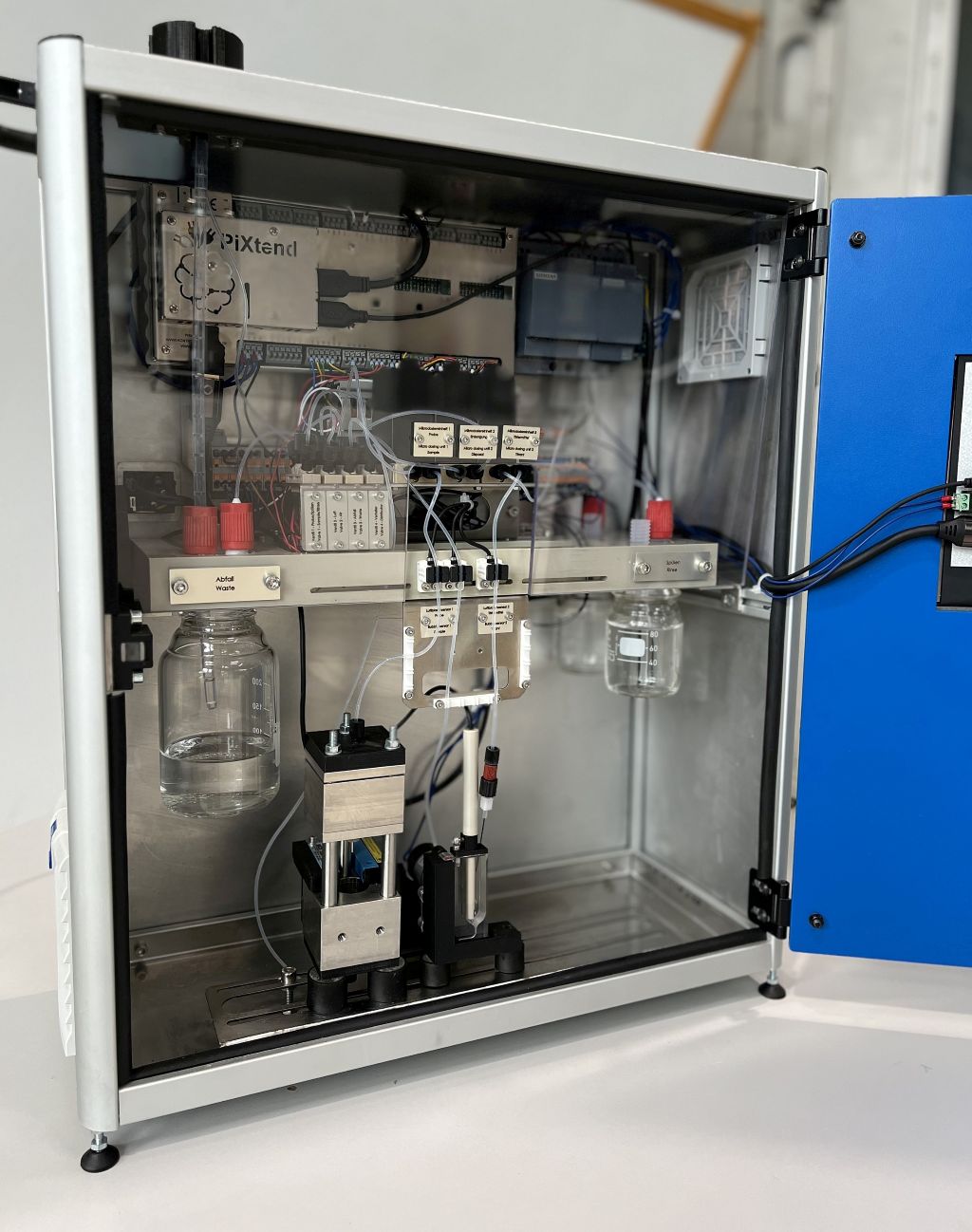
Smart Drying – optimal drying with minimized time and energy requirements
Drying is not only one of the most energy-intensive processes but also the bottleneck in part cleaning due to the time required. Nevertheless, problems often arise – especially when different components need to be cleaned and dried. To be on the safe side, drying processes are often designed too long based on a worst-case part, which results in increased energy consumption with correspondingly high costs and reduced productivity.
The goal is therefore to achieve optimally dried parts from the system with minimized energy and time requirements. This has been implemented by Ecoclean with the AI-supported intelligent Smart Drying technology for combined warm air-vacuum drying processes. The basis is a moisture-temperature sensor specifically developed for this application, which has now become standard for various system types from the manufacturer.
To control drying in a time- and energy-optimized manner, the AI model of the Smart Drying technology was initially trained with data from thousands of drying trials with various components and target parameters. Based on this know-how, the AI evaluates the quality of the ongoing drying process by analyzing the parameters of moisture, temperature, and pressure in the process chamber. It then decides which action is most sensible next for optimal drying. This could be, for example, the introduction of warm air for thin-walled parts or plastic workpieces. Essential for the use of Smart Drying technology are process-stable, reproducible processes that ensure consistent conditions in the process chamber. Worn seals or improperly calibrated sensors, for example, lead to changes here.
Among the next development steps at Ecoclean is to transfer insights from machine learning to the use of AI for the control and optimization of cleaning and rinsing processes.
Contact: