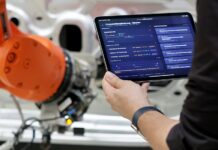


The digital transformation in mechanical and plant engineering is gaining momentum and is largely driven by customer demands.
The new interoperability study by VDMA shows: 84 percent of companies see a concrete need for interoperable interfaces, 71 percent rate OPC UA as highly relevant, and 62 percent consider the Companion Specifications particularly important. "Interoperability is the key to fully exploiting the potential of digital transformation in machinery and plant engineering. The new edition of our study clearly shows: Only through common standards like OPC UA and close collaboration along the entire value chain – from component manufacturers to machine builders to operators – can we efficiently utilize data and sustainably secure the competitiveness of the industry," says Andreas Faath, Head of Machine Information Interoperability at VDMA.
OPC UA: From Pilot Project to Practice
The standard has arrived in practice: 57% of companies use OPC UA in production – a manufacturer-independent communication protocol that enables secure and semantically unambiguous data exchange between machines and IT systems. Only 8% have no plans for application. About half of the new products are already OPC UA capable – a clear sign of broad acceptance and the transition from the pilot phase to real implementation. One third of companies are already using OPC UA for Machinery to enable standardized communication. This makes it clear: OPC UA is increasingly becoming the connecting backbone for industrial interoperability. The rising integration into products and processes shows that the standard is establishing itself as a central foundation for digital transformation.
Customer requirements as drivers of innovation
A central driver for the introduction of OPC UA in machinery and plant engineering is specific requirements from customers: 60 percent of the surveyed companies state that they are integrating OPC UA due to explicit customer requests. Another 40 percent act proactively and implement the technology to prepare early for future developments.
To adjust to market needs.
This strategic foresight pays off: In more than half of the cases (54 percent), the anticipated customer requirements were confirmed afterwards. This demonstrates how important it is to recognize customer needs early and to align technological developments accordingly. Interoperability thus becomes not only a technical necessity but also a competitive advantage.
Strategic advantages of interoperable standards
- The study identifies three key benefits of interoperable interfaces:
Resolution of proprietary interfaces - Cost savings through reduced integration effort
- Vision Plug & Play through standardized communication with other systems of the
Automation environment
A central finding of the study is the strategic importance of interoperable interfaces for machinery and plant engineering. This is particularly evident in three areas:
Firstly, the resolution of proprietary interfaces enables manufacturer- and platform-independent data exchange. This allows for faster integration of new components, more efficient connection of third-party machines, and more flexible restructuring of existing systems.
Secondly, standardization significantly reduces the integration effort, both in the
Commissioning as well as during maintenance and system care. This reduces costs and simplifies the scaling of production systems. Thirdly, open standards such as OPC UA provide the foundation for plug & play functionalities. Machines and components can be automatically recognized and integrated, which minimizes downtime and reduces technical complexity. This creates an infrastructure that is not only efficient but also future-proof.
Diverse application fields and future potential
The high strategic importance of interoperable interfaces is evident in various ways.
Application cases, especially in production monitoring, production control, and remote maintenance. Interoperable interfaces enable standardized, cross-manufacturer integration of machines and systems. This allows production processes to be managed more transparently, efficiently, and flexibly. The use of data ranges from optimizing production, improving quality, to developing digital business models and AI applications.
Through the use of structured, standardized data models such as the "Machine State"
meaningful key figures for machine availability and process control
Possible. Thus, interoperable interfaces form the basis for intelligent, adaptive, and economically relevant applications that increase operational efficiency.
Conclusion:
The results of the study make it clear: interoperability is a key success factor.
for the digital transformation in mechanical and plant engineering. Open standards such as OPC UA enable seamless, cross-manufacturer communication and lay the foundation for flexible, scalable, and efficient production processes. They reduce
technical complexity, simplify commissioning, and strengthen the innovation capability of companies. The widespread use in practice and the multitude of concrete application cases demonstrate that OPC UA has long since outgrown the pilot phase and has established itself as a key technology.
Study for download: Study on Interoperability in Mechanical and Plant Engineering_2025
Contact person at VDMA:
- Maximilian Wagner
- VDMA Project Manager
- Phone 069 6603 1917
- maximilian.wagner@vdm.ae
Contact: