
The development in the field of humanoid robots is progressing with impressive dynamics. The competition between the USA and China, as well as advancements in AI, battery development, and mechanics, are fueling the performance of the Men in Metal. At automatica, it will become clear how far this development has already progressed.
What the humanoids in the Middle Kingdom are capable of was recently demonstrated at a half marathon in Beijing. On the just over 21-kilometer running course, around 20 humanoid robots successfully competed against humans. With this race, the People's Republic has achieved its goal of presenting itself as one of the leading providers of humanoid robots.
Two legs enable maximum flexibility and mobility
But a half marathon inevitably leads to a frequently asked question: Why do humanoids have legs? Wouldn't it be more efficient to use wheel drives? The reason most humanoids are still equipped with two legs is explained by Jonathan Hurst, Chief Robot Officer at Agility Robotics: 'Bipedal robots are designed for coexistence with humans and offer versatility and mobility that goes beyond what wheel drives can achieve. By using legs, humanoids can adapt to complex environments, climb stairs, overcome curbs, and fulfill a wide range of tasks.' Digit, the humanoid from Agility, is already in use in many applications, primarily in logistics centers such as at Amazon and GXO Logistics. With a height of 1.75 m and a weight of about 64 kg, Digit can perform complex tasks such as lifting loads weighing up to 16 kg. And thanks to advanced sensors, including LIDAR and cameras, he can also navigate independently. Melonee Wise, Chief Product Officer at Agility Robotics, will also discuss Digit and how humanoids can fill gaps in the automation chain at the automatica Forum in Hall A5. Following her, Carolin Richter, Head of Next Generation Robotics at BMW Group, will give a practical-oriented talk about the company's experiences with concrete applications of humanoids.
USA in a pioneering role in technology development
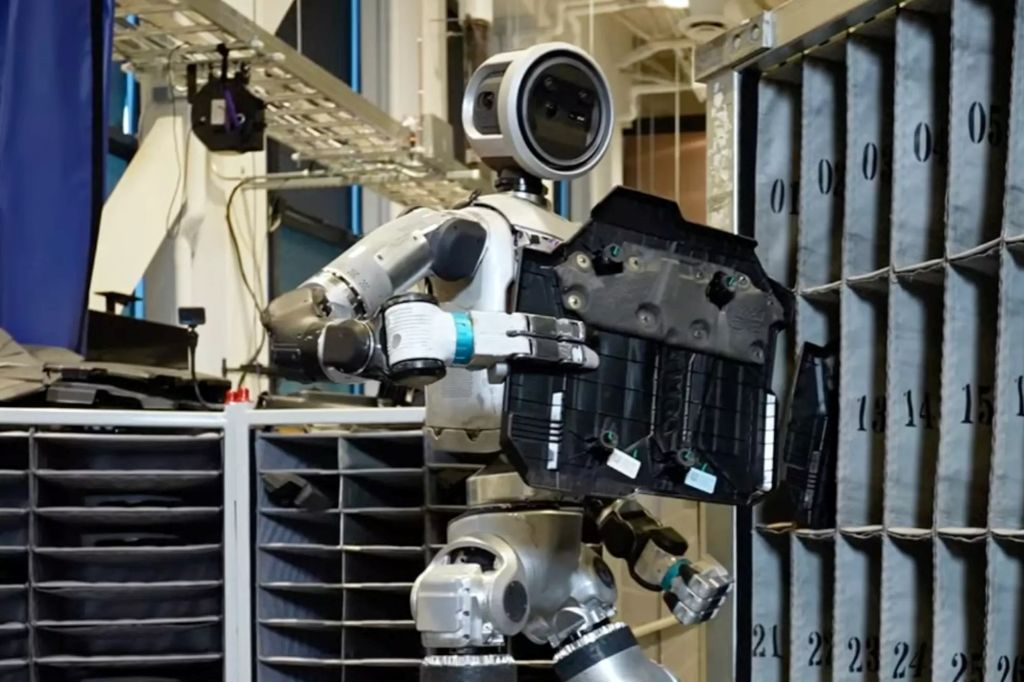
Like Digit, other highly developed humanoids from the USA include Atlas from Boston Dynamics, Optimus from Tesla, Figure 01 and 02 from Figure AI, and Apollo from Apptronik. All of them are already working in pilot applications in the automotive industry. 'We are developing the most advanced and capable humanoid robots in the world that assist humans in meaningful and revolutionary ways,' says Jeff Cardenas, CEO and co-founder of Apptronik. However, significant capital and powerful partners are needed to drive these developments forward.
Recently, Apptronik completed a funding round of over 350 million dollars. Collaborations with NASA, NVIDIA, Google DeepMind, and on the user side with Mercedes-Benz and GXO Logistics are intended to ensure that Apptronik will continue to play a leading role in this future market.
Germany with a need to catch up in humanoid robotics
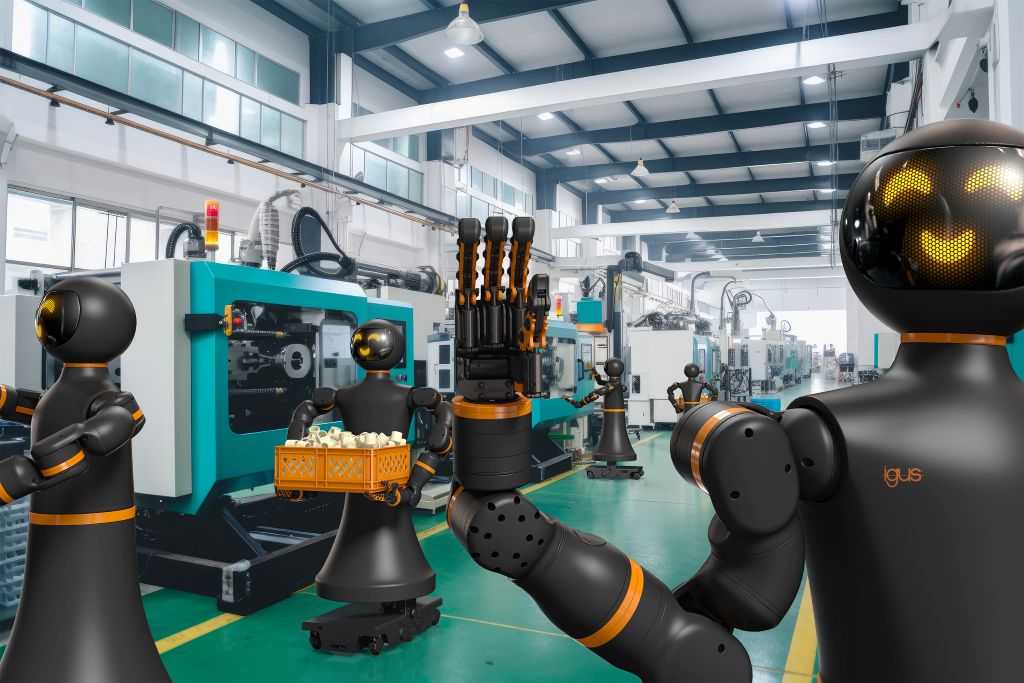
Although Germany does not play a key role in the global market for humanoids, the automatica shows that there are promising developments here as well. In addition to the 4NE-1 from Neura Robotics, which debuted at automatica in 2023, more humanoids will find their way to Munich this year. One of them comes from Cologne and is named 'Iggy Rob'. Igus offers its first humanoid robot for just under 50,000 euros. This is made possible, according to the manufacturer, by the combination of in-house components such as the ReBeL cobots for the robotic arms and the mobile base ReBeL Move. Its range of applications extends from assistive robotics to factory automation and education and research. Igus plans to use Iggy Rob in its own company for the automation of injection molding machines.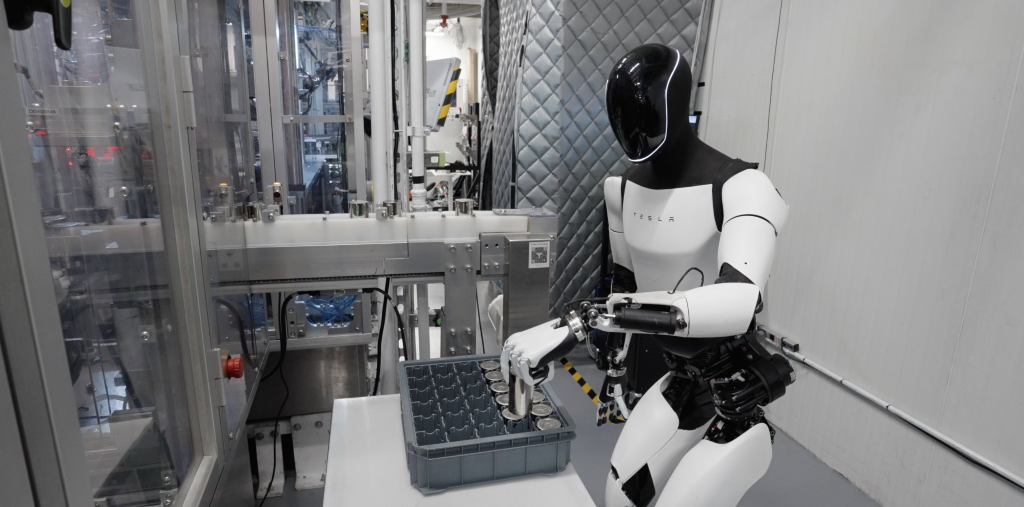
The exhibition appearance of the Institute for Robotics and Mechatronics of the German Aerospace Center is also eagerly anticipated. Here, intensive research is being conducted on the further development of humanoid robotics. The latest results will be showcased at automatica. The recently concluded cooperation of the institute with Siemens is also noteworthy.
'This strategic partnership is another example of the transfer of robotics technologies from aerospace to industrial applications,' says institute director Alin Albu-Schäffer. 'The close networking with leading German industrial partners like Siemens is essential to secure the competitiveness of European robotics in the future, in light of the rapid developments in the USA and China.'
Humanoid robots: a gigantic growth market
Tesla sees itself as a technology leader with its humanoid robot Optimus. This robot moves elegantly, is fast, and has a highly flexible five-finger hand. Musk believes that applications in households or childcare will soon be possible, and Goldman Sachs also sees high potential for the global market for humanoids. According to them, this market could grow to 38 billion US dollars by 2035. In addition to American companies, the People's Republic also has ambitious goals and aims to become the world market leader in humanoid robots within the next three years. In the medium term, five percent of all jobs in China are expected to be taken over by humanoids. This would correspond to the deployment of around 35 million units. Already today, humanoids from Unitree, AgiBot, Engine AI, Fourier, or Ubtech are in use in various applications and industries in Chinese companies.
Industry leader Unitree is one of the first manufacturers worldwide to bring a small humanoid to the market at a spectacularly low price with the G1. The base version of the 1.3-meter tall and 35 kg light G1 is expected to cost only 16,000 euros in China, while in this country it will likely be closer to 30,000 euros. Depending on the level of expansion, this price can quickly more than double. Interest in the G1 is high, as Unitree marketing manager Qian Yuqi reveals: 'There are already orders from both domestic and foreign markets. Initially, scientific research institutions are likely to use our robot, but industrial companies can also envision using the G1 for simple tasks.'
The development shows: The time for humanoids and thus for a new era of automation has come. Thanks to AI, they are already capable of taking on some of the tasks that were previously reserved for humans. The automatica promises exciting insights into what humanoids are capable of and how their use can influence the world of work.
Contact: