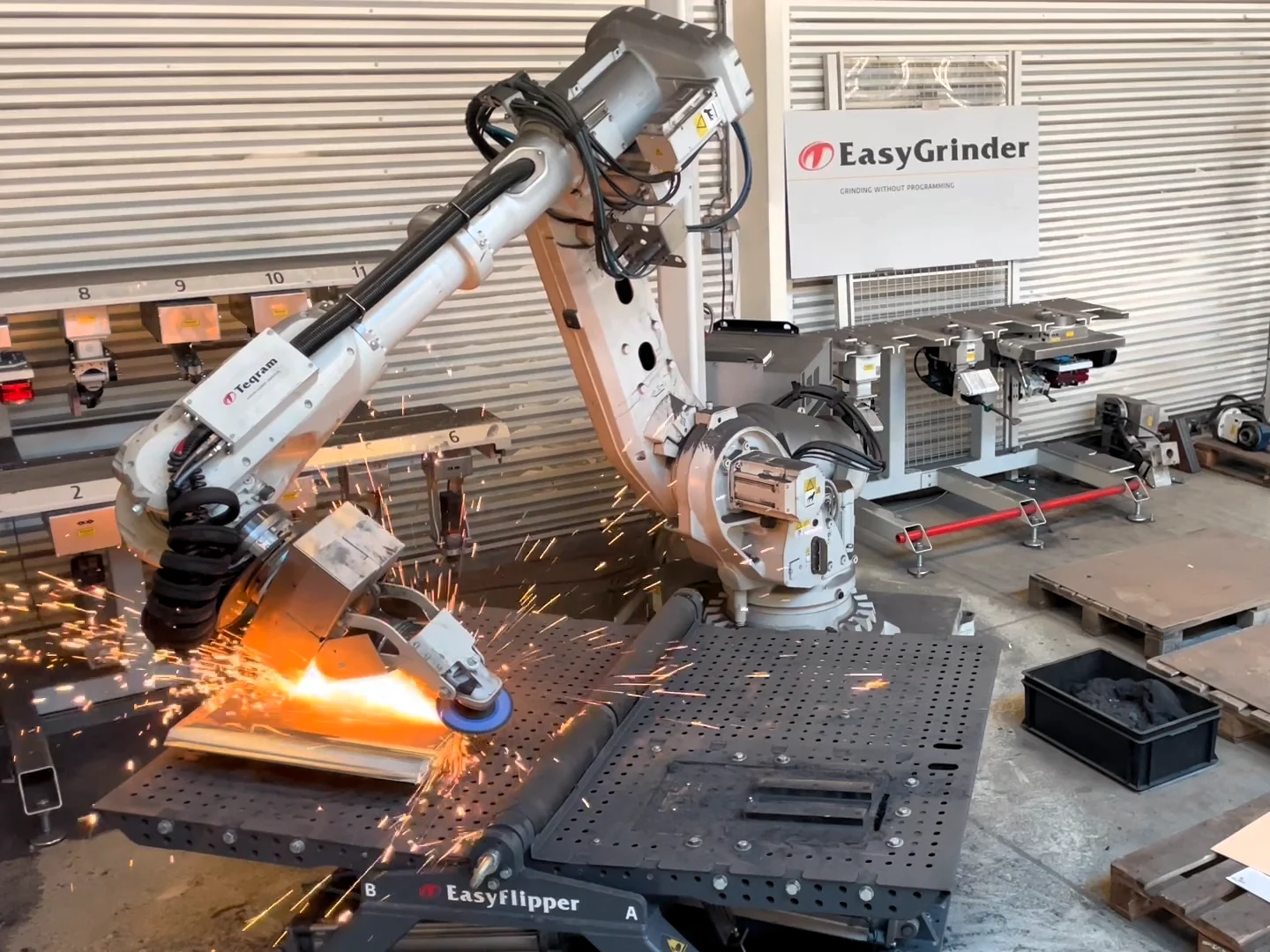
The AI-controlled grinding robot, which is already used for the automatic reworking of cut sheet metal parts, will soon also be able to create and rework welding bevels. This represents another step towards fully automated welding seam preparation – specifically for companies processing medium and heavy sheets.
From Reworking to Complete Preparation
The EasyGrinder has proven itself in recent years as an autonomous solution for deburring and grinding of flame-cut and machined parts. It removes burrs and cut edges, rounds edges up to R3, and cleans surfaces. With the new function, the range of applications is significantly expanded.
In addition to removing oxide layers, heat-affected zones (HAZ), and other residues, the robot can now independently create welding bevels. This allows components to be prepared for welding directly after the cutting process – without additional processing steps.
Automatic Programming Based on Product Data
A special feature of the new solution is the high degree of automation. Based on a geometry file with information about the welding seam, the EasyGrinder automatically creates the required processing program. Manual programming or teaching the robot is not necessary.
According to Teqram, this approach meets the growing demand for flexible automation in sheet metal processing. With the increasing variety of variants and the trend towards smaller batch sizes and individual part production, flexibility is becoming increasingly important. Since programming effort and setup times are minimized, automation can also be economically implemented in such production environments. At the same time, the solution allows for a more targeted use of the expertise of experienced specialists.
AI and 3D Vision Automatically Compensate Deviations
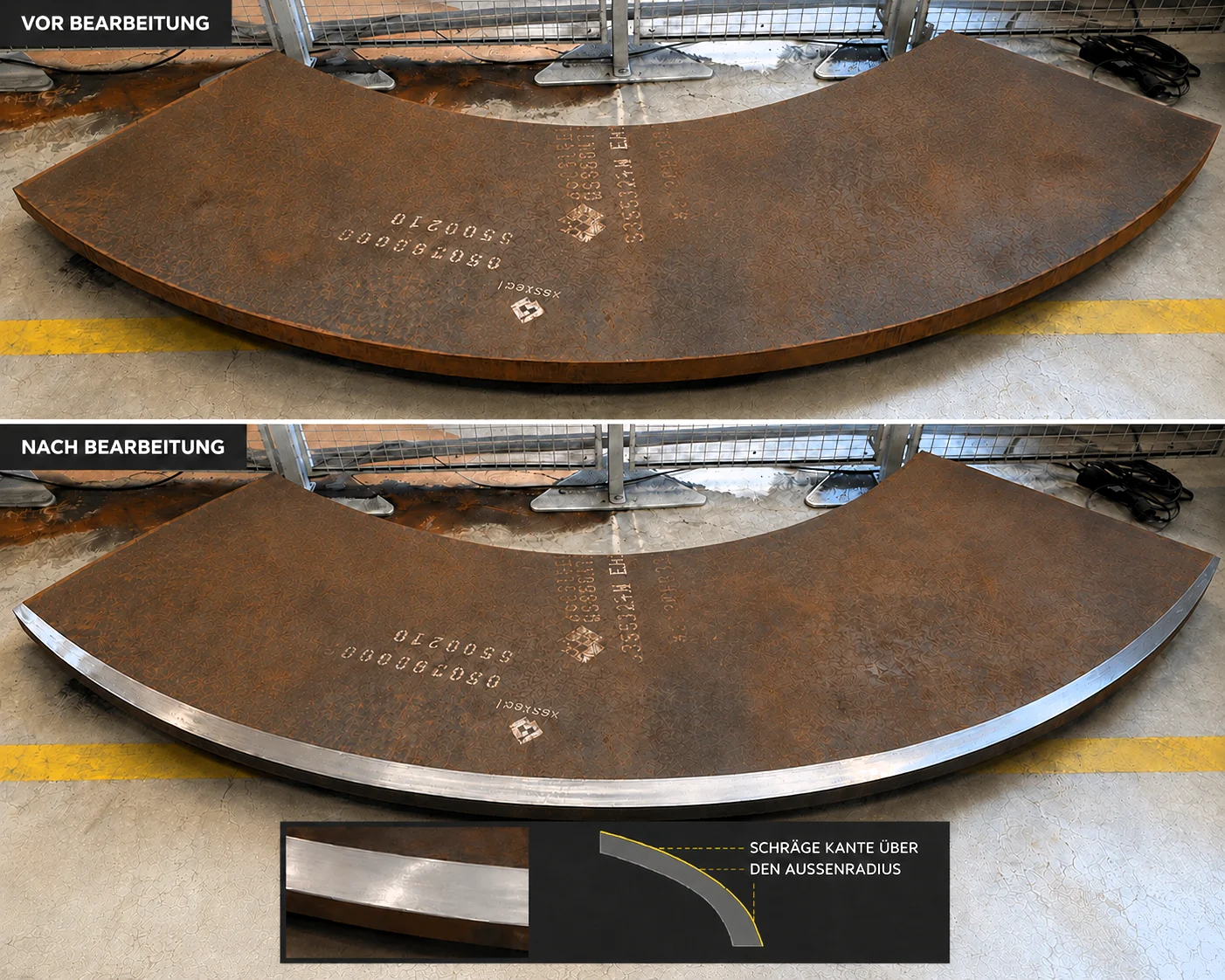
The EasyGrinder combines 3D vision technology with AI-enhanced control. Before each processing operation, the actual geometry and position of the workpiece are automatically recognized.
This ensures consistent processing quality, even when the components differ from one another. Complex contours are automatically recognized and tracked without requiring additional programming.
Interesting Alternative to Conventional Methods
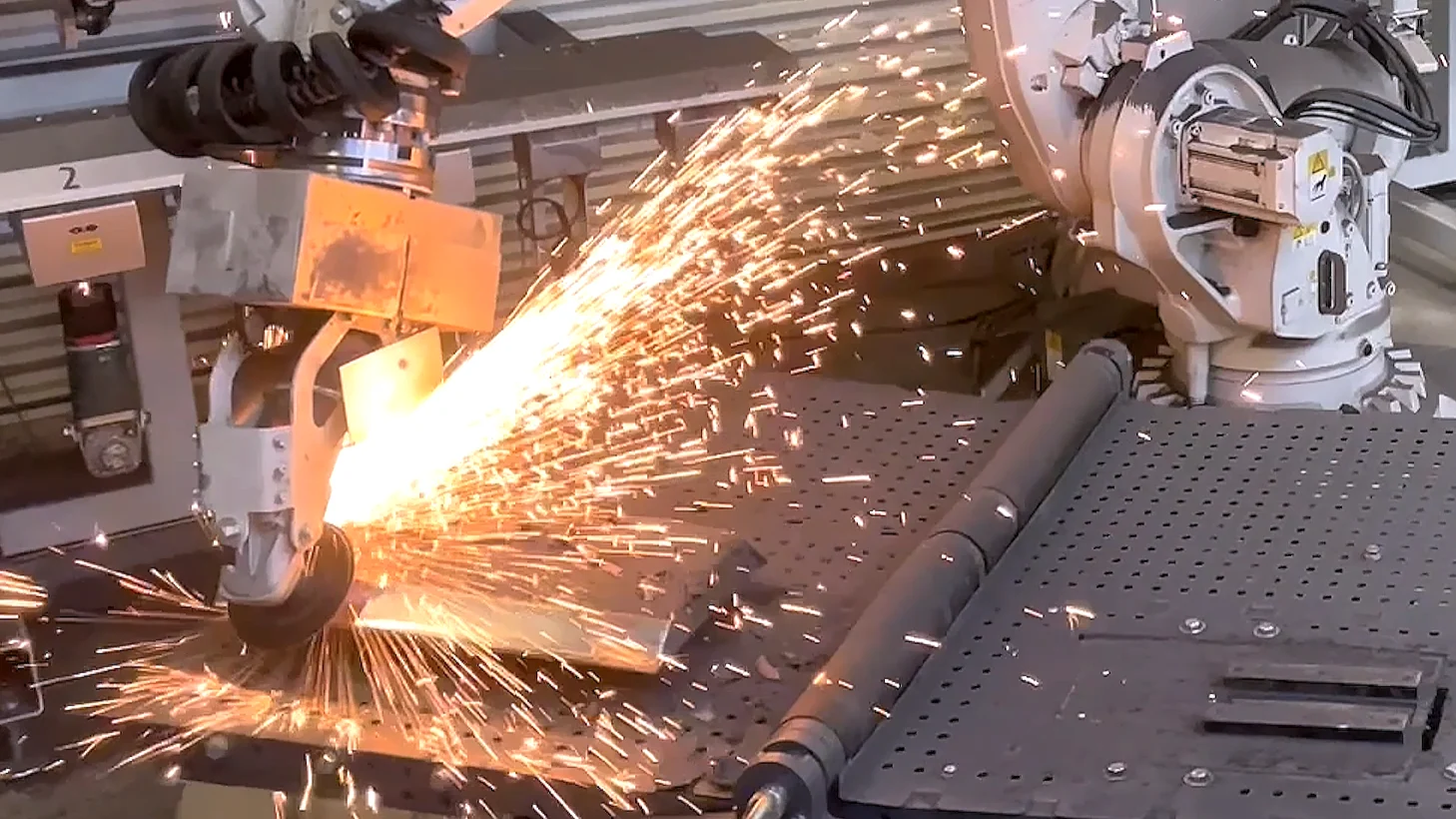
In practice, methods such as manual grinding, nibbling, or milling are often used for creating welding bevels. However, each of these methods has its limitations.
Nibbling is particularly suitable for straight contours and typically produces a relatively rough surface.
Milling offers high precision but often requires additional process steps and NC programming. Additionally, components must be cleaned and deburred beforehand.
The EasyGrinder combines several processing steps into a single automated process. Thanks to high processing speed, even larger bevels can be produced economically, eliminating additional work steps in many cases.
Seamless Complement to Thermal Cutting
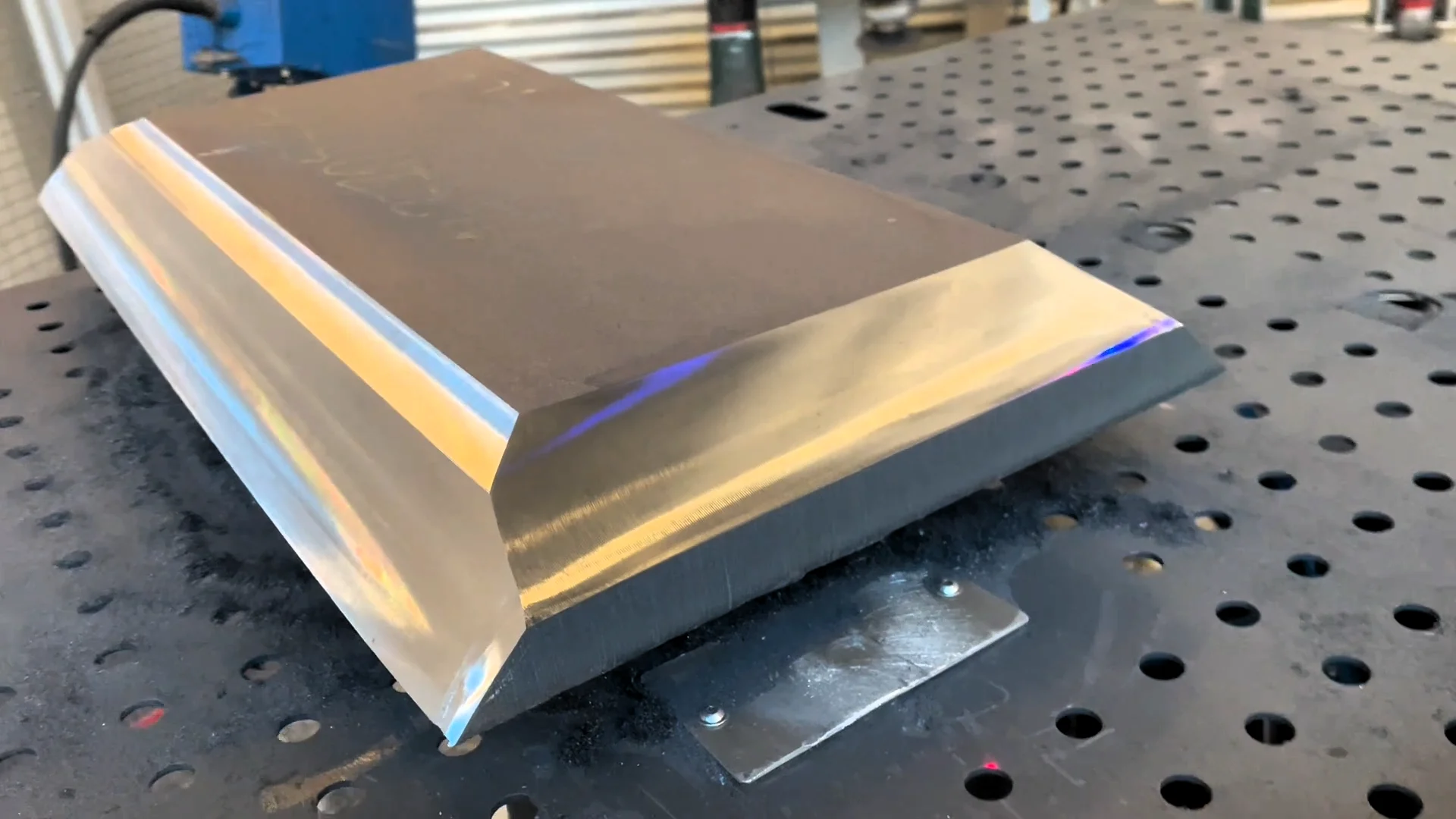
For companies processing thick sheets, laser, plasma, and oxy-fuel cutting often remain the most economical methods for producing large welding bevels. These processes are fast and efficient but require subsequent reworking. Before welding, oxide layers, slag, burrs, cut edges, and the heat-affected zone must be removed to ensure a reliable weld.
The EasyGrinder fully automates this reworking. In a single setup, components can be deburred and ground, edges rounded, and bevels created. This provides a very economical alternative for components up to 30mm sheet thickness or thicker sheets with small bevels compared to cutting the bevel.
By combining several processing steps into an automated process, handling effort, intermediate storage, and manual grinding work are reduced. At the same time, consistent and reproducible quality is achieved.
More Capacity Without Additional Skilled Personnel
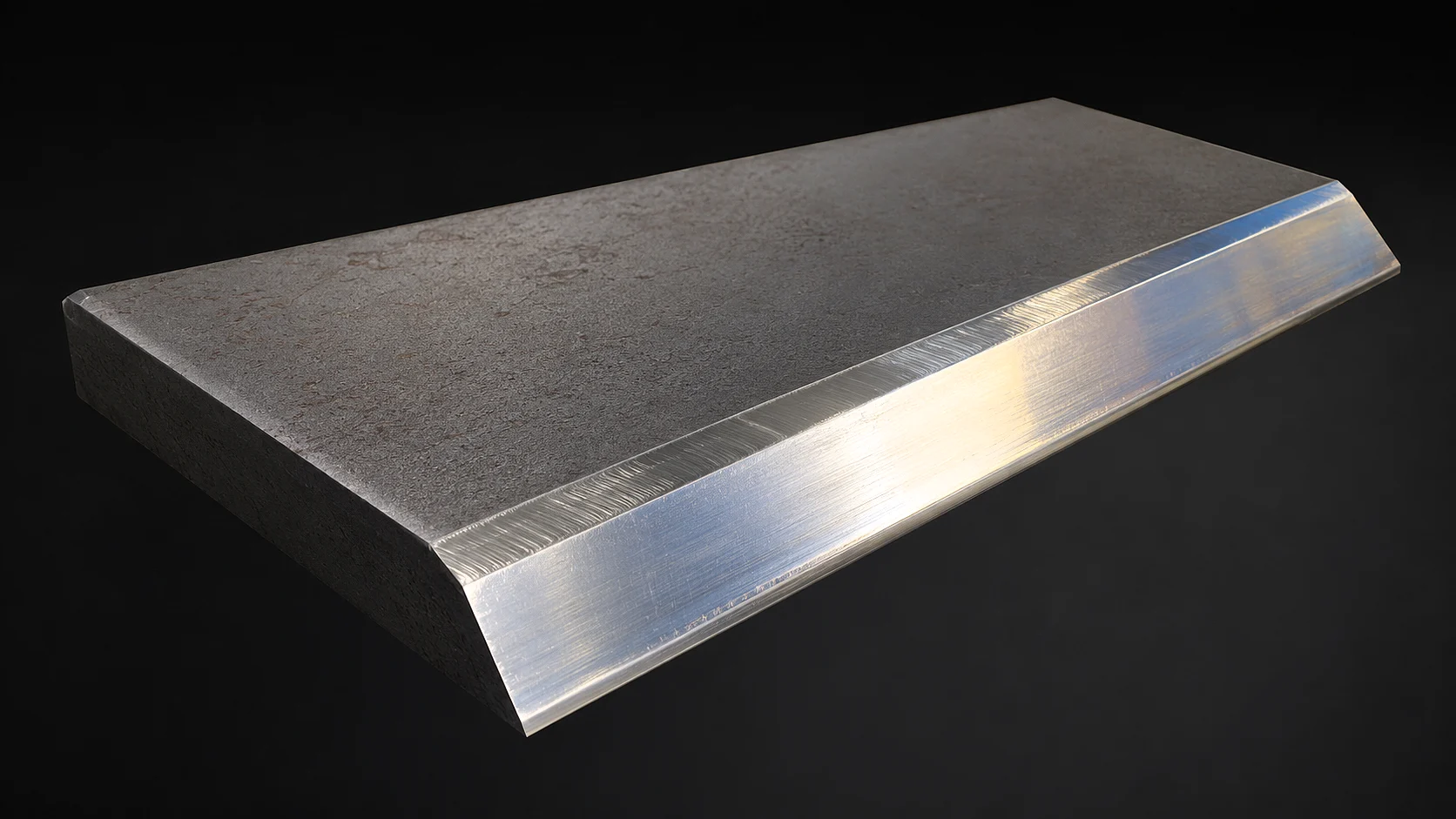
According to Teqram, the expansion is particularly relevant for companies looking to increase their production capacity without becoming more dependent on the limited availability of skilled technical personnel. The EasyGrinder not only takes over physically demanding grinding tasks but also automates the handling of heavy sheet metal parts.
The robot can independently pick up components, position them for processing, and then stack them again. The system processes workpieces weighing up to 600 kg and measuring up to 4 x 1 meters or 1.6 x 1.6 meters. This automated handling eliminates crane movements and manual intermediate steps, thereby reducing lead time and making employee deployment more efficient.
Moreover, the automated approach ensures consistently high quality and a better-controlled production process. This can help reduce scrap and rework and improve the predictability of production costs. Additionally, abrasives are used more efficiently, which can further help lower operating costs.
Live at EuroBLECH
The new features of the EasyGrinder will be presented for the first time at EuroBLECH, the international trade fair for sheet metal processing, taking place from October 20 to 23, 2026, in Hanover.
Visitors can experience at Teqram's booth how an AI-controlled grinding robot not only automates the reworking of cutting parts but also integrates welding seam preparation into an autonomous overall process.
Teqram at EuroBLECH in Hall 13, Stand F182
Contact: