The Fraunhofer ILT develops laser-based methods for the production of PFAS-free functional layers on metal components, sliding bearing components, and elastomer rollers. The projects RePEEK, EPOS, LEMBAS, and pureWaterSeal demonstrate: The exit from forever chemicals cannot be achieved solely through suitable substitute materials. Manufacturing processes are equally crucial.
Per- and polyfluorinated alkyl substances, or PFAS, are functionally hard to surpass: They are chemically and thermally extremely stable and are therefore under regulatory pressure. However, the established substances cannot simply be replaced: They reduce friction, protect against wear and corrosion, prevent adhesion, and ensure emergency running properties when lubricant films fail. Those who want to replace them need not only a different material but also a process that reliably applies this material to very different components.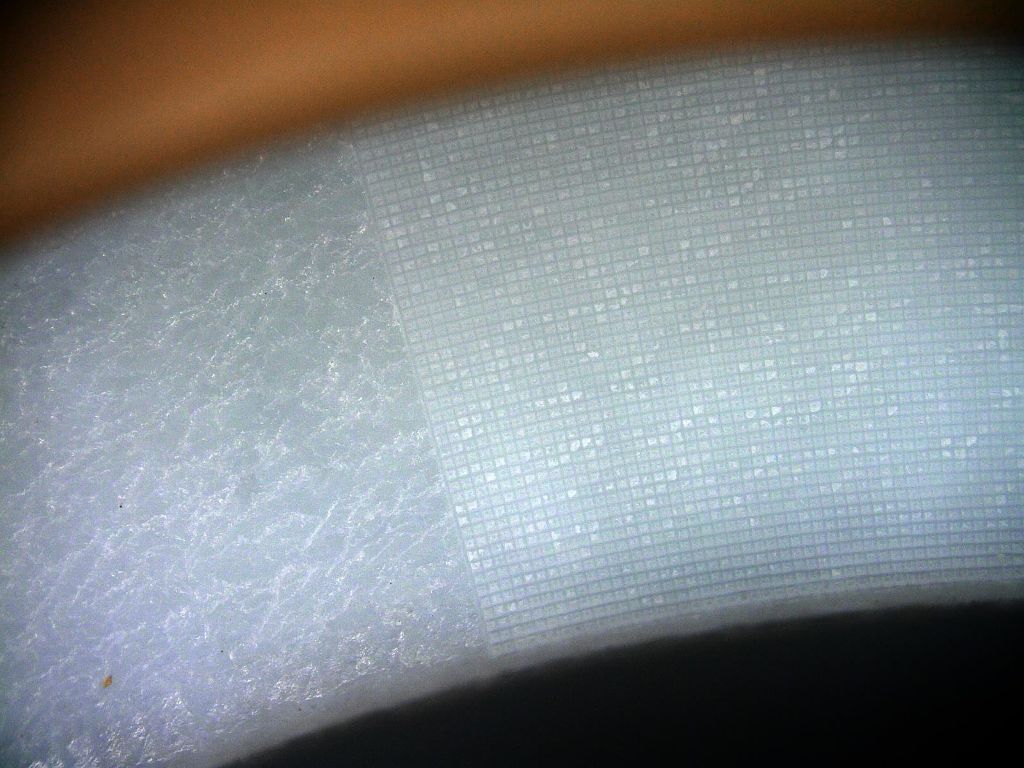
In the projects RePEEK, EPOS, LEMBAS, and pureWaterSeal, the Fraunhofer Institute for Laser Technology ILT develops laser-based processes for PFAS-free high-performance coatings on large metal components, sliding bearings, seals, and sensitive elastomer rollers. Depending on the application, the laser applies layers, locally melts materials, or specifically structures surfaces. It delivers energy precisely, spatially limited, and only for a short time into the component. This allows processing of PFAS-free substitute materials that traditional oven processes can only apply with high energy expenditure or where the necessary heat would damage the underlying component.
The material alone does not solve the problem
»The desire for PFAS-free alternatives initially sounds simple: A critical substance should disappear, and another should take over its function«, says Dr. Samuel Moritz Fink, group leader of thin-film processes at Fraunhofer ILT. »In practice, however, this exchange is significantly more complex. PFAS-containing materials are often located precisely where components are subjected to the greatest stress.«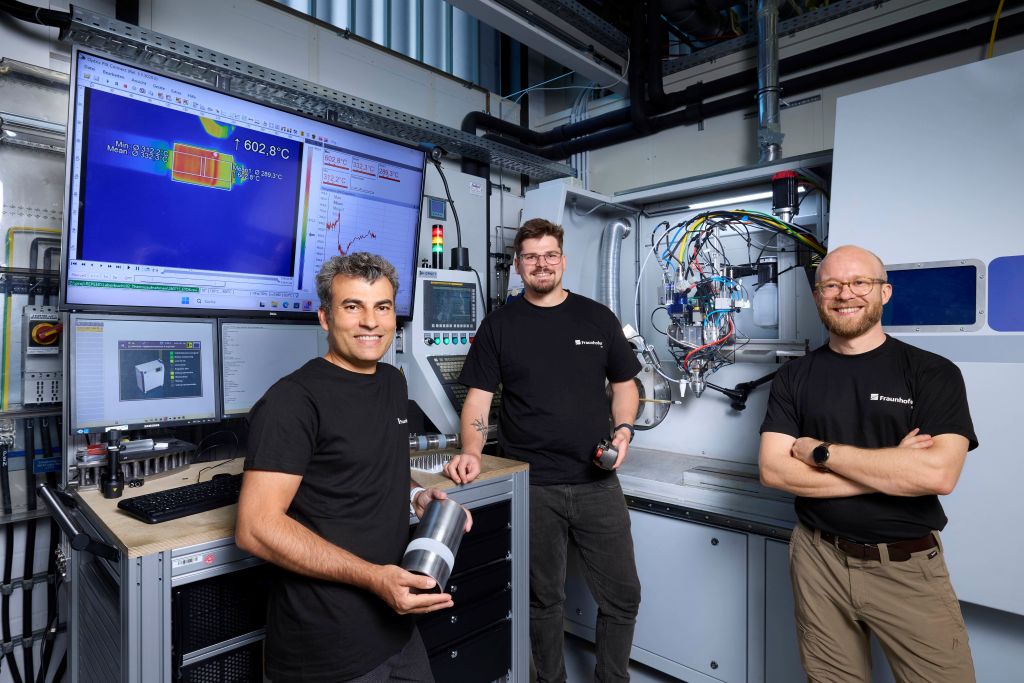
Substitute materials must adhere to metal, plastic, or rubber, withstand high temperatures, not detach under load, and also be economically applied to large components. »A material like polyetheretherketone, or PEEK, is very interesting chemically and mechanically, but it does not automatically achieve all the properties of, for example, PTFE«, explains Fink. PTFE stands for polytetrafluoroethylene. »PEEK is stiffer, more expensive, and depending on the application, more difficult to process. Therefore, for many industrial components, it is not enough to simply choose a different powder, film, or plastic.«
The process is crucial. How is the substitute material applied to the surface? How does it bond with the component? How can it be prevented that a temperature-sensitive material underneath is damaged?
»We do not consider PFAS alternatives as a pure material question«, explains Dr. Christian Vedder, head of surface technology and form removal at Fraunhofer ILT. »Our research focuses on laser-based processes that allow for the targeted construction of innovative layer systems.« Laser processes address precisely where a substitute material does not fully achieve the required properties. They structure surfaces, improve the bond to the component, or locally alter layers without significantly heating the entire component.
RePEEK: PEEK Coatings in Hybrid Process
In the RePEEK project, surface experts investigate how PEEK-based coatings can be applied to metallic components that operate in moving and heavily loaded systems. The focus is on applications from mechanical engineering: large sliding bearings, seals, pistons, and solenoid valves.
The task becomes particularly clear with large sliding bearings, as found in wind turbines: A shaft runs in a coated bearing shell, usually with PTFE-containing layer systems. As the name suggests, RePEEK also relies on PEEK.
»PEEK is often applied as a film or processed as powder and then thermally bonded to large components today«, says Samuel Fink. »This can work for small components. However, for ton-heavy metal components, it becomes cumbersome: The entire component must be placed in an oven, heated to high temperature, and then slowly cooled down again.« The energy expenditure is high, the process takes a long time, and much more material is heated in the end than would be necessary for the actual coating.
The researchers initially create a metallic layer using a laser-based application process. This surface is intentionally rough and provides grip for the plastic. They then apply PEEK powder in the same process environment and locally melt it. The plastic anchors itself in the rough metal surface; thus, a composite of metallic functional layer and PEEK-based top layer is created.
The team has developed a special nozzle technique for the PEEK powder and has already applied for a patent for the process. A cyclone nozzle significantly slows down the gas flow, allowing the powder to hit at low speed instead of bouncing off. This way, the process uses more material, is easier to control, and works more efficiently.
Large sliding bearings in wind turbines often still work with PTFE-containing layer systems. In the RePEEK and EPOS projects, Fraunhofer ILT is developing laser-based processes for robust PEEK coatings as a PFAS-free alternative.
EPOS: Multi-layered PEEK Coatings for Large Sliding Bearings
Further work is already following RePEEK. In the EPOS project, Delil Idris Demir at Fraunhofer ILT investigates how PEEK-based layers can be reliably built up in multiple layers on large-format sliding bearing components. The stepwise application is intended to enable larger layer thicknesses without fully heating ton-heavy components in an oven. ACS Coating Systems brings its many years of experience with PEEK coatings, especially for such sliding coatings. The company has been developing such layer systems since the mid-1990s and now manufactures coatings with thicknesses ranging from a few micrometers to one millimeter. Managing Director Dr. Christoph Stecher accompanies the project with a focus on layer construction, industrial application, and later series production.
The Polymer Service GmbH Merseburg, or PSM, examines and evaluates the resulting layers under the direction of Prof. Dr. Katrin Reincke. The focus is on the crystallinity, microstructure, and thermal state of PEEK, as well as the mechanical and thermomechanical properties. This data is intended to help coordinate the laser process and the multi-layer layer construction so that the coating adheres evenly and withstands the loads in the sliding bearing permanently. EPOS thus connects the laser-based process development of Fraunhofer ILT, the industrial coating experience of ACS, and the materials technology expertise of PSM.
LEMBAS: Anti-adhesion Layers for Sensitive Elastomer Rollers
The LEMBAS project focuses on elastomeric rollers and wheels used in film production, packaging industry, paper production, and medical technology. Particles from the roller surface can quickly become a problem there.
"So far, companies often use silicone coatings for such applications," explains Adam El-Sarout, also from the Thin Film Processes group at Fraunhofer ILT. "While they provide the necessary anti-stick properties, they do not always achieve the durability that modern high-speed processes require." In LEMBAS, the team is developing laser-based processes in collaboration with coating specialist Rhenotherm, using high-performance polymers such as PEEK, polyamide, or polypropylene. These materials are more abrasion-resistant, chemically stable, and longer-lasting than silicone and are completely free of PFAS.
"The technical hurdle lies in the temperature window," reveals El-Sarout. "High-performance polymers require high temperatures when melting. However, elastomers like EPDM can only tolerate this heat to a limited extent. If a rubber roller were completely heated in an oven, the substrate would be damaged." The laser addresses exactly this problem: it generates the high temperature only locally and only for a short time in the coating material. This way, the functional layer melts while the elastomer component underneath remains thermally protected.
To ensure the layer lasts, the researchers are developing an intermediate layer that protects the elastomer and strengthens the bond to the top layer, in addition to the anti-stick material. They are also adapting the optical and rheological properties of the materials to the laser process and investigating suitable methods for application and laser pre-treatment.
"A substitute material must not only fulfill the desired function but also fit the component, the temperature limits of the substrate, and the production process," says Vedder. If this step is successful, the process combines several advantages: less abrasion, fewer product contaminations, less cleaning and solvent use, and significantly less energy consumption than traditional oven processes.
pureWaterSeal: PFAS-free seals for water-based lubricants
In the pureWaterSeal project, researchers from the Fraunhofer Institutes for Laser Technology ILT and for Materials Mechanics IWM are developing sustainable seals that do not rely on PFAS and can operate with water-based lubricants. This addresses two environmental issues: PFAS accumulate permanently in the environment, while oil-based lubricants contaminate soils and waters.
Matthias Laermann, head of the Surface Structuring team at the Fraunhofer Institute for Laser Technology ILT, emphasizes: "In Germany alone, around one million tons of oil-based lubricants are consumed annually. A single liter can contaminate up to one million liters of groundwater. The consequences are polluted soils, contaminated food, and destroyed ecosystems. We are finding solutions that address these challenges together."
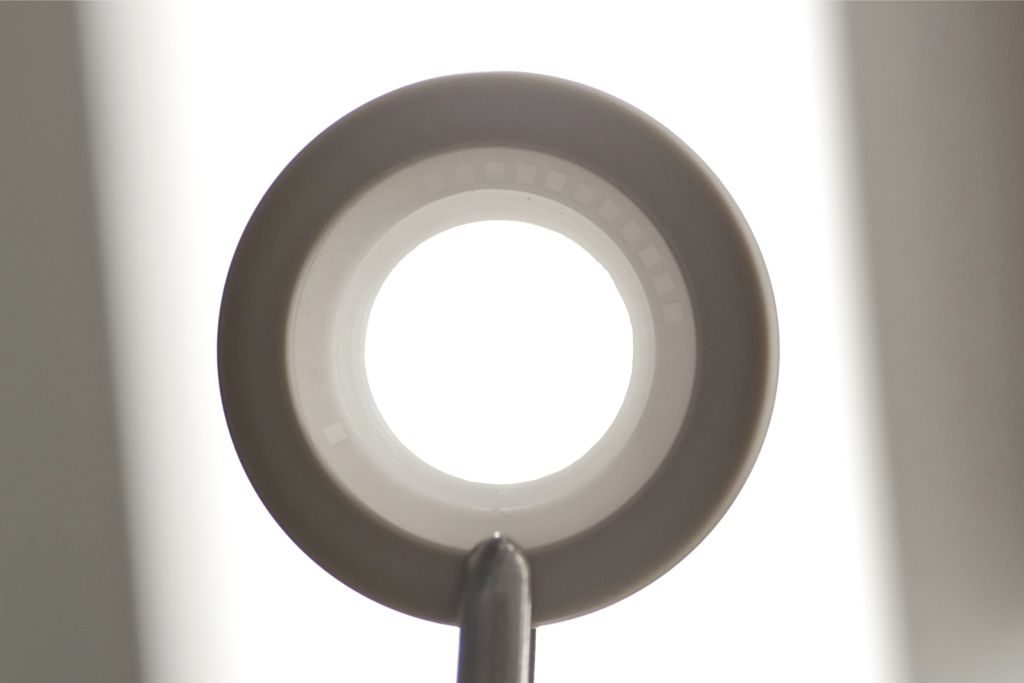
Experts from Fraunhofer IMW developed diamond-like carbon coatings (DLC) designed for PFAS-free plastic components. The Fraunhofer ILT team then structured the coating with the laser, locally relieving internal stresses and mechanical loads without compromising the stability of the entire layer. At the same time, the combination of coating and laser structuring reduces friction, increases wear resistance, and extends the lifespan of the seals.
Initial prototypes are already working in pumps of geothermal power plants. Together with industry partners, the researchers are now adapting the seals for further applications, including uses in cars, ship propellers, wind turbines, and harvesting machines. Meanwhile, the team is preparing for the transfer to larger systems and industrial quantities.
The laser makes the material change feasible
The various projects at Fraunhofer ILT show that the exit from PFAS is not just a material change but also requires suitable manufacturing and surface processes. The laser plays a key role: it applies materials locally, melts them precisely, or structures functional layers without unnecessarily stressing the underlying component.
This creates new opportunities for companies. They do not have to wait for a single substitute solution that covers all PFAS applications. Fraunhofer ILT is developing customized coating systems for different components and requirements in collaboration with industry partners: low-friction surfaces for sliding bearings, abrasion-resistant anti-stick layers for rollers, and PFAS-free sealing systems for water-based lubricants.
Contact: