
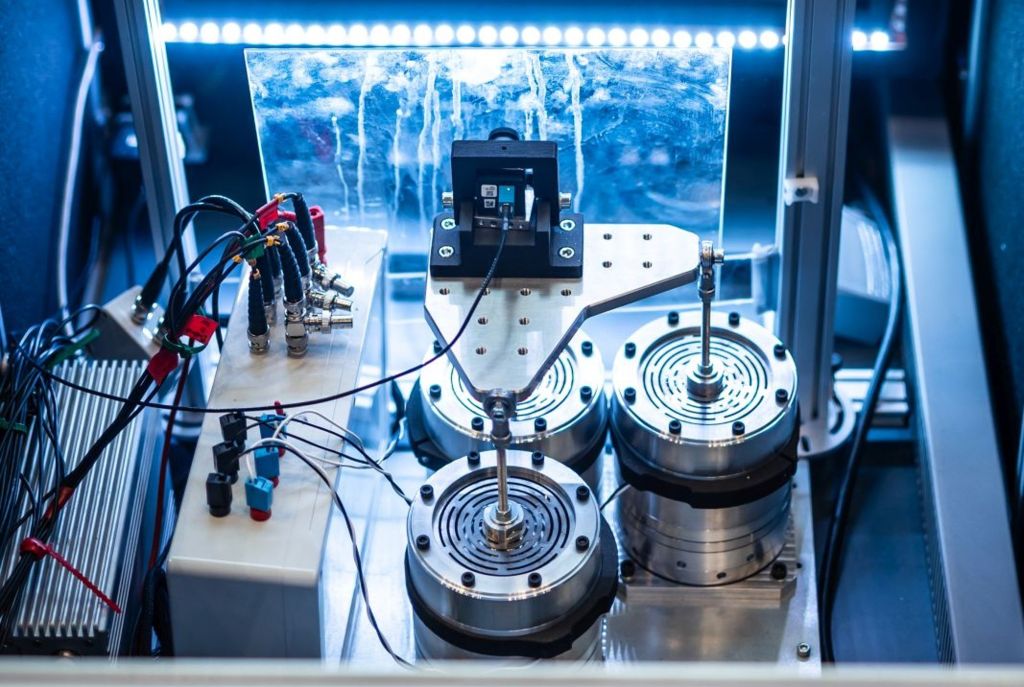
The reliability of AI-based image recognition is ensured through a smart validation environment even under unfavorable conditions – here under strong vibrations. Components and subsystems can be efficiently characterized under various mechanical boundary conditions, e.g., for the simple generation of AI training data. The transfer of developed technologies into the economy is illustrated through various development steps along the stages of technology readiness level (TRL).
Artificial Intelligence, Vibration Reduction, Sensor Technology
Innovative applications integrate new and autonomous functions – they are smart. Methods of artificial intelligence process input variables, such as camera or other sensor data, often based on previous training of the respective method. These new applications lead to challenges in testing, validation, and characterization of systems. The Fraunhofer Institute for Structural Durability and System Reliability LBF develops technologies and methods to meet these challenges, improve existing processes, and enable new applications and products.
Insight into Development Methods and Technology Transfer
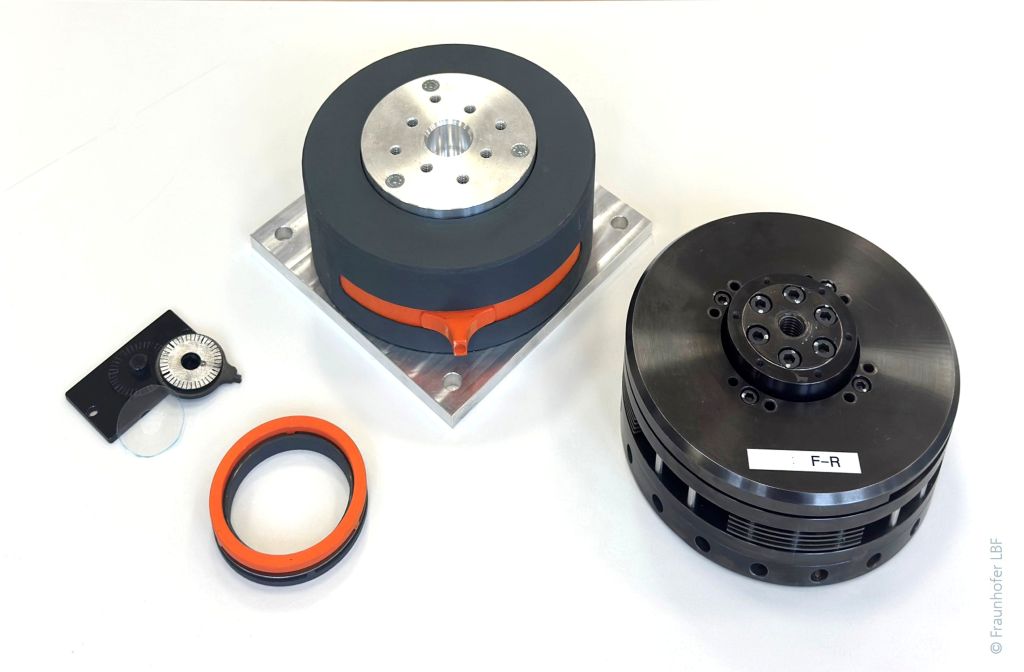
On one hand, Fraunhofer LBF presents a validation environment for AI-based image recognition under vibration effects on the camera. If effects occurring in reality, such as vibrations of the camera, are not considered in the training of the method, it can lead to misclassifications during its use. Similar challenges arise when a system is to be experimentally tested or characterized for different boundary conditions and operating environments.
In a second exhibit, researchers from Darmstadt demonstrate the path from the first idea through communication prototypes to technology transfer via licensing or spin-off based on two technologies. This involves adjustable stiffness, which has been developed up to TRL 7 in various applications and can be licensed. Additionally, the path of the also licensable DELTA-C® technology from the idea through functional prototypes to the force-measuring washer as a product of a spin-off is shown.
The Fraunhofer Community for Smart Systems offers many years of expertise and know-how in interdisciplinary research and development of smart systems and jointly explores new dimensions for reliable, trustworthy, and secure applications with its customers.
Fraunhofer Institute LBF at HANNOVER MESSE, Hall 2, Stand B24.
Contact: