
Low water levels on the Rhine, Danube, and Elbe are severely affecting inland shipping and have increasingly evident impacts on economic development the longer they persist. Further deepening of navigation channels is controversial due to its ecological impacts, a shift of heavy transport back to the road is not possible for many goods and would particularly burden heavily loaded bridges and sections of roads in need of repair. It is more sustainable to focus on ship construction: reduced weight means less draft and thus the option to transport goods even when other ships are at risk of running aground.
For example, ship walls and decks could achieve significant weight savings in sandwich construction, increasing the payload capacity by up to 30 percent compared to the net ship weight in low water conditions – or tolerating lower water levels with the same payload.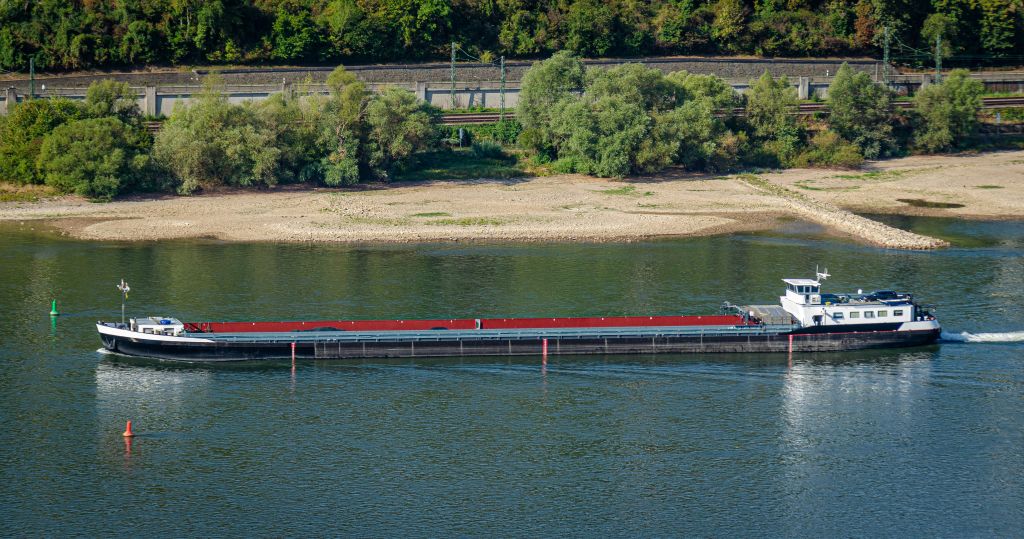
Sandwich construction with lightweight aluminum foam core
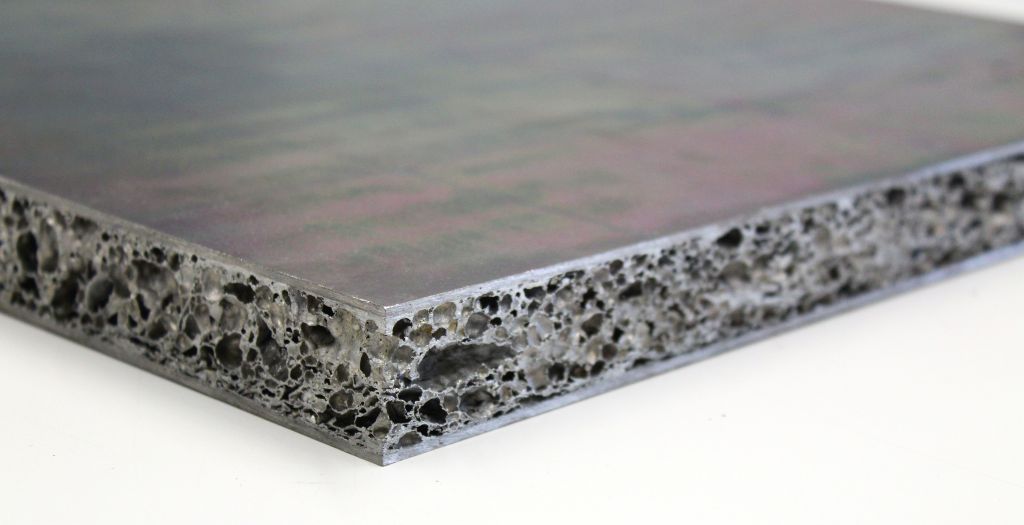
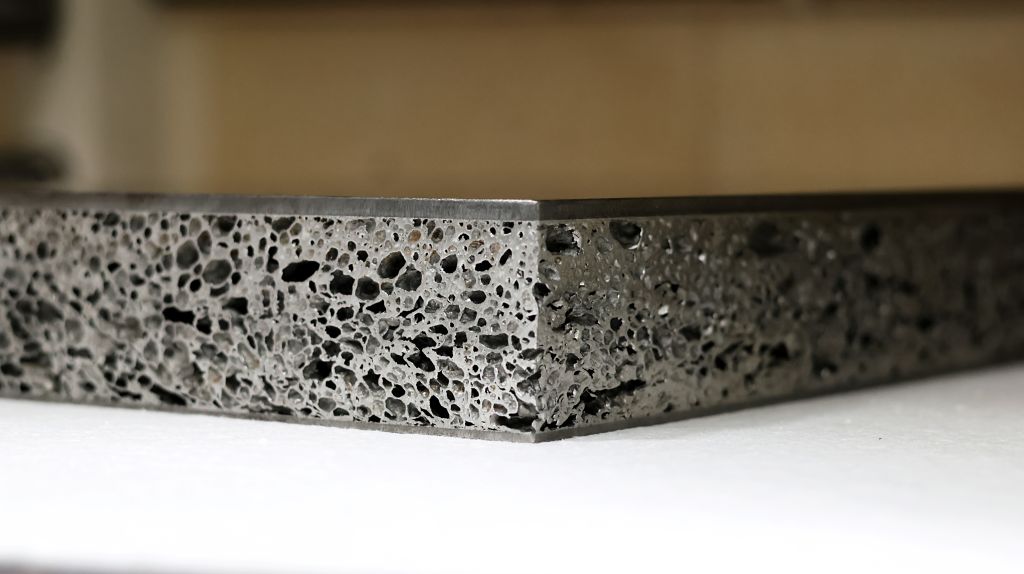
In such a sandwich construction, aluminum foam is placed between two thin steel or aluminum plates. Aluminum foam is an ultra-lightweight metallic structural material with a density significantly below one gram per cubic centimeter. The basic principle of producing aluminum foam is similar to whipping up a cake batter:
An aluminum powder is mixed with a blowing agent powder (e.g., titanium hydride) that releases gas when heated, usually hydrogen. The resulting gas bubbles distribute in the liquid aluminum and expand it into a foam-like structure. During the foaming process, the aluminum foam bonds with the metallic cover plates in a metallic bond. No adhesive is needed for composite manufacturing – a significant advantage for later recycling. The foam is then cooled and solidifies, ensuring that the porous structure is permanently maintained.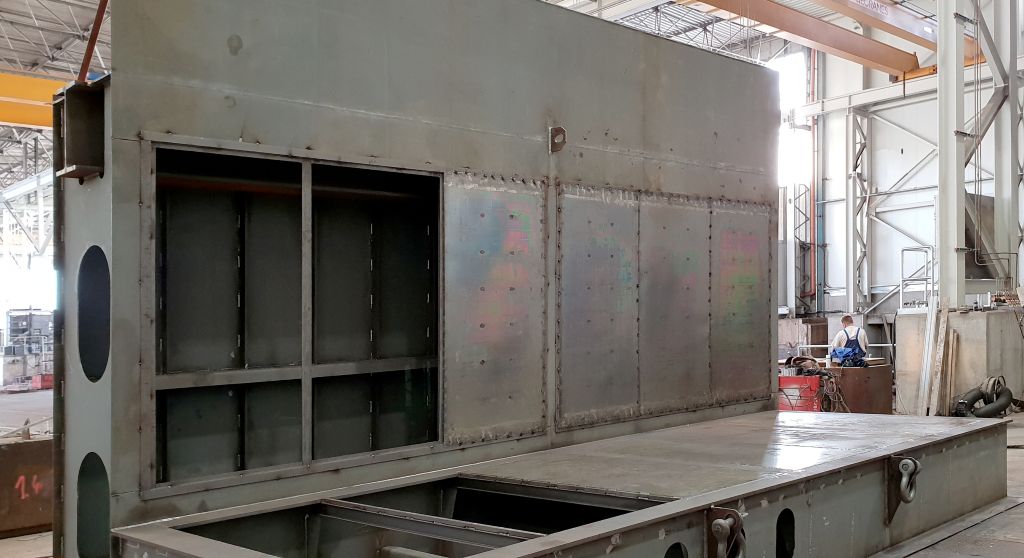
The result is a material with many enclosed pores that is very lightweight. At Fraunhofer IWU, constructions with aluminum foam are being developed, for example, for machine tools or housings of traction batteries in electric cars.
Dr. Jörg Hohlfeld, head of the metal foam group at Fraunhofer IWU, emphasizes that such sandwiches are also ideally suited for ship outer skins and superstructures:
"With about 30 percent less weight compared to conventional shipbuilding steel, they are by no means inferior to existing steel plates in terms of stiffness." 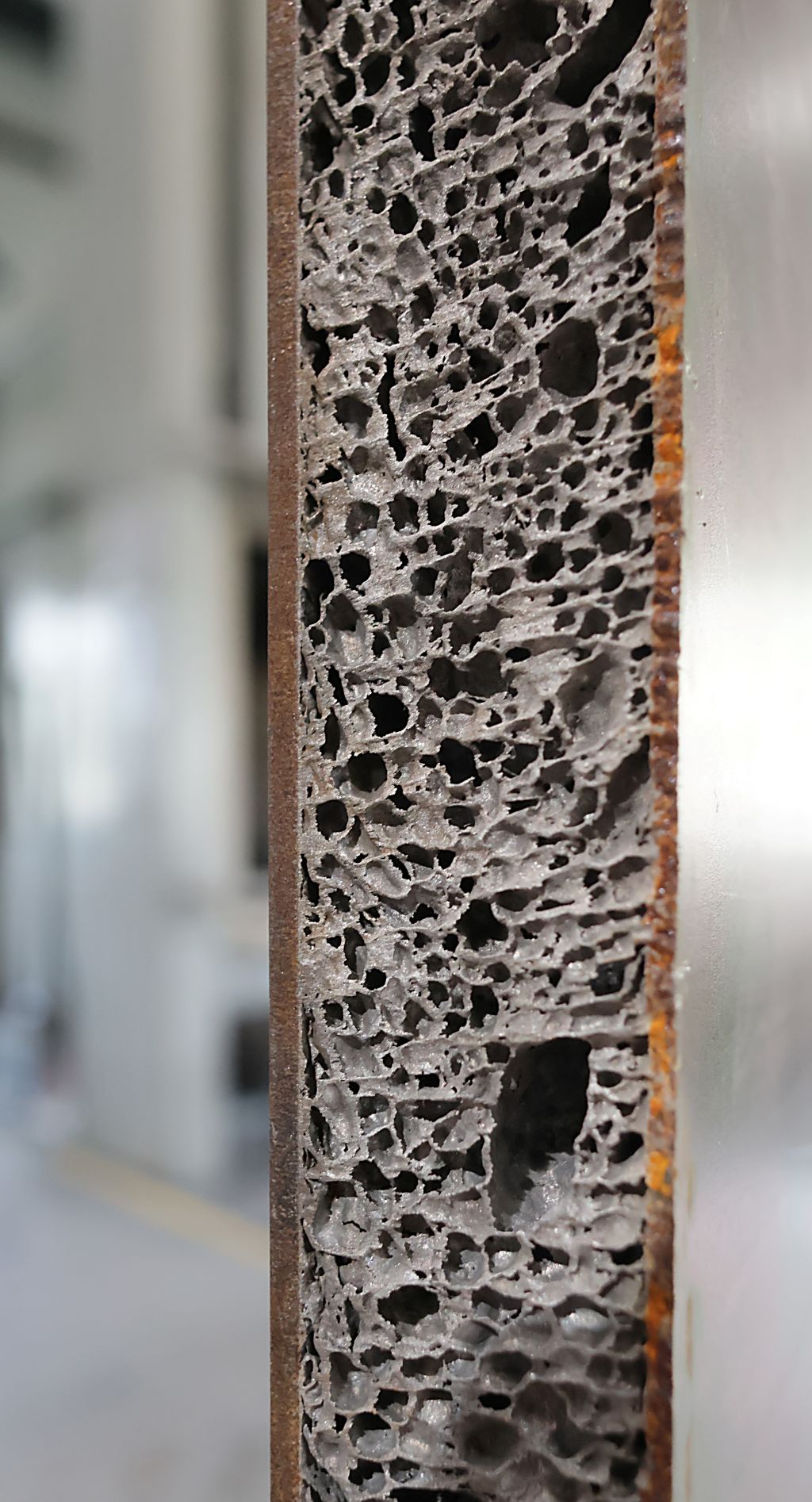
The lightweight and shear-stiff aluminum foam core serves to maintain a constant distance between the sheets and thus preserve the bending stiffness of the sandwich. The outer sheets absorb the applied loads and transfer them. From a manufacturing perspective, the researchers see no insurmountable hurdles: the uniform distribution of the pore structure in the foam core is now well manageable even with large-volume components, and reproducible properties can be ensured. The sandwiches can be prefabricated in larger dimensions (e.g., 2.0 m x 1.5 m) and joined into large assemblies using common welding processes (e.g., MAG).
Somewhat higher material and process costs in the production of sandwiches compared to conventional steel plates are likely to be more than offset in shipbuilding by the economic and ecological advantages – as periods of low precipitation and low water levels have significantly increased in recent years.
Contact: