
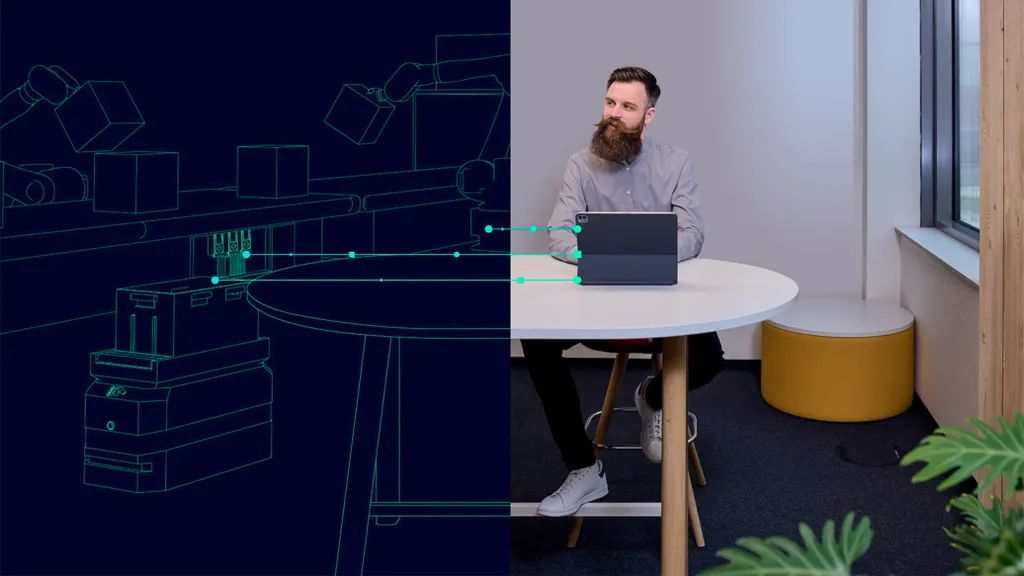
Siemens makes software-defined automation accessible to a broader range of users in the industry and expands the IT-like engineering tool Simatic AX Logic Control Engineering (LCE) with new features: a contact plan programming called XLad – the first graphical programming language in Simatic AX LCE – as well as support for the Simatic S7-1200 G2 controller generation. These innovations combine the programming common in Operational Technology (OT) with modern IT workflows. They help engineering teams work more effectively and open up new application areas for fundamental automation projects where cost efficiency is crucial.
IT-like engineering becomes accessible for OT users
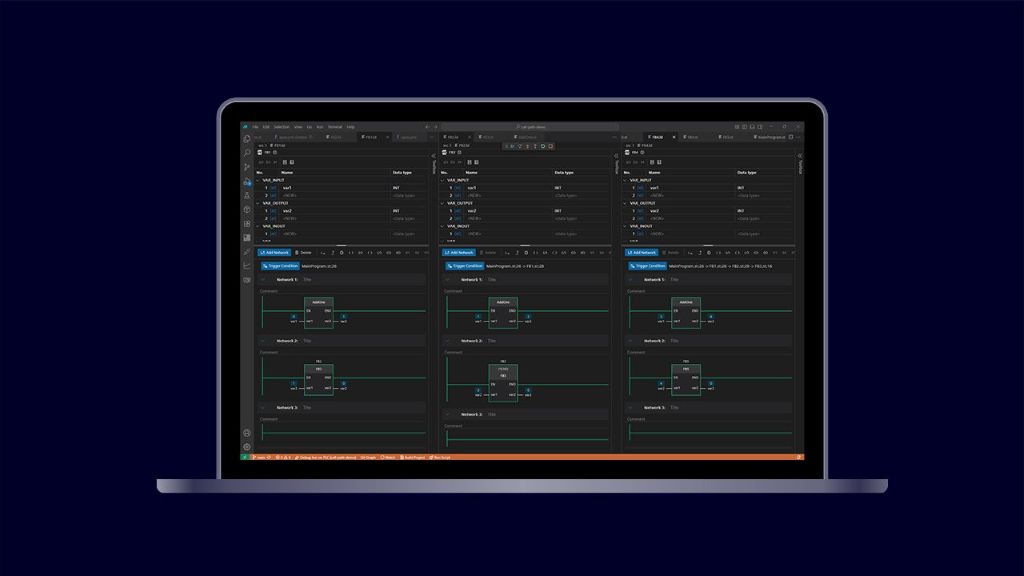
Previously, Simatic AX LCE was designed as an engineering environment that was entirely based on Structured Text (ST), primarily tailored for software automation engineers. With the addition of contact plan programming (ladder programming) in Simatic AX, Siemens now enables service and maintenance technicians as well as engineers with a preference for graphical logic representation to work more intuitively with control programs. This reduces onboarding time, simplifies troubleshooting, and improves collaboration between OT and IT teams.
"With the introduction of ladder programming in Simatic AX Logic Control Engineering, software-defined automation becomes accessible to more user groups from the OT world. We are increasingly connecting the digital with the real world," said Rainer Brehm, COO for Automation and CTO at Siemens Digital Industries. "This makes engineering, maintenance, and collaboration more efficient."
Modern software workflows for industrial automation
XLad is the first text-based contact plan programming tool integrated into Simatic AX Logic Control Engineering. It brings software development methods such as version control, automated testing, and continuous integration into the realm of contact plan programming. With integrated support for Git and CI/CD workflows (Continuous Integration and Continuous Delivery/Deployment), users can manage changes to contact plans more transparently, collaborate more effectively in teams, and enhance software quality in engineering.
The seamless interaction of XLad with Structured Text (ST) allows users to reuse libraries created in ST by integrating them into contact plan applications. The object-oriented programming principles and the intuitive readability of contact plans make it significantly easier to implement complex control logic clearly and efficiently.
Bidirectional programming plus AI-capable and human-readable code
Furthermore, XLad supports bidirectional programming: users can switch between a graphical view and a text-based editor depending on workflow preference. The textual representation is both human-readable and ready for artificial intelligence deployment. This lays the groundwork for future engineering with AI, such as AI-assisted development of control logic. Additionally, the text-based representation serves as the basis for simple version management with Git.
New application cases with expanded hardware support
At the same time, Siemens expands the hardware scope of Simatic AX Logic Control Engineering to include the Simatic S7-1200 G2 controller. This opens up a new spectrum of projects that can be implemented with Simatic AX LCE. Previously, Simatic AX exclusively supported Simatic S7-1500 controllers. Now users can also use Simatic AX LCE for the engineering of decentralized, fundamental control logic.
Siemens presents these innovations at the Automate trade show in Chicago, USA, from June 22 to 25. There, the company demonstrates how software-defined automation can be made more practical, scalable, and accessible for a variety of industrial applications.
Contact: