An orange robot from KUKA recently shared the stage with NVIDIA CEO Jensen Huang at NVIDIA's AI conference GTC. Huang is the founder and CEO of the world's most valuable publicly traded company. His keynote made one thing clear: Industrial automation is entering a new phase. In manufacturing, AI systems will no longer just analyze and make predictions, but will perceive the physical world, make decisions, and act independently.
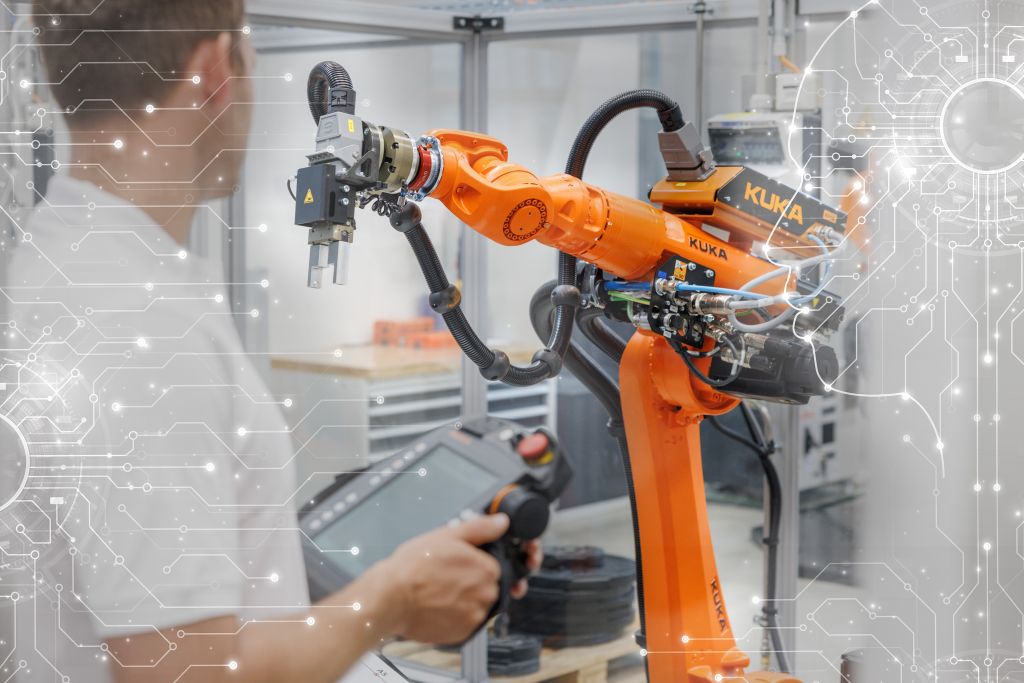
Physical AI and advanced robotics are rapidly becoming key factors in modern manufacturing, global supply chains, and industrial services – boosting both productivity and competitiveness. This transformation is accelerated by technological breakthroughs in highly scalable AI models that can flexibly expand to ever-larger data sets, simulation-driven innovation, and powerful computing architectures ranging from end devices to edge systems to data centers.
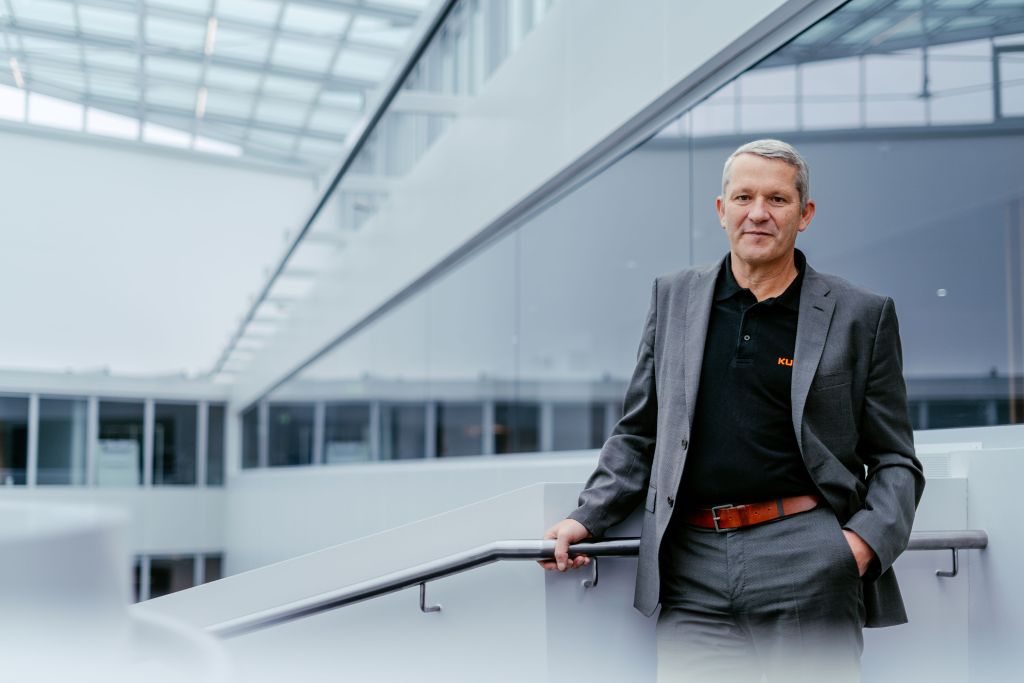
As a global automation company, the KUKA Group plays an important role in this transformation. KUKA Group CEO Christoph Schell says: "Robots and automation systems are evolving from programmable machines to intelligent contributors that learn, adapt, and can safely work alongside humans."
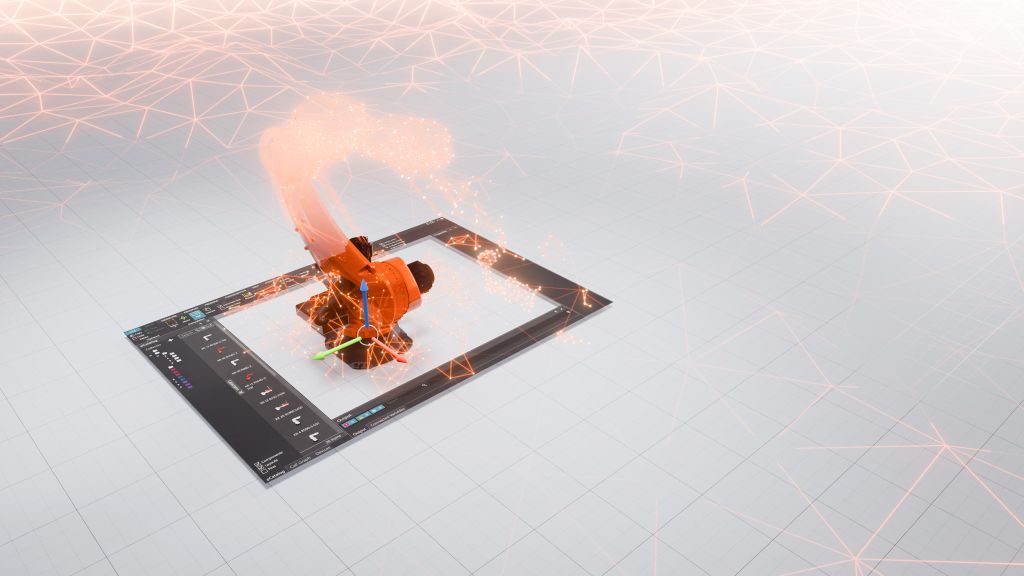
With new open software platforms like KUKA AMP, which connect traditional deterministic automation – such as rule-based, pre-programmed systems – with intent-based automation, the path from idea to deployment becomes faster, more precise, cost-efficient, and autonomous." KUKA publicly introduced its new Automation Management Software platform 'KUKA AMP' for the first time at NVIDIA GTC.
From Automation 1.0 to Physical AI
With this advancement of the technology stack, which is the combination of software, programming languages, tools, and platforms, the company known for its deep manufacturing expertise is enhancing its solutions with intent-based capabilities and Physical AI – across robotics, system integration, warehouse management, healthcare automation, and simulation.
Intent-based systems translate the desired outcome of a user into automated decisions and actions. The technology determines how a goal is achieved on its own, rather than requiring humans to specify every single step. KUKA is positioning itself to further expand its global leadership role in the age of Physical AI – or as KUKA calls it: Automation 2.0.
In today's prevailing classical, rule-based automation – Automation 1.0 – markets are more competitive than ever. Some long-time automation customers, particularly from the automotive industry and other sectors, are significantly reducing their investments. At the same time, international customer demand and production locations are shifting. "On the way to Automation 2.0 and Physical AI, Automation 1.0 remains essential – for KUKA and for the entire industry," says Schell. "Proven, rule-based automation continues to provide the stability and productivity our customers rely on, especially in high-volume and safety-critical environments. We are not replacing it. We are enhancing it with intent-based and AI-driven capabilities. Automation 1.0 remains the backbone, while Automation 2.0 adds new flexibility. KUKA will remain a key player in both areas."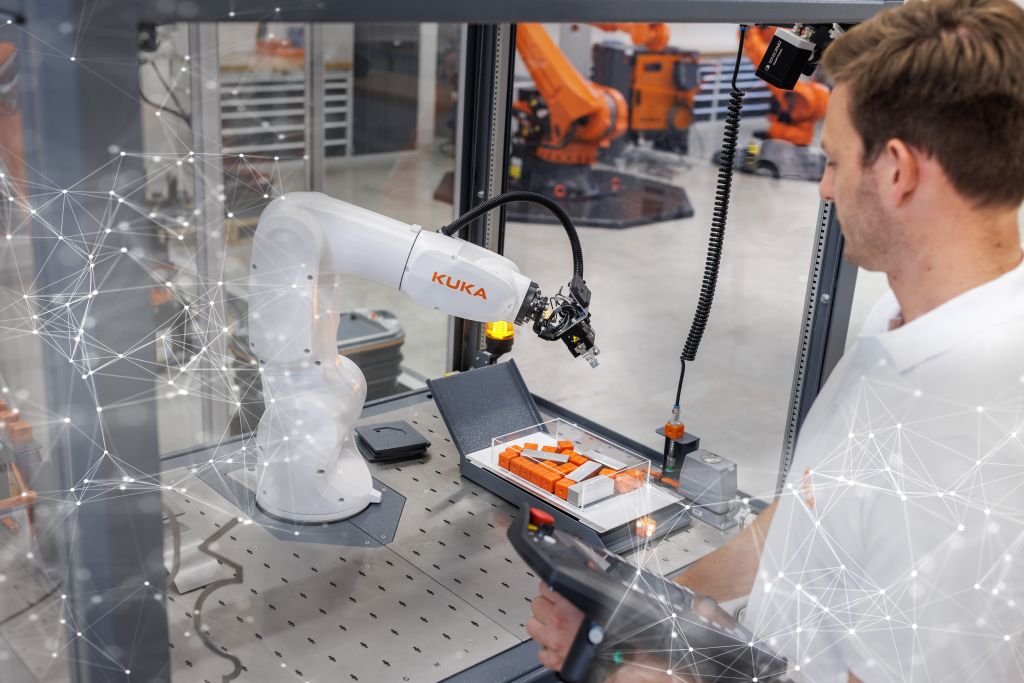
At the same time, technological disruptions and growth potentials are attracting investments from a growing number of new and established providers of robotics and automation systems. In this complex environment, the strategic realignment is already reflected in business development: The KUKA Group achieved a profitable revenue growth of four percent in 2025 and recorded an increasing order intake.
KUKA Group Accelerates Innovation with Record Investments
The KUKA Group began its strategic realignment last year after Christoph Schell took over as CEO. "We are consistently advancing our strategic direction. Our growth areas – intelligent automation and software- and AI-defined infrastructures – are developing dynamically and form a solid foundation for sustainable success. Our modular production platforms are leading the way," Schell continued, adding: "Looking to the future, we expect a decade of profound technological transformation. Cost reduction initiatives, software and AI, as well as shifts in geographical significance will be key drivers for the future success of the KUKA Group," said the technology manager.
In 2025, the KUKA Group invested 213 million euros in research and development – the highest amount ever in the company's history. At the same time, the company is now more globally balanced than ever: Revenue was distributed evenly last year across the regions of EMEA (Europe, Middle East, and Africa), America, and Asia-Pacific.
China remains the largest robotics market in the world, accounting for more than 50 percent of global demand. In this highly competitive environment, the KUKA Group has further strengthened its market position and is now among the two leading providers. For the first time in the company's history, revenue from the China business exceeded one billion euros – a clear signal of the growing strategic importance of the region.
Global Expansion with Innovation Centers Across Asia
At the same time, the company is further expanding its global presence – most recently with one of several new training, research, and application centers in Central Vietnam, established in partnership with the University of Da Nang. In India, one of the fastest-growing automation markets in the world, the KUKA Group is systematically expanding its market presence to participate in the strong medium- to long-term industrial growth of the country.
In the USA, KUKA has established a Software and AI Center of Excellence in Silicon Valley. The team is led by Marc Fleischmann and includes Melonee Wise, an award-winning robotics pioneer who is now working for the global automation corporation and presented KUKA AMP at NVIDIA GTC.
For customers, this means: a central automation partner that integrates hardware, software, and digital solutions – from industrial and mobile robots to simulation, shuttle systems, cranes, warehouse solutions, and healthcare automation. KUKA offers seamless end-to-end automation that can be implemented, scaled, and operated more easily worldwide. Additionally, the company operates complete production facilities and automated contract manufacturing on behalf of customers and offers – depending on the industry – Robots-as-a-Service models. CEO Christoph Schell says: "We are among the very few global providers that deliver industrial end-to-end automation solutions from a single source."
Contact: