
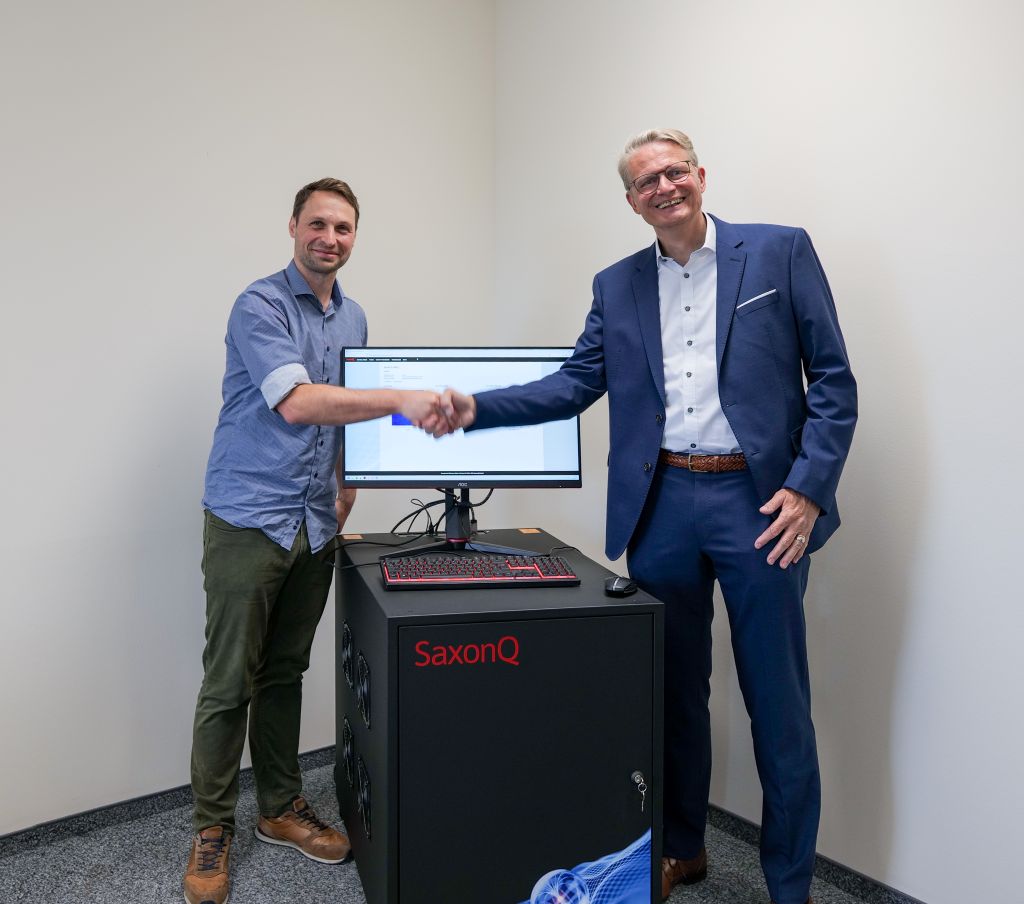
The first comparatively compact, transportable quantum computer in Saxony and one of the first worldwide that operates at room temperature: Since June 11, a new 4-qubit quantum computer has been working at the Dresden branch of Fraunhofer IWU. The device is available to the Saxon Research Network for Quantum Technologies (SAX-QT), which involves several Fraunhofer institutes, universities, and colleges, for the exploration of new application areas of quantum computing. The IWU itself will primarily use the new computer for the further development of Industry 4.0 solutions for a self-controlling, human-learning (cognitive) production. With the institute's close ties to the manufacturing industry (automotive, aerospace, machinery, and plant engineering), industrial partners will also benefit.
Quantum computers are fundamentally many times more powerful than conventional computers and could solve highly complex tasks in many areas in the future – tasks that would either overwhelm the computing power of today's computers or are not economically feasible with 'classical' computers. The development of quantum computers is still in its infancy; the devices are bulky, expensive to acquire, and usually only operate under laboratory conditions at temperatures below -270 °C.
The quantum computer sourced from the Leipzig startup SaxonQ is designed as one of the first devices suitable for industrial use and is compactly constructed. The processors of the mobile box operate without cooling and complex infrastructure and are insensitive to disturbances. The qubits, the computing units of the quantum computer, are generated on a diamond chip just a few millimeters in size.
Science and industry expect significant increases in performance and energy efficiency from quantum technology. Simply put, today's (digital) computers must calculate each operation sequentially (one after the other) with 0 and 1, while quantum computers can explore all (possible) options in parallel (simultaneously). This results in fascinating new possibilities for data processing with drastically reduced energy consumption. Not only AI applications, which demand enormous sequential computing power from today's computers, could be operated in a significantly more environmentally or climate-friendly manner in the future.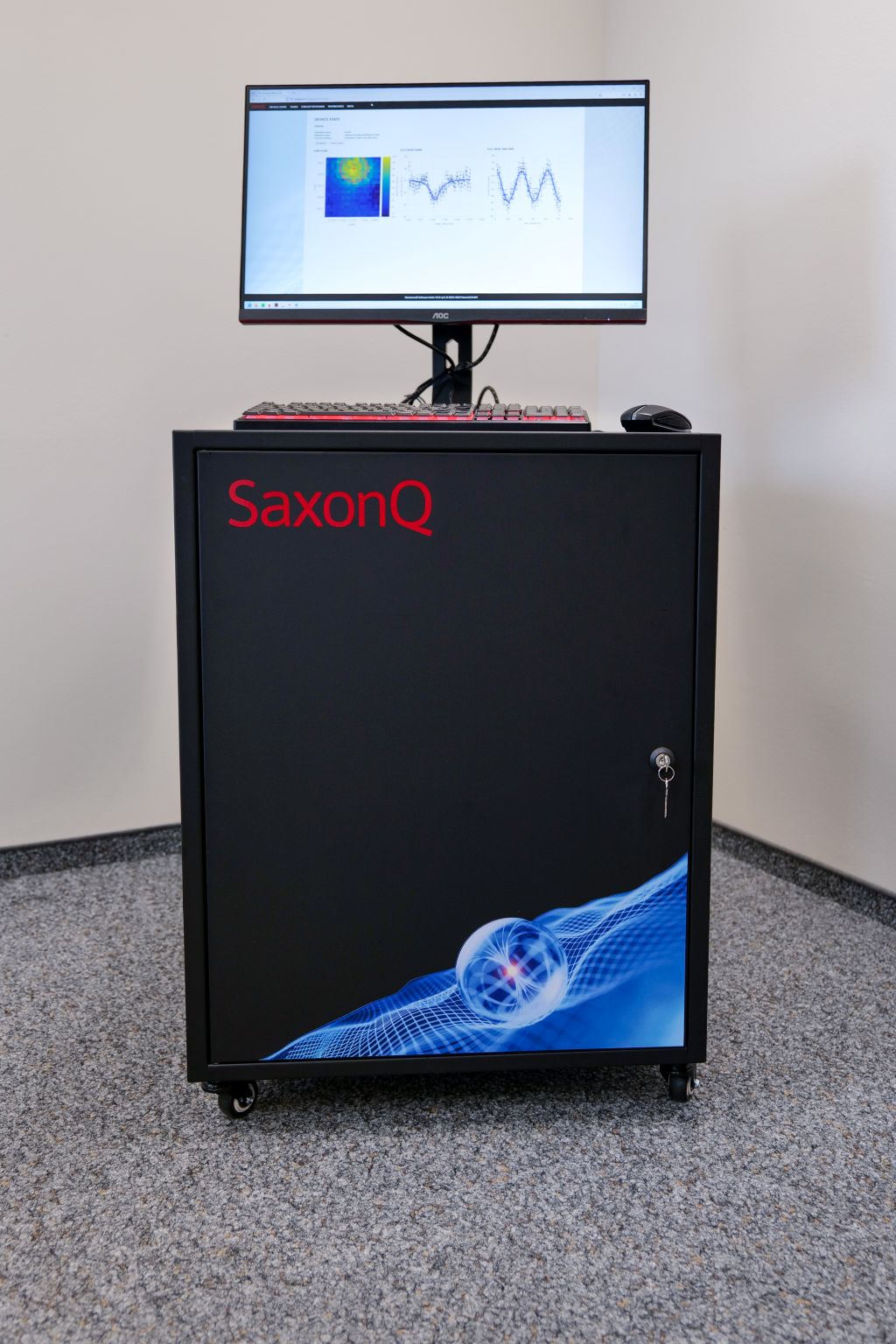
The new quantum computer will give an additional boost to the Saxon Research Network for Quantum Technologies (SAX-QT). In SAX-QT, the Fraunhofer IWU and IPMS institutes, in particular, collaborate with the Zittau/Görlitz University of Applied Sciences (HSZG) and the Leibniz Institute for Solid State and Materials Research (IFW) Dresden on innovative quantum technologies and quantum materials. SAX-QT brings together the competencies of the participating network partners in the field of quantum technologies to promote regional and European technological sovereignty in this area.
Fraunhofer IWU already offers training on quantum computing for all interested parties from industry and research who wish for an easy entry into the world of quantum computing.
Contact: