
How Fraunhofer ILT is transforming industrial processes with synchrotron radiation
In the interdisciplinary 'Laser Meets Synchrotron' team at the German Electron Synchrotron (DESY) in Hamburg, the Fraunhofer Institute for Laser Technology ILT and RWTH Aachen – Chair of Laser Technology work closely together; they research fundamental scientific questions that lead to industrial innovations. The consortium also includes Friedrich-Alexander University Erlangen-Nuremberg, the University of Stuttgart, Ilmenau University of Technology, and Vienna University of Technology.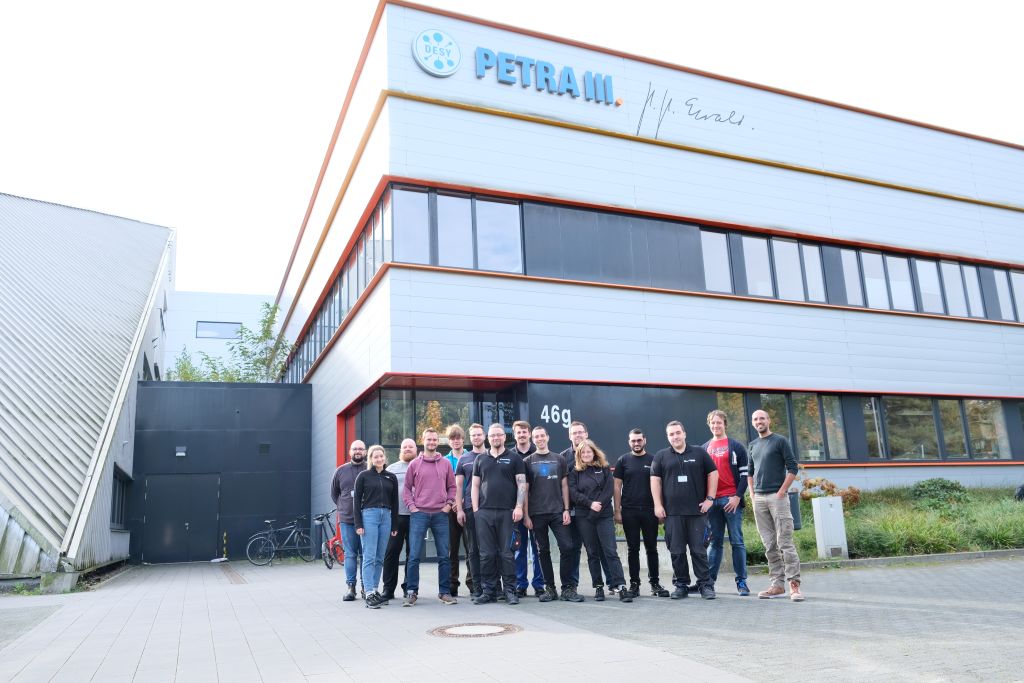
Project leader Christoph Spurk from RWTH Aachen coordinates the transport and setup of the systems, lasers, and optical components and distributes tasks to specialists from the fields of physics, IT, materials science, and mechanical engineering. The research team operates in a three-shift system 24/7 and conducts a total of 700 different experiments over seven days. These penetrate industrial laser processes such as welding, drilling, and cutting with the aim of better understanding material properties and behavior and ultimately optimizing processes.
'With synchrotron radiation, we can visualize realistic laser processes in real-time at DESY, observing steam bubbles, melting movements, or the formation of pores,' explains Spurk.
Precision in real-time: Optimized laser processes for industry and research
The research results show that by deliberately adjusting the laser settings, a significant reduction of stress cracks is possible, porosity can be minimized, and electrical conductivity can be increased. Steam bubbles and melting movements, which often lead to defects, have been visualized in high resolution for the first time, enabling the optimization of welding processes for high-performance batteries.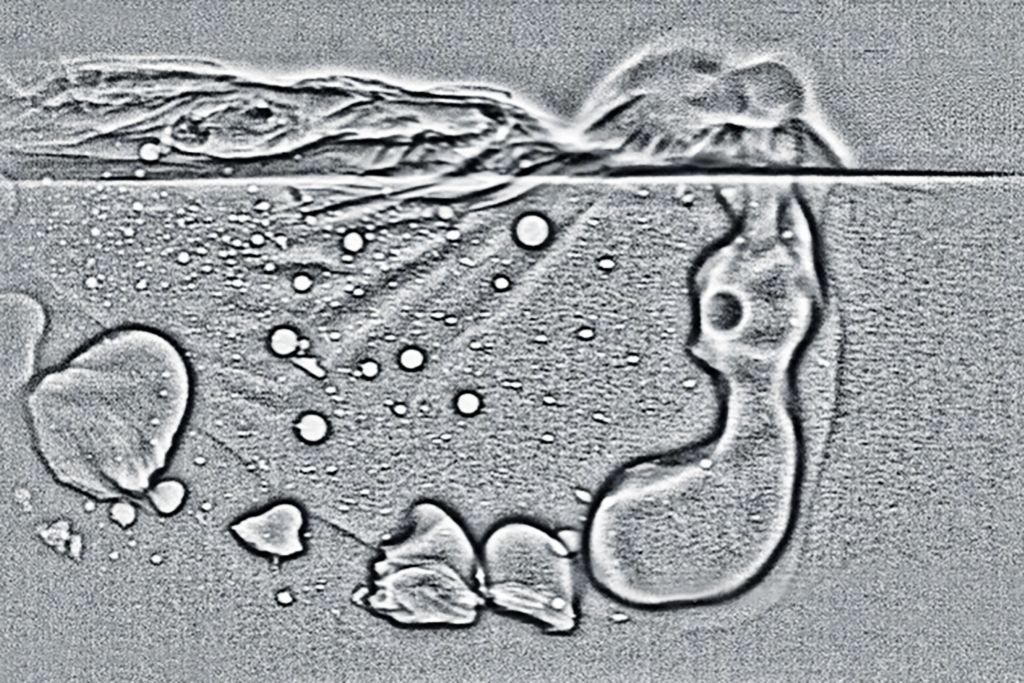
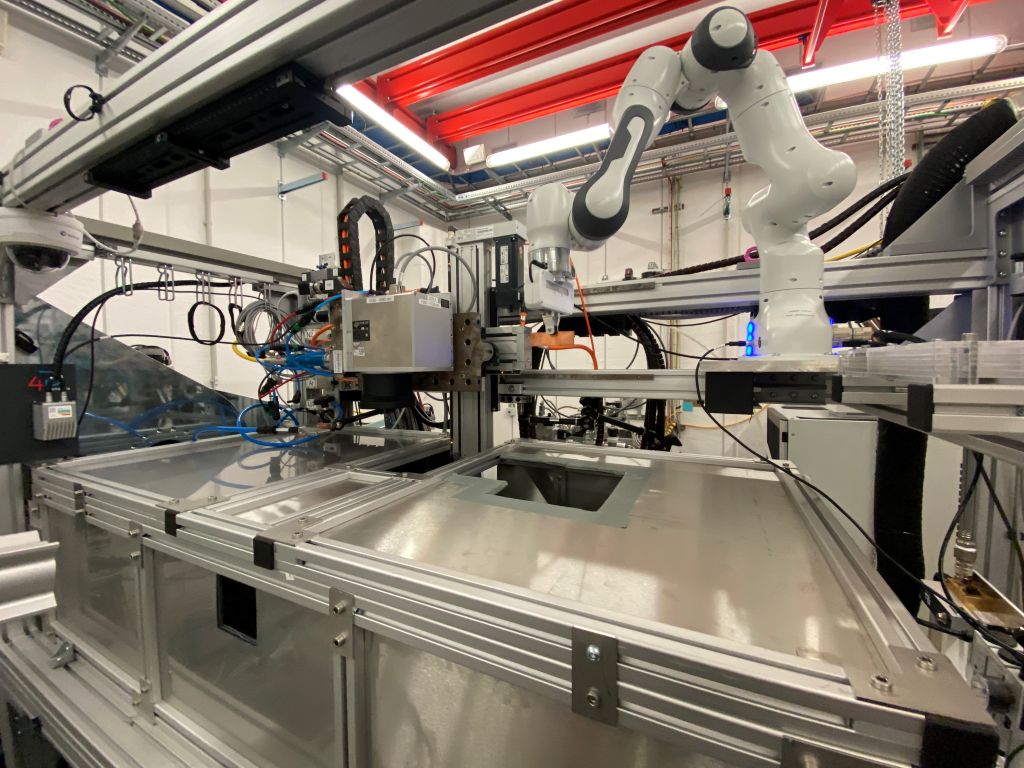
With their outstanding brilliance and intensity, synchrotron radiation enables investigations with a resolution in the micro and even nanometer range, providing insights into fine material structures and dynamic processes. Optical systems focus the laser radiation precisely on the materials; high-speed cameras are used for visualization, achieving frame rates of up to 50,000 frames per second – Spurk and his team are already working on a system that aims to reach 200,000 Hz in the future. For phase contrast visualization, the team uses scintillators that convert X-rays into visible light.
If the contrast is still too low, researchers add tungsten or tungsten carbide particles to the material. The particles appear as black dots in the images and provide information about the melting movement.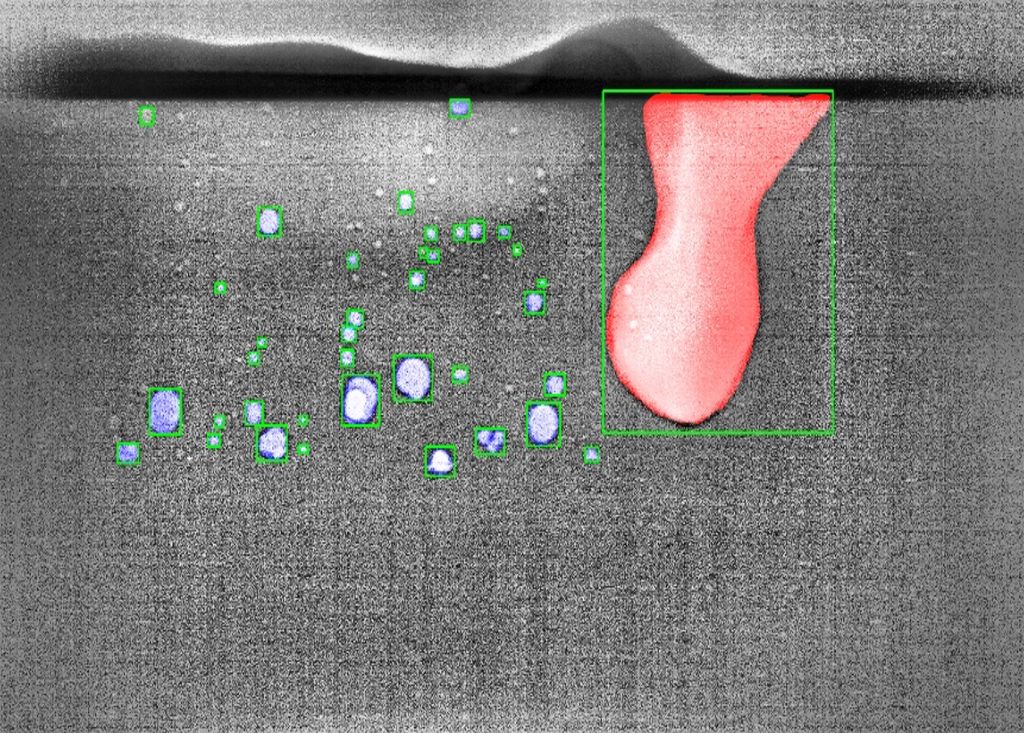
In sectors such as automotive, aerospace, hydrogen technology, or microelectronics, flawless welding of copper or aluminum connections is essential, as is the case for metal and plastic connections. Only through real-time visualization can the smallest material defects be identified, which would not be visible with conventional methods.
Innovative material connections: New perspectives for electromobility, aerospace, and microelectronics
'Investigating complex material combinations like copper-aluminum connections is extremely important for electromobility, where they are used in high-performance batteries and other critical components,' explains Dr. Alexander Olowinsky, head of the Joining and Separation department at Fraunhofer ILT. 'Thanks to the data obtained at DESY, such connections can be manufactured with higher strength and reliability. In the field of lightweight construction, we are also investigating other structuring processes, and the results flow directly into the development of new technologies.'
Synchrotron radiation enables early detection of stress cracks and unwanted structures in aluminum-titanium connections in the aerospace industry and optimizes the manufacturing process. Additionally, laser powder welding of nickel-based superalloys for turbine blades is improved with the help of high-speed recordings. In microelectronics, high-precision connection processes are essential. Analyzing melting movements in ultra-thin copper traces helps avoid short circuits and material fatigue, which is particularly important for the production of semiconductors and printed circuit boards.
From Big Data to Smart Data: Precise analyses for industrial innovations
The expertise of the 'Laser Meets Synchrotron' partners plays a key role in utilizing this technology. The data obtained require specialized analyses that are only possible with in-depth know-how and dedicated software – the research team returns to the institutes with up to 50 terabytes of data.
'Our strength lies not only in conducting these experiments but especially in understanding and interpreting the results, processing the complex data, and making it usable,' explains Christoph Spurk. 'We turn Big Data into Smart Data.' This is only possible with the interdisciplinary orientation of the team; only in this way can the data obtained at the synchrotron be transferred into practice.
The economic benefit for customers and partners goes far beyond process optimizations: The data and insights gained form the basis for entirely new business models, such as in the field of data-driven material development. This allows companies to develop tailored materials for specific applications based on precise analysis results, giving them a significant competitive advantage. Companies like Audi, Bosch Research, and Denso have been able to make their production processes more efficient and shorten development cycles through collaboration.
Contact: