
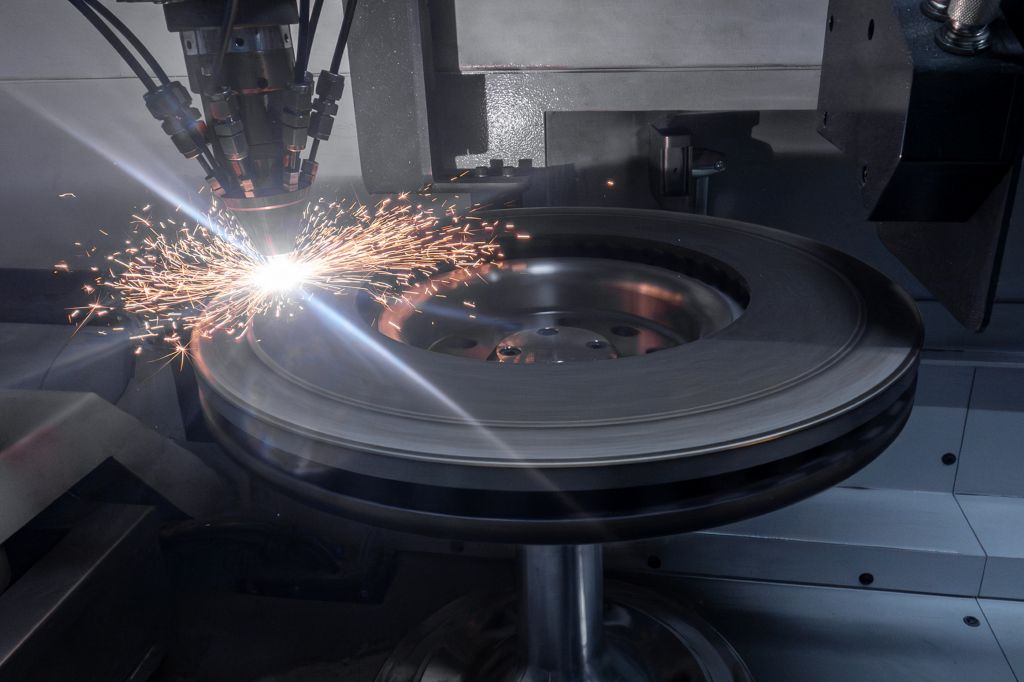
The EURO-7 standard will massively change automotive manufacturing: For the first time, not only emissions from combustion engines but also brake wear will be regulated. Initial conclusion: The fine dust generated must significantly decrease in many models. As a result, OEMs and suppliers are looking for a new solution for the braking system, with coated brake discs currently proving to be the optimal solution for this task. But how can the various coating systems be applied reliably and efficiently within the framework of high-volume production? EMAG offers the right answer to this question: A series-ready complete solution for the coating of brake discs via laser cladding – which has already proven itself in production. But what are its specific features?
The problem is as simple as it is quickly explained: Conventional braking systems produce too many fine dust particles from the EU's perspective, with the new limits of the EURO-7 standard leading to a significant technological 'gap' between the fine dust emissions of current and future models. The upper limit for all new vehicles is now only 7 milligrams of fine dust per kilometer – today, a passenger car emits up to 40 milligrams depending on the model.
This change poses a development challenge, especially for manufacturers of larger models (with higher fine dust emissions), as the brake is a safety-critical component whose design is very complex in detail. At the center are primarily the two 'friction partners' brake disc and brake pad, as their interaction generates fine dust.
A technical challenge
What possibilities are there to reduce fine dust? This question has occupied developers for some time, with extraction systems near the brakes proving to be a problematic approach. On the one hand, only part of the emissions is extracted, and on the other hand, manufacturers would have to plan for additional space and accept higher unsprung masses. The use of so-called NAO brake pads (Non-Asbestos Organic) also does not provide a satisfactory solution, as fine dust emissions only decrease with brand new brake discs. After a short time in use, they rise back to current levels. Against this background, coated brake discs are emerging as the optimal solution: The conventional brake disc simply receives a new layer that provides protection against corrosion, wear, and fine dust.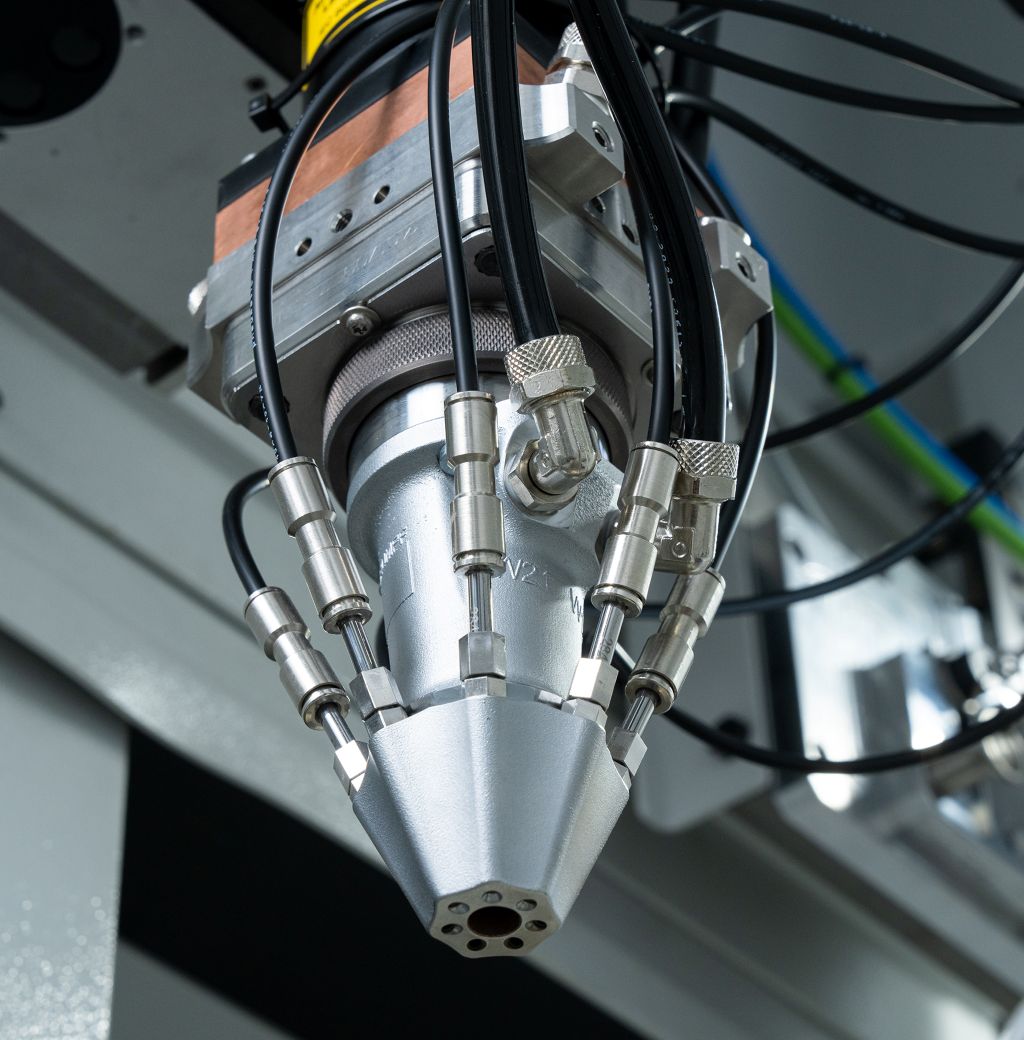
Coated brake discs are fundamentally nothing new; however, they have only been used in a niche due to high production costs. One factor is that thermal spraying processes and galvanizing do not create a metallurgical bond with the base material. Consequently, complex pre-treatments are necessary for the bonding of the layer. Furthermore, the layers are (too) thick, and the heat input is high. In this context, a new development from EMAG in the field of laser cladding of brake discs represents a quantum leap for this task.
The new production solution is economical, suitable for mass production, process-safe – and variable, as a variety of material combinations can be used in the coating.
ELC 450 LMD – modular machine solution for laser cladding
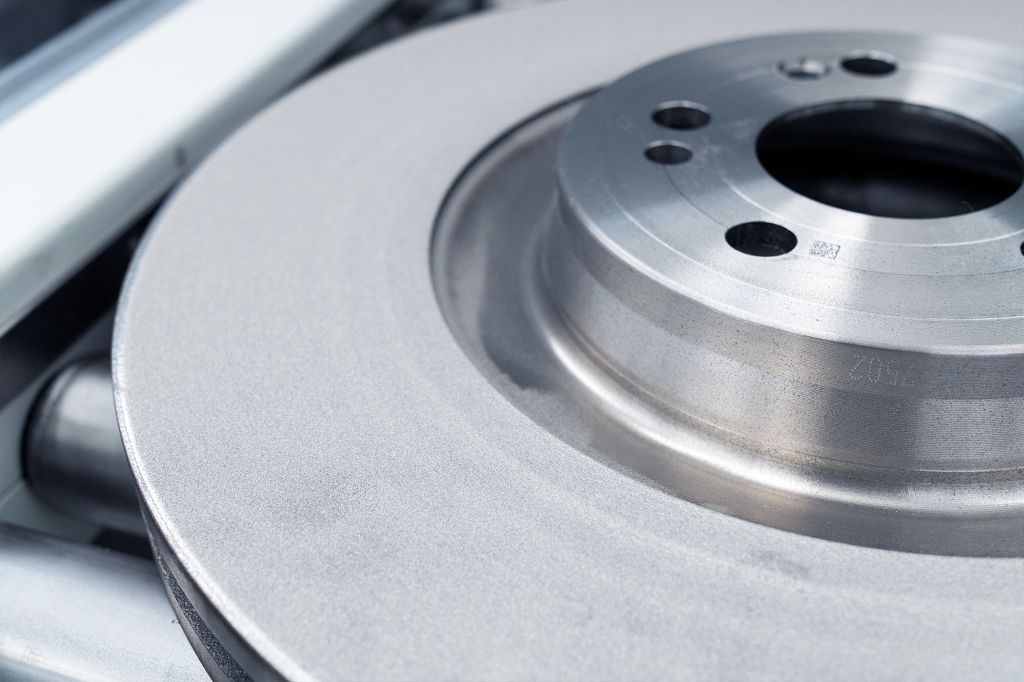
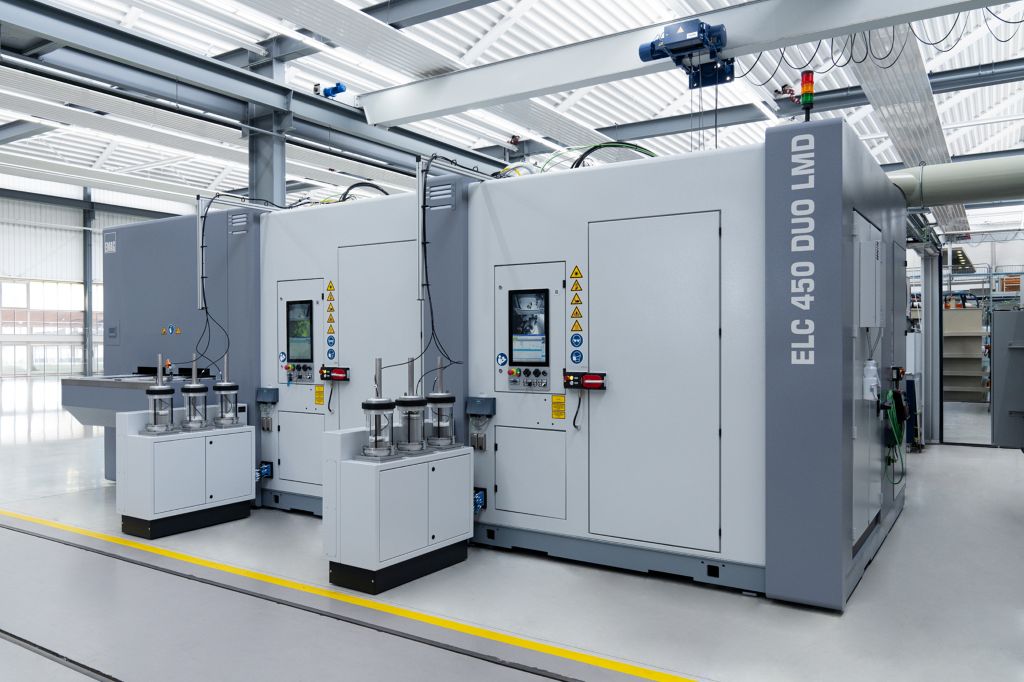
The ELC 450 LMD is an innovative machine solution from EMAG, characterized by its modularity and flexibility. The basic idea behind the ELC 450 LMD is the use of process modules that can be combined and expanded according to customer requirements. The machine is available in various configurations, consisting of the number of process modules.
The base variant, the ELC 450 LMD, has one process module. The ELC 450 DUO LMD is equipped with two process modules, while the ELC 450 TRIO LMD, as the name suggests, uses three process modules. These modular machine concepts allow for optimal fulfillment of customer requirements regarding layer structure and productivity. This then leads to the choice of machine configuration. The ELC 450 LMD can realize both single-layer and double-layer systems. The combination of laser power and deposition rate determines the most suitable machine concept for the respective application.
The longer service life of coated brake discs also has a positive impact and helps reduce environmental impact. Unlike conventional brake discs, coated brake discs have a significantly longer lifespan, meaning they need to be replaced less often. This reduces the demand for new brake discs and helps mitigate the environmental impact from production, transport, and disposal. Additionally, the new generation of brake discs reduces vehicle maintenance efforts, saving time and costs. Overall, the coating of brake discs provides a sustainable solution for extending the lifespan of brake discs and reducing environmental impact.
Contact: