
Battery production is at the center of global industry and climate policy. With the worldwide growing demand for energy storage for electromobility and stationary applications, the importance of efficient, sustainable, and regionally independent production is also increasing.
In particular, the framework conditions of battery production pose immense challenges for companies: The dependence on raw materials such as lithium, cobalt, and nickel creates geopolitical tensions. At the same time, supply chains are becoming increasingly fragile due to global crises and rising transport costs. Europe therefore faces the task of building a resilient value chain that includes both raw material extraction and processing as well as recycling – after all, used batteries are the most abundant lithium resource in Germany. Additionally, production processes must be flexible enough to adapt to new battery concepts such as solid-state or sodium-ion batteries for investment security reasons.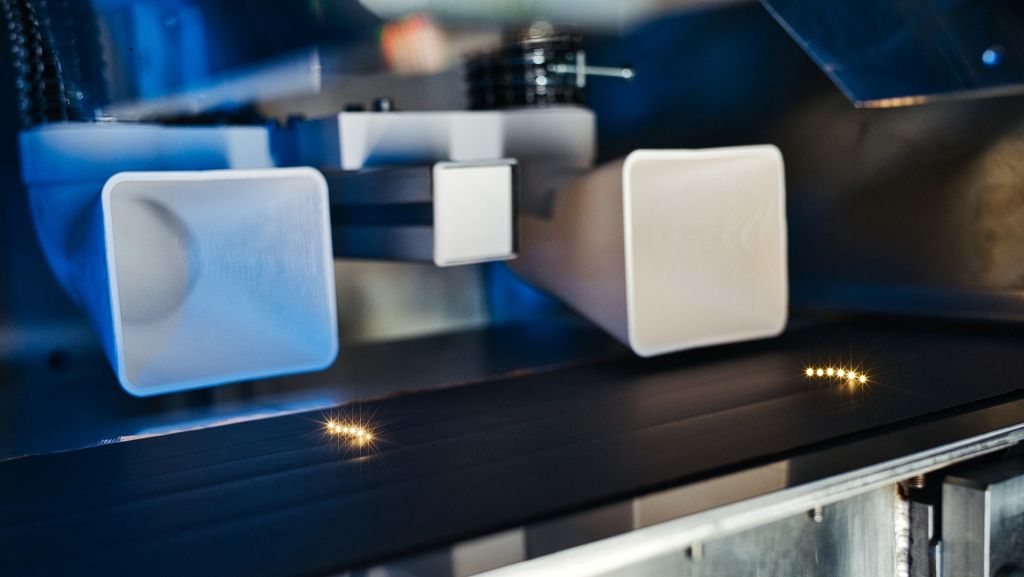
In light of these challenges, it becomes clear that the future of battery production in Europe can only be secured through the use of cutting-edge technologies. Especially laser technology offers solutions to meet the central requirements – efficiency, precision, and sustainability. Whether in material processing, electrode manufacturing, or recycling: Without innovative laser processes, competitive and sustainable battery production in Europe is hardly conceivable.
Raw material preparation and material refinement as a basis
Materials such as lithium and nickel are still components of current battery cells. Their chemical and physical properties enable high energy densities and long lifespans, but their extraction and processing bring complex problems.
However, battery technologies are rapidly evolving, aiming to minimize the use of rare and expensive raw materials. CATL already presented a sodium-ion battery in 2021 that completely avoids lithium and cobalt. In April 2024, the Chinese battery manufacturer introduced a cobalt-free lithium iron phosphate (LFP) battery with a range of over 1,000 kilometers. In just ten minutes, it can charge enough energy for 600 kilometers, corresponding to a charging speed of one kilometer per second.
Toyota plans to implement solid-state batteries in hybrid vehicles starting in 2025. Nissan has launched a prototype production facility for laminated solid-state batteries in Japan. Panasonic has introduced a solid-state battery for drones. VW and Mercedes, Ford and BMW are on the verge of introducing solid-state batteries or have entered into strategic partnerships.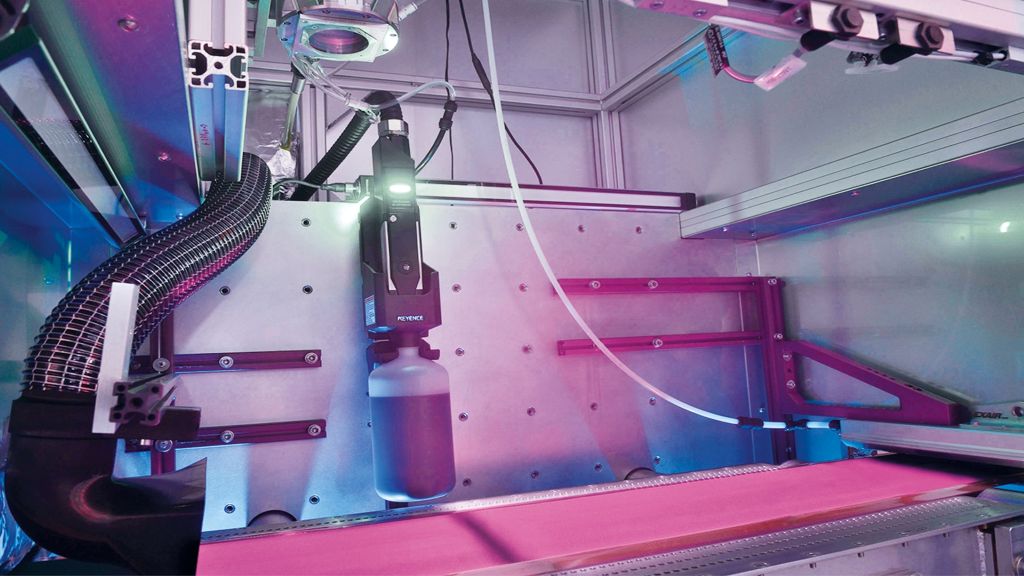
A key approach for new battery technologies is the material refinement at the nano level, where raw materials are specifically processed and functionalized to maximize their performance in batteries. This is being researched by the Surface Technology and Form Removal department at the Fraunhofer Institute for Laser Technology. Modern laser technologies enable precise interventions in the material structure while simultaneously minimizing resource consumption.
Another example of the successful application of laser technologies can be found in the collaboration between Fraunhofer ILT, the Chair of Laser Technology LLT at RWTH Aachen, TRUMPF, and the German Electron Synchrotron DESY. By using X-rays from a particle accelerator, deeper insights into laser welding processes were gained. It was shown that the use of lasers with green wavelengths improves material utilization and reduces scrap. These findings not only provide technological advantages but also contribute to more sustainable manufacturing.
»These projects demonstrate that innovative laser technology can not only master the challenges of raw material preparation but also enable sustainable and competitive battery production in Europe«, explains Dr. Alexander Olowinsky, head of the Joining and Separation department at Fraunhofer ILT.
Electrode manufacturing: Innovations for sustainable production
The coating of the current collector foils (copper or aluminum) with the electrode materials for anode and cathode and their subsequent drying are crucial steps that influence both the energy density and the cycle life of the batteries. However, conventional drying processes based on convection ovens have significant energy consumption and require large space, which limits the sustainability and efficiency of battery production.
The project IDEEL (Implementation of Laser Drying Processes for Economical & Ecological Lithium Ion Battery Production), funded by the Federal Ministry of Education and Research, shows how laser drying addresses these challenges: For the first time, the drying of anodes and cathodes in the roll-to-roll process was realized using a high-performance diode laser. This method significantly reduces energy consumption, simultaneously doubles drying speed, and halves space requirements.
»Laser drying not only enables a more efficient process management but also contributes to significantly improving the CO₂ balance of battery production«, explains Dr. Samuel Moritz Fink, group leader of thin-film processes at Fraunhofer ILT. Fink and his team, together with project partners, developed a laser drying module with customized optics and process monitoring that ensures uniform drying. This approach also offers flexibility: Existing convection ovens can be retrofitted with laser technology, facilitating implementation in existing production lines.
In another research project, Fraunhofer ILT utilizes a specially developed multi-beam optics. This divides the laser radiation into several partial beams that simultaneously process a 250 millimeter wide strip of a lithium-ion battery anode. This high-precision structuring increases energy density and fast-charging capability.
Electrode manufacturing also benefits from the integration of artificial intelligence into the manufacturing process. Researchers at Fraunhofer ILT are currently investigating how AI-based systems can be used to optimize process parameters. Such systems could not only further increase quality and productivity but also lay the foundation for autonomous manufacturing.
Cell assembly: Precision and efficiency through innovative technologies

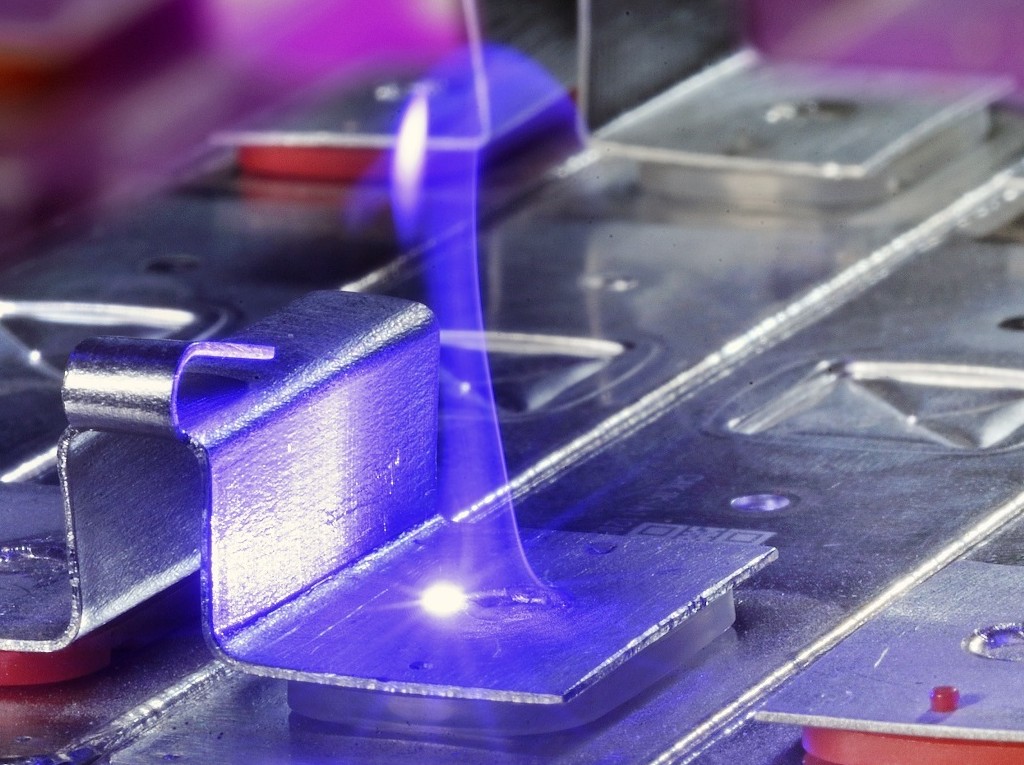
In addition to the drying of the electrodes, the precise connection of the electrode materials plays a central role in the performance and reliability of batteries. Here, laser micro-welding has established itself as a key technology. It enables contactless, high-precision joining of materials such as copper and aluminum, which are essential for battery electrodes. Due to the low thermal load, the sensitive cell chemistry remains intact, while the electrical conductivity is optimized through reduced contact resistances.
Laser micro-welding offers a combination of flexibility and efficiency that traditional welding processes cannot achieve.
The requirements for laser micro-welding vary depending on the cell format, as each cell type presents specific challenges in contacting. Cylindrical cells require precise welding depth to ensure electrical conductivity while avoiding damage from overheating. Particularly challenging is the contacting of the negative pole, as excessive heat could damage the sensitive polymer seal, leading to electrolyte leakage. In pouch cells, which are characterized by flexible design and high energy density, it is especially important to avoid through-welds of the sensitive film casing.
A promising development in cell assembly is the XProLas project, which TRUMPF is implementing in collaboration with Fraunhofer ILT and other partners. The goal is to develop compact, laser-driven X-ray sources that enable quality inspection on-site directly at the manufacturer instead of using large particle accelerators as before. This technology allows for real-time analysis of battery cells, enabling precise monitoring of both charging and discharging processes as well as material quality. Especially in the examination of cathode material, which significantly determines the performance and durability of a battery, this method opens up new possibilities. 'By using brilliant X-ray sources, we can detect impurities and material defects early, significantly shortening development times,' explains Dipl.-Ing. Hans-Dieter Hoffmann, head of the Laser and Optical Systems department at Fraunhofer ILT.
Here too, the integration of artificial intelligence opens up additional potentials: AI-based systems can monitor and adjust process parameters in real-time. This allows deviations to be detected and corrected early, laying the foundation for autonomous manufacturing. The vision of a 'first-time-right' production, where all components are assembled flawlessly on the first pass, is thus coming within reach.
Module and pack production: Efficiency and precision through laser technologies
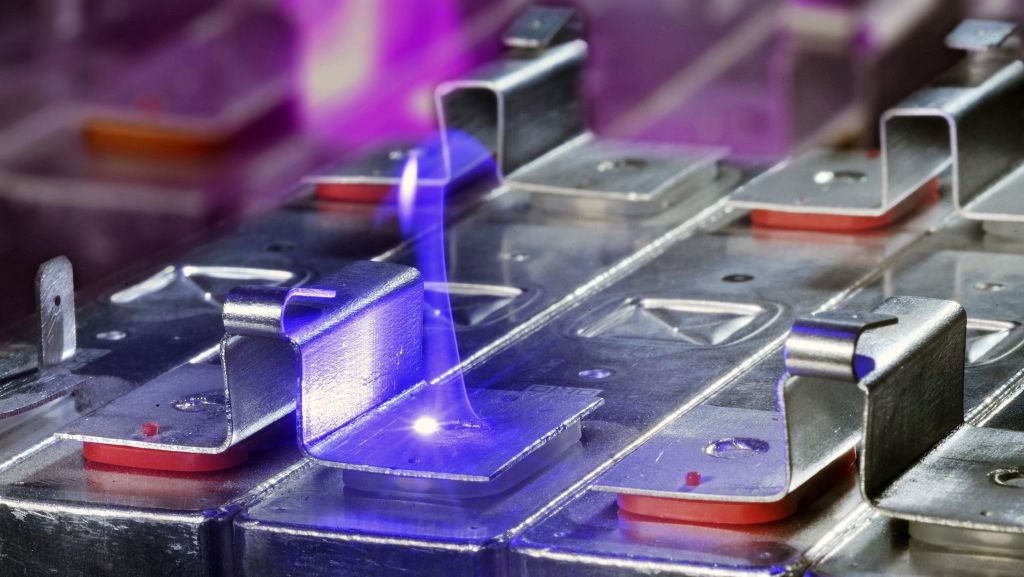
Subsequently, the individual cells are connected to modules or packs. Precision plays a crucial role, especially at the module level, as the integration of multiple weld seams is necessary without increasing the thermal load on the sensitive cells. Laser processes such as micro-welding enable a tailored adaptation to these requirements.
One of the central innovations of Fraunhofer ILT is the development of processes that enable the joining of aluminum and copper – both materials with very different physical properties – safely and precisely. Using state-of-the-art laser beam guidance, the welding depth can be controlled to avoid damaging sensitive cells.
'This technology is essential for the production of modules and packs that must reliably function under extreme conditions, such as high currents and thermal loads,' explains Olowinsky. An example of this is the laser welding of large cylindrical cells, which has been further developed at the Aachen Institute in collaboration with partners such as EAS Batteries GmbH. Here, a stable and durable interconnection of the cells is ensured to guarantee long lifetimes and low failure rates.
In addition to laser welding, laser soldering has established itself, particularly for connecting heat-sensitive components. This process operates at lower temperatures than traditional welding methods, thus protecting sensitive electronics within the modules. This not only increases the reliability of the battery packs but also contributes to the energy efficiency of production.
Battery management and sensor integration
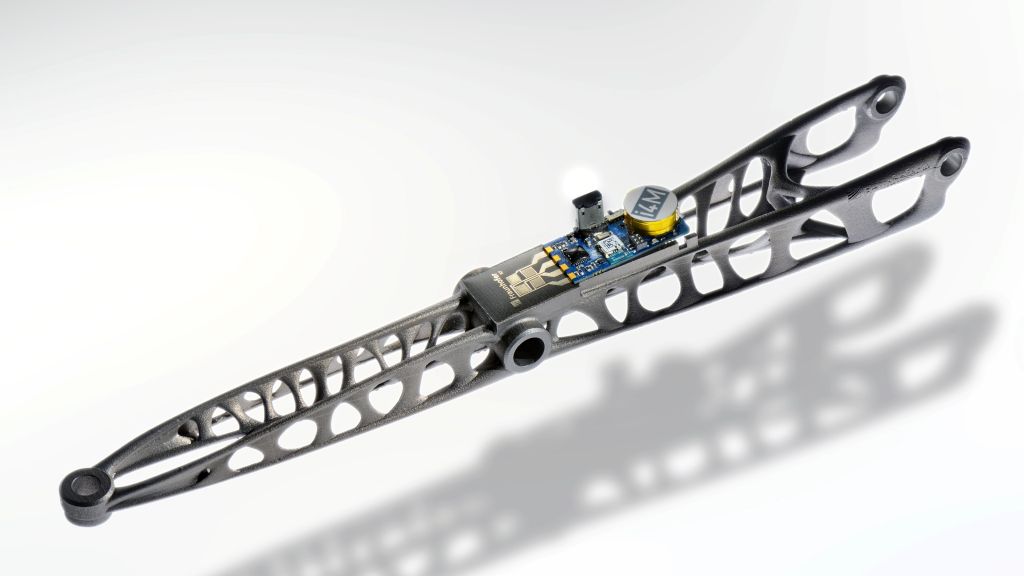
Battery management is one of the central challenges of modern energy storage systems. The safety, longevity, and performance of batteries depend significantly on this – and not least the acceptance of electromobility. Advances in sensor integration and the use of AI offer transformative possibilities to meet these requirements.
Traditionally, batteries are monitored on a macroscopic level, which only provides limited insights into the complex processes within the cells. Here, the integration of sensors during manufacturing offers new possibilities. Researchers at Fraunhofer ILT print sensors directly onto components or even integrate smart measuring devices. These sensors enable real-time monitoring, such as measuring temperatures, forces, or even chemical changes within the batteries.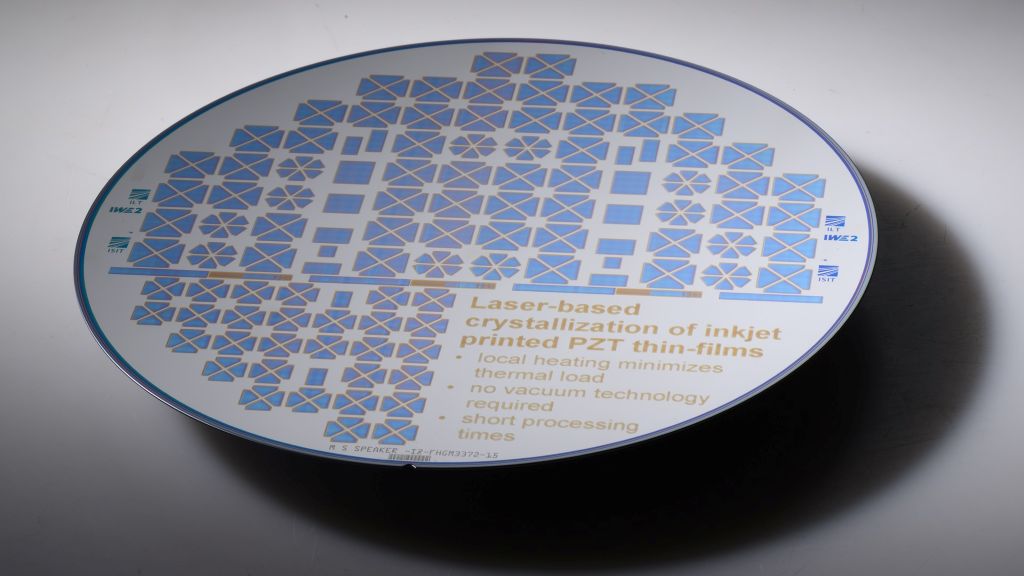
'With additively manufactured sensors, we can continuously monitor the condition of the battery modules and respond early to potential faults,' explains Samuel Fink. These sensors are only a few micrometers thick, precise, and simultaneously resistant to mechanical and thermal stresses, making them ideal for use in batteries and battery modules. Their ability to continuously provide data enables predictive maintenance, which detects potential defects before they occur.
However, the integration of sensors alone is not sufficient to realize predictive maintenance. Sensors can detect changes in cell chemistry, while AI algorithms analyze this data and make predictions about the lifespan of the cells. Researchers in the 'Data Science and Measurement Technology' department at Fraunhofer ILT are developing such AI-based algorithms that analyze large data volumes from sensors in real-time. These systems also enable dynamic adjustments of processes, such as optimizing temperature profiles during cell assembly or adjusting laser welding parameters.
Recycling and reuse
With the boom in battery technology, the need for sustainable strategies for recovering valuable raw materials is also growing. An effective circular economy is essential to reduce dependence on primary raw materials while minimizing the environmental impact of battery production.
In the EU project ADIR, Fraunhofer ILT is developing a viable recycling concept for electronic devices with eight project partners from three countries. In the ACROBAT project, a concept for recycling lithium iron phosphate batteries is to be developed before they penetrate the market on a large scale. The goal of the project is to recover more than 90 percent of critical materials. Together with partners like Accurec Recycling, Fraunhofer ILT is working on innovative separation and processing methods that are both ecologically and economically sustainable. The Aachen laser experts are developing an inline characterization method to precisely assess the quality of the active material.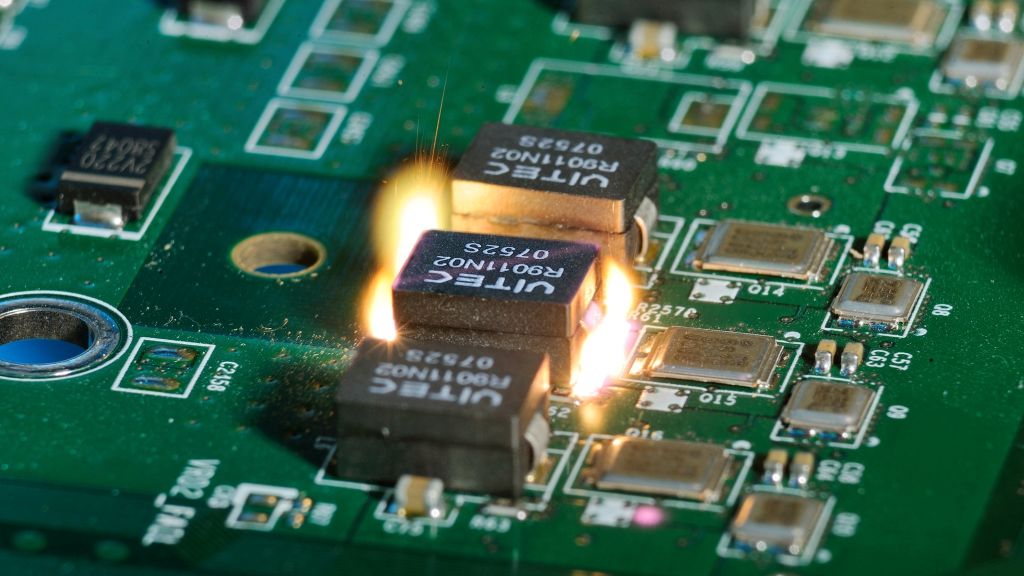
Laser spectroscopic analysis (LIBS) allows for the precise identification and separation of complex material compositions. Researchers want to adapt this technology for recycling old batteries to further improve the recovery of metals like cobalt and tantalum. Here too, the integration of AI can analyze large data volumes from laser measurements in real-time and derive process optimizations.
This AI-based monitoring enables a dynamic adjustment of recycling parameters, reducing waste and increasing the quality of recycled raw materials.
Conclusion and Outlook
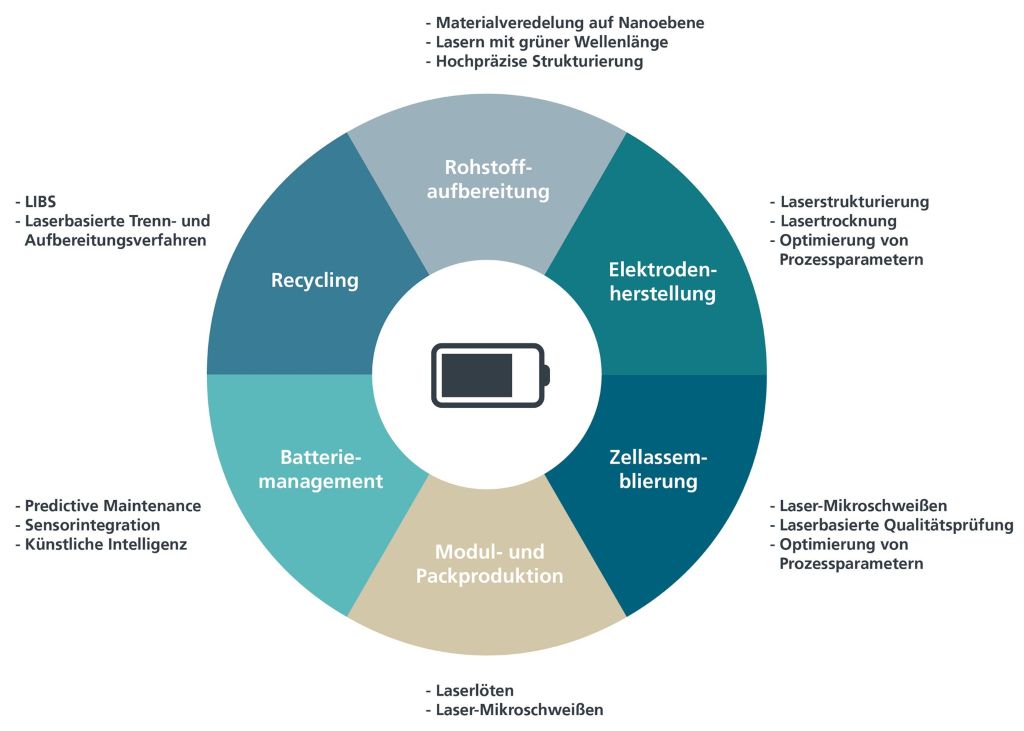
Battery production is at the center of the electric mobility transition and thus in the focus of innovations that combine efficiency, sustainability, and technological excellence. The technologies and developments presented along the production chain demonstrate how state-of-the-art laser processes can pave the way for a sustainable and competitive battery industry – from raw material processing to electrode manufacturing, cell assembly, and recycling.
At the same time, AI-based analysis and control systems create a new dimension of process control that improves production quality and sustainability while further reducing production costs.
In the future, AI-based control loops could enable autonomous production, where processes adapt in real-time to changing conditions. Additionally, laser-driven X-ray sources and inline characterization technologies open up new possibilities for quality assurance and material analysis.
Contact: