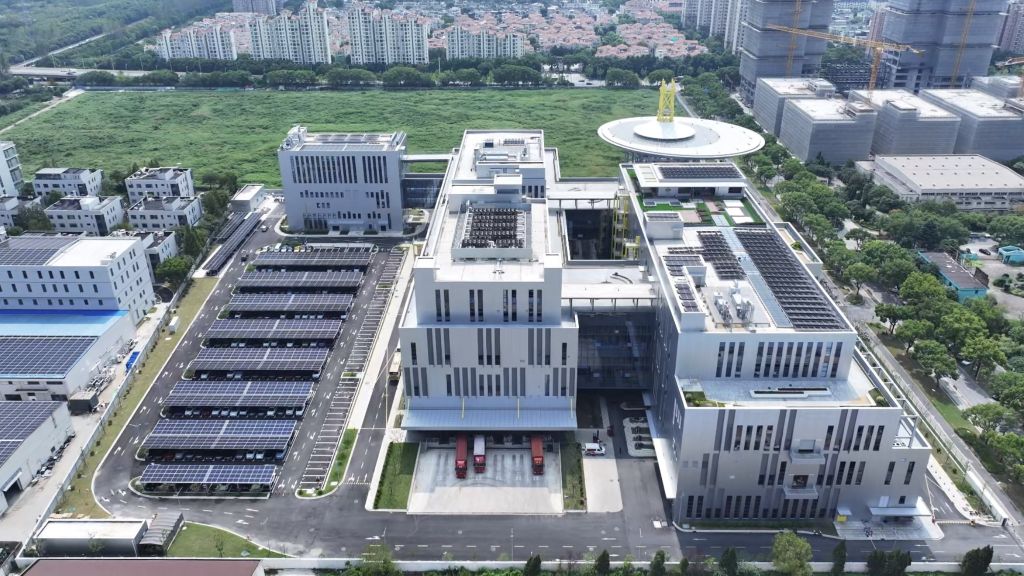
On November 20, igus officially opened its new factory in the Fengxian Industrial Park in Shanghai. With an investment of around 75 million euros, one of the most modern production and logistics centers of the motion plastics specialist has been established on approximately 70,000 square meters. The new campus offers three times more space than the previous location in Shanghai and is an important milestone for igus's further expansion in China. The new factory strengthens local value creation and enables faster, more flexible service to customers in China with a greater variety of products. Some of the products will be specifically manufactured for the local market.
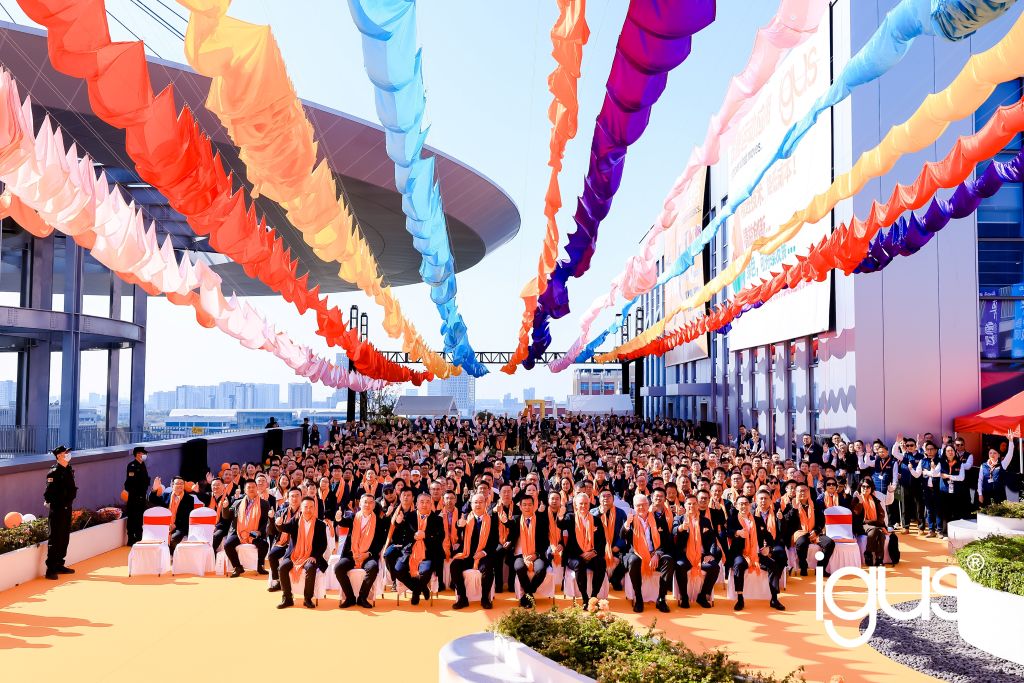
Almost exactly two years after the first groundbreaking, the new production site of igus in China officially celebrates its opening. With 823 employees, of which 270 are in production, the campus in Shanghai-Fengxian is one of the most important locations for igus worldwide and is also the largest in the Asia-Pacific region. The new factory is part of the company's 'Local for local' strategy. With the tripled space and significantly expanded production capacities, igus can supply its customers on-site even faster in the future while further increasing the share of locally produced products.
At the same time, the company continues to invest in expanding its production capacities in Germany and other locations to serve customers worldwide as close to the respective market as possible. 'China is one of the most important growth markets for us worldwide. With the new factory, we create the conditions to support our customers even more flexibly and to consistently further develop our local production,' says Artur Peplinski, spokesperson for the management of igus SE & Co. KG.
The new building, with a total area of around 70,000 square meters, combines production, assembly, quality assurance, storage, and logistics under one roof across four floors. Local production covers about 50 percent of the Chinese order volume. At the same time, the location offers sufficient capacities for further growth in future markets such as robotics, electronics, and medical technology. Additionally, there are growing project businesses in areas such as shore power and the oil and gas industry. Furthermore, igus benefits from its broad positioning across numerous industries. From machine and plant engineering to automation technology to the energy sector, the company supports customers with lubrication-free motion plastics solutions, thus unlocking additional growth potential in the Chinese market.
AGV tower as the centerpiece of the new factory
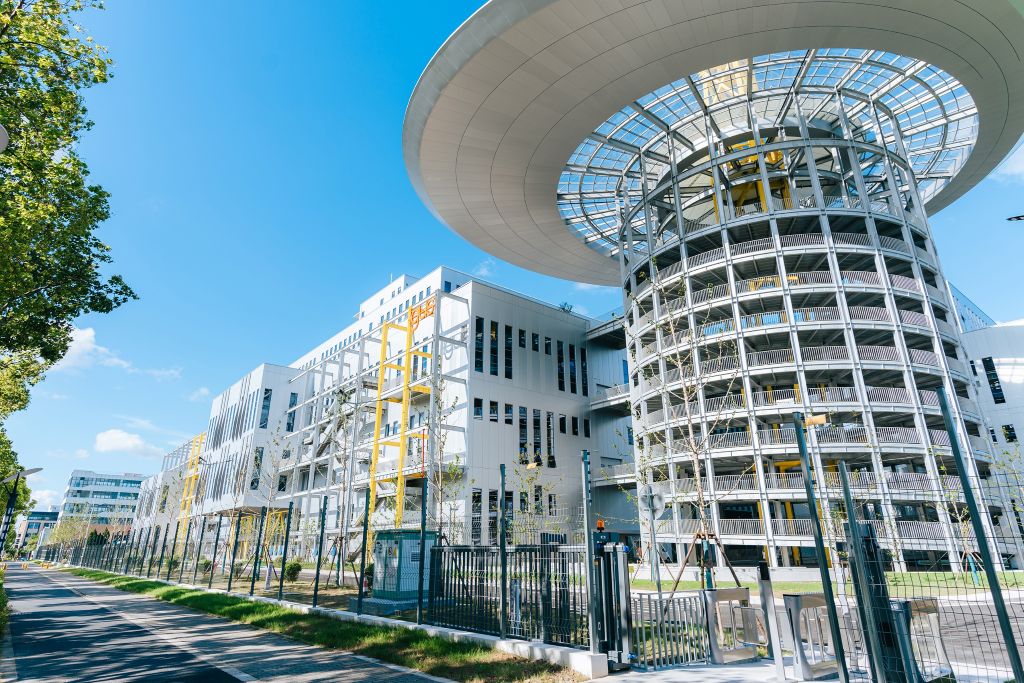
The factory has 40 modern injection molding machines with a production capacity of over two million parts per week. At the same time, the new factory offers enough space for further expansion of production capacities to up to 200 machines in the future. Additionally, igus invested in cable assembly with high-precision cutting machines, labeling and testing systems, as well as 17 industrial 3D printers for additive manufacturing. The centerpiece of the intelligent factory is a spiral-shaped tower in the center of the building.
Through it, driverless transport systems (AGVs) connect the four floors and take over the automated material transport between production, assembly, storage, and shipping. The concept ensures maximum flexibility, as material flows can quickly adapt to changing customer demands.
Architecture inspired by the Centre Pompidou
Not only technologically but also architecturally, the new location sets standards. The building concept, inspired by Frank Blase, board member of igus SE & Co. KG, and developed by a Chinese architect team, is based on the Centre Pompidou in Paris, a world-famous work of high-tech architecture. The focus is on flexibly usable spaces and an adaptable facade structure. This allows production, assembly, and logistics areas to be adjusted to new requirements and technologies in the future. The open concept creates the conditions for further growth and supports the continuous development of manufacturing and logistics processes. 'For us, a factory building is never finished. It must be able to grow with the demands of our customers and the possibilities of new technologies,' explains Frank Blase. 'This thought is exactly what we implemented in the planning of the new location. The architecture thus supports the same idea that also shapes production: maximum adaptability in a dynamic market.'
Contact: