
How can sustainability goals be systematically and economically implemented in toolmaking? This question was addressed by the WZL research project 'SustainTool - Toolmaking as a Driver of Sustainability', which was successfully completed after more than two years. Research institutions and industry partners jointly developed methods, guidelines, and digital tools that enable toolmaking companies to measure, evaluate, and specifically improve ecological, economic, and social sustainability aspects.
Systematically Anchor Sustainability in Toolmaking
Toolmaking companies are increasingly faced with the challenge of reconciling rising demands for resource efficiency, climate protection, and circular economy with economic production processes. The research project 'SustainTool' therefore aimed to make sustainability practically implementable along the entire value chain of toolmaking based on concrete data, key figures, and recommendations for action.
Practical Methods and Digital Tools Developed
The project resulted in various practical solutions for companies. These include a guideline for sustainable tool manufacturing, a guideline for conducting climate risk analyses, tools for energy simulation in the injection molding process, a morphological box for developing resource-efficient tool concepts, and a CO₂ calculator for injection molding tools. The developed methods support companies in systematically capturing, evaluating, and optimizing emissions, energy and material consumption, as well as circular economy potentials.
A key success factor of the project was the close collaboration between research and industry. The results were developed together with the companies of the accompanying committee in workshops, validation rounds, and regular project meetings, continuously aligned with the requirements of industrial practice. This allowed the developed tools to be evaluated and further developed under real application conditions.
From Research to Industrial Application
The Chair of Production Management at the WZL of RWTH Aachen contributed its expertise, particularly in the areas of sustainable tool manufacturing, CO₂e assessment, collaborative emissions management, and circular economy. As part of the project, strategies and recommendations for action for more sustainable tool manufacturing and approaches for stronger utilization of re-use and re-manufacturing concepts in toolmaking were developed.
'SustainTool shows that sustainability in toolmaking does not have to remain abstract. With reliable emission data, practical methods, and concrete recommendations for action, companies receive tools to tap into ecological and economic potentials alike,' says Helen Baumert, research associate at the Chair of Production Management at the WZL of RWTH Aachen.
Successful Project Completion in Austria
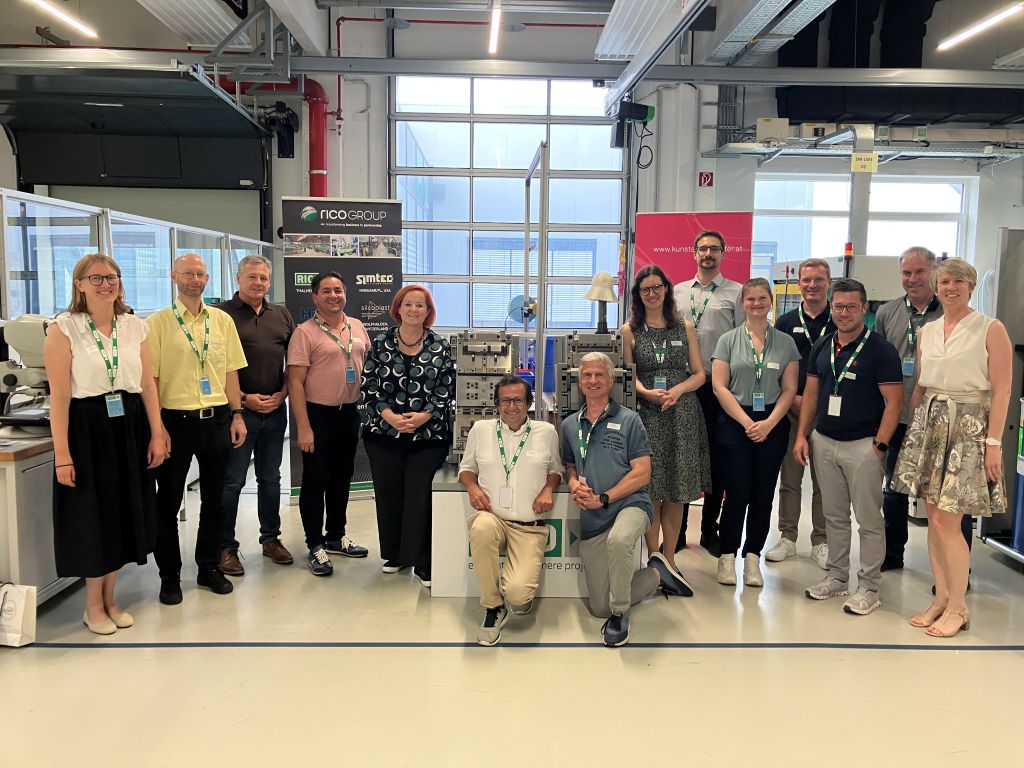
The project concluded on June 23, 2026, with a hybrid project meeting at RICO Elastomere Projecting GmbH in Thalheim near Wels (Austria). Representatives of the participating research institutions and the companies of the accompanying committee discussed the project results and their potentials for industrial application.
The research project SustainTool ran from March 1, 2024, to June 30, 2026. In addition to the WZL of RWTH Aachen, the Plastic Cluster of Business Upper Austria - OÖ Wirtschaftsagentur GmbH, the Research Association for Tools and Materials e.V. (FGW), Montanuniversität Leoben, Fraunhofer Austria Research GmbH, and Hochschule Schmalkalden were involved as research partners.
Download:Guideline for Sustainable Tool Manufacturing
Contact: