
Prices must come down: A consistent reduction in CO₂ emissions is hard to imagine without improved availability of electrolyzers and fuel cells. Currently, these central hydrogen systems are produced in relatively small quantities. One reason for this is the manufacturing costs. The reference factory.H2 orchestrated by Fraunhofer IWU addresses this directly: It creates the conditions for industrial mass production and suitable production systems. With the completion of the hydrogen projects H2GO (fuel cells particularly for freight mobility) and FRHY (electrolyzer production), all components of the reference factory.H2 are now available. This presents significant value creation potential for the industry.
"On 20 in 27" is the performance promise of the reference factory.H2: By 2027, the costs for the production of electrolyzers and fuel cells are to be reduced to 20 percent of current values (base: 2024).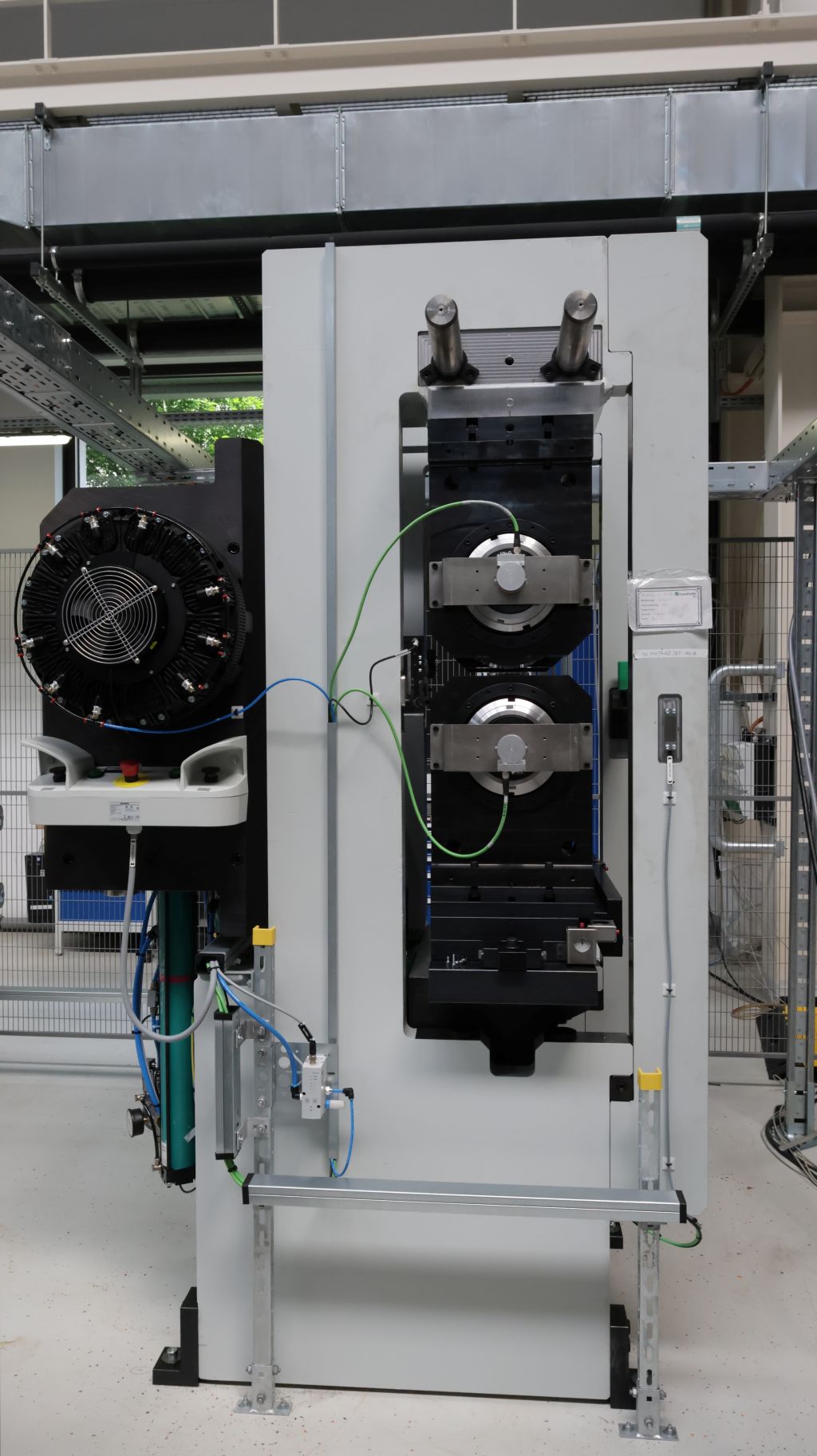
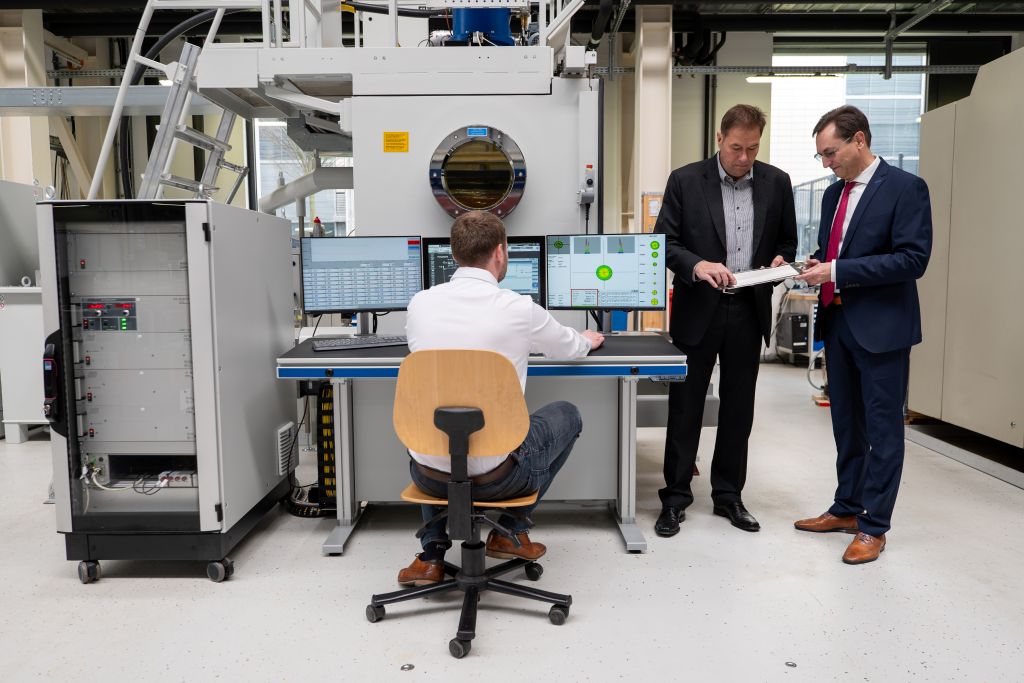
Physically located in the "research factory" of Fraunhofer IWU, the reference factory.H2, as a value creation community of several Fraunhofer institutes and numerous partner companies, demonstrates reference scenarios for efficient, scalable production along the entire value chain. Processes and systems are oriented towards the roll-to-roll principle. Typically, material is unwound from a roll, processed, and then rewound. In combination with continuous production (without intermediate breaks), this method enables efficient large-scale production. The infrastructure of the reference factory.H2 also includes a laboratory where production-oriented product design ("Design for Production") can be tested in several loops before series start.
State-of-the-art infrastructure for highly automated production: hollow embossing, electron beam welding, sealing, stacking
Electron beam welding allows simultaneous processing of multiple joining points. Image: Fraunhofer IWU
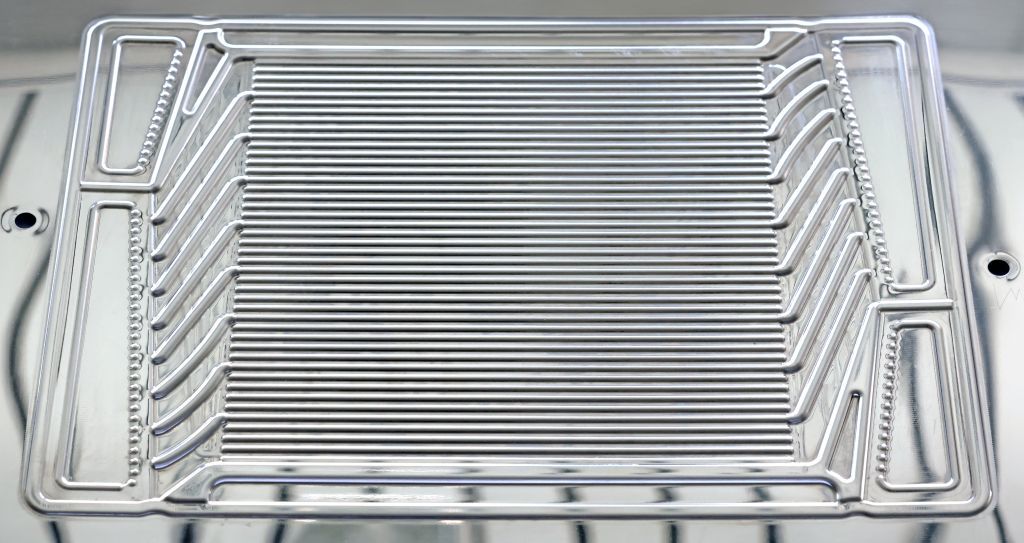
High production rates and cost-effectiveness: BPPflexROLL and flexROLLmax For the production of bipolar plates, essential components of electrolyzers and fuel cells, the reference factory.H2 primarily relies on hollow embossing as a continuous process. Ultimately, this results in significantly lower manufacturing costs per component. Compared to conventional pressing processes, the process forces decrease by a factor of 10, allowing the required plant technology to be designed smaller, lighter, and more cost-effective.
Electron beam welding: particularly precise and efficient
To join the metallic bipolar plates, which are only a few tenths of a millimeter thick and the size of an A4 sheet, weld seams with a total length of more than one meter must be executed, making the welding speed crucial for production time. In electron beam welding, electrons are the medium – several electromagnetic lenses control the negatively charged particles, which strike at up to two-thirds the speed of light and fuse the two workpieces together. This process does not require sluggish steering mechanics like laser welding. Thanks to the ability to quickly deflect the beam, multiple process zones can be processed simultaneously, whereas previously one joining point had to be "worked off" after another.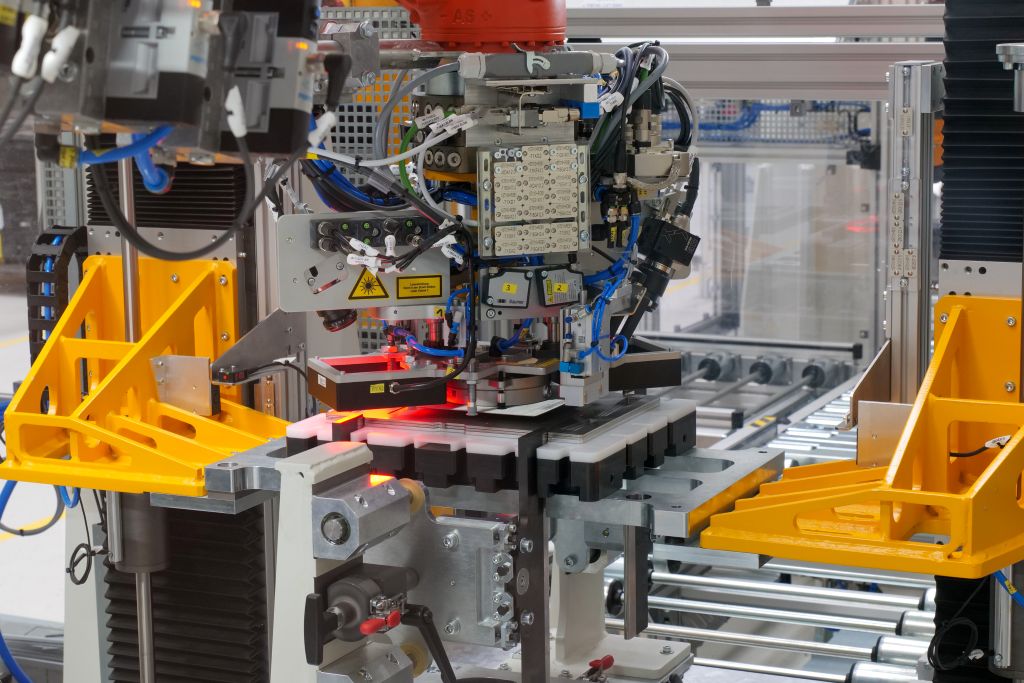
From a qualitative perspective, this technique is also favored because it operates under vacuum conditions. This guarantees constant conditions without disturbing fluctuations in air pressure or humidity. The higher the quality of the weld between the bipolar plates, the higher the efficiency of the system. If the processing time decreases simultaneously, manufacturing costs are reduced. More quality at lower costs: Thus, electron beam welding sets new standards.
Sealing: only 100% tightness means high efficiency
To enable consistently economical production of stack components in the roll-to-roll process (R2R), new continuous production technologies for the application of sealing have also been developed.
Unique system for the assembly of fuel cells and electrolyzers
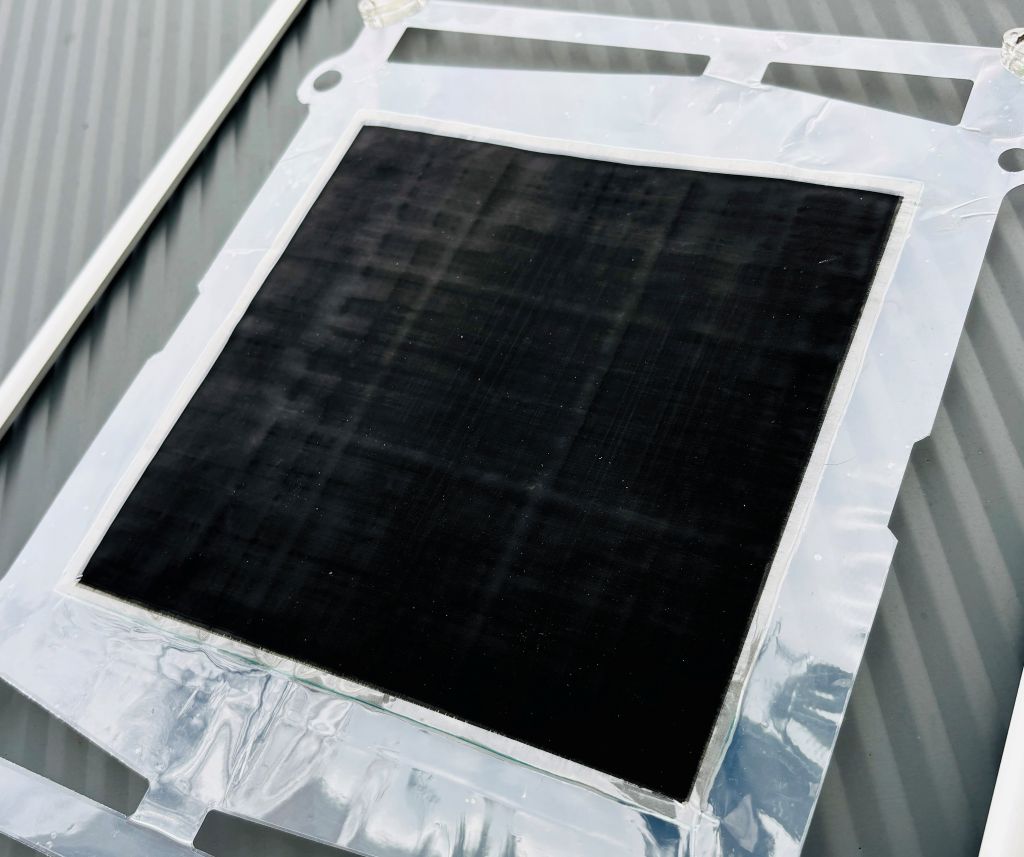
In the design of the system, the focus was on developing a novel stacking concept that allows for high-rate assembly of individual components without parallelization or commissioning. The opportunity for a substantial reduction in the stacking and assembly process arises from the consistent use of roll-to-roll technology for the production of individual components (BPP/bipolar plates, PTL/porous transport layer, and CCM/catalyst coated membrane), which are available in the band until stacking and are only separated in the process. Particularly innovative is the clamping of the components as an automated, reproducible, and cost-effective process.
Certified laboratory
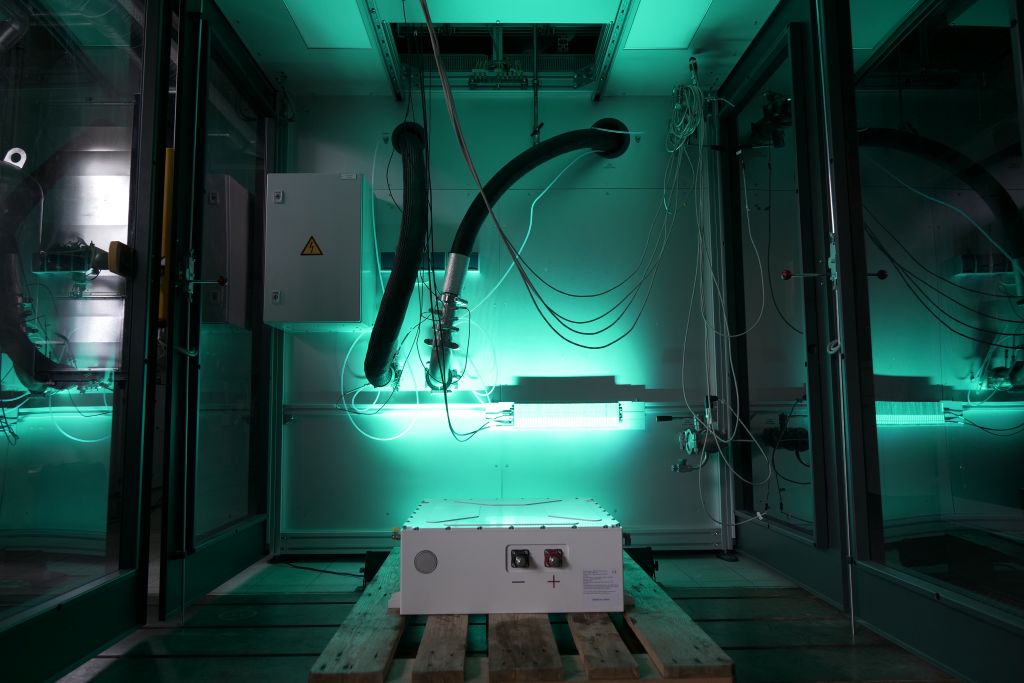
The reference factory.H2 can thoroughly test electrolyzer and fuel cell individual cells and systems to characterize and evaluate performance, durability, reliability, and other important properties under various operating conditions. The test benches in Chemnitz allow for the validation of the material concept before a product goes into series production. An early-aligned material and production concept is essential for the rapid ramp-up of large-scale production of hydrogen systems.
Circular economy fuel cell
In the national action plan H2GO, the consortium Stack to Piece examined what machines, systems, and processes are needed to not only automate the assembly of fuel cell systems but also to be able to dismantle them efficiently and non-destructively at the end of their product life. Project partners include the Fraunhofer Institutes IST, IWU, IKTS, and IFAM.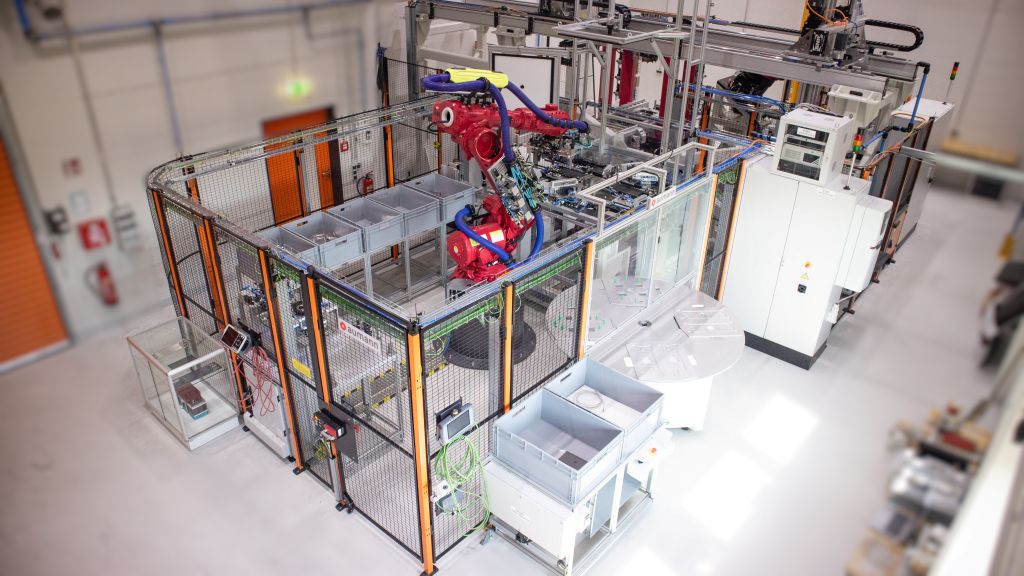
H2 Transfer Days: November 24 - 26 in Chemnitz
The H2 Transfer Days consolidate the closing events of the flagship projects H2GO and H2Giga/FRHY, which focus on the industrial production of hydrogen systems, fuel cells, and electrolyzers. The focus is not only on technological innovations but especially on novel production solutions that promote economic transfer and industrial value creation.
By involving regional industry partners and interdisciplinary contributions, concrete approaches for market introduction and the establishment of sustainable value chains are presented. More info and registration: H2 Transfer Days - Reference Factory.H2 Even after the project is completed, the research results remain accessible to interested industrial companies on the websites of the reference factory.H2.
Contact: