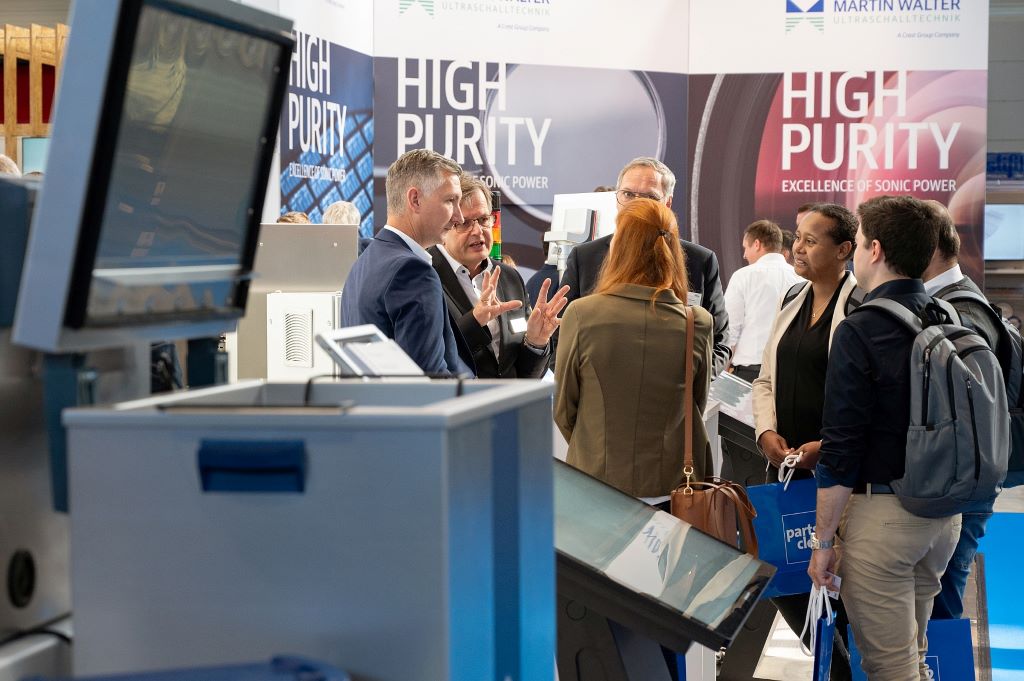
Wide areas of industry are now focusing on the production of sophisticated products for growth sectors. This is accompanied by higher demands for technical cleanliness, which cannot be met with a cleaning process at the end of production. Rather, the quality criterion of 'cleanliness' must be the focus throughout the entire manufacturing process. The exhibitors and the supporting program of parts2clean will inform about which aspects need to be considered and how cleaning tasks along the production chain can be solved not only according to demand but also efficiently and resource-conservingly. The 21st international leading trade fair for industrial parts and surface cleaning will take place from October 7 to 9, 2025, at the Stuttgart exhibition grounds (Germany).
Due to technological upheavals, more and more companies are rethinking their product range and increasingly focusing on the production of sophisticated components with higher value creation for growth and high-tech sectors. These include, among others, aerospace, measurement and analysis technology, medical and pharmaceutical technology, sensor technology, new mobility, electronics, microsystem technology, defense industry, vacuum technology, and the semiconductor industry, including its suppliers. 'In these industrial sectors, components must meet very high demands for performance, quality, and reliability,' explains Ramtin Randjbar-Moshtaghin, Project Director at Deutsche Messe AG. 'Accordingly, the requirements for particulate and filmic cleanliness are also very high.'
Consider the production chain from a cleanliness perspective
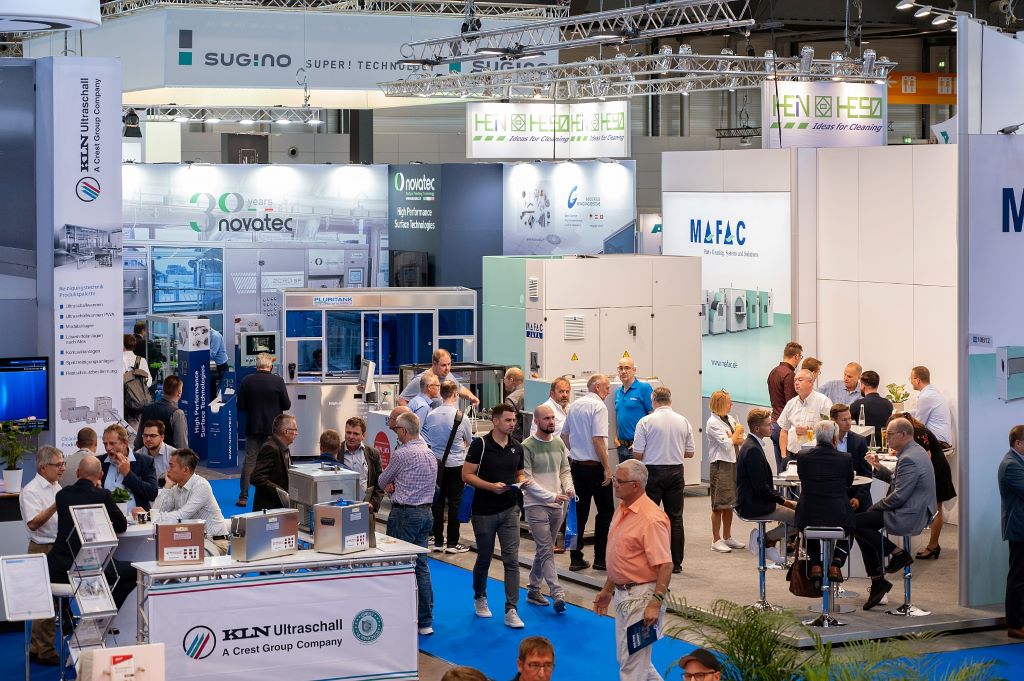
Classic cleaning processes, which generate the required cleanliness level at the end of production, are reaching their limits here. It is therefore necessary to scrutinize every phase of product creation from the cleanliness perspective. This begins already at the development stage: Is the component designed in such a way that it is easy to clean? Cleanability has a decisive influence on a new product and its value creation. This means it is an enabler here.
Subsequently, each manufacturing step, such as milling, forming, casting, additive manufacturing, or coating, must be assessed regarding its impact on the technical cleanliness of the overall product. This includes, among other things, whether the operating and auxiliary materials used are easily cleanable or contain critical substances. Or whether residues from the previous process impair subsequent processing, which necessitates an intermediate cleaning. When it comes to assembly and/or final cleaning as well as packaging, the question arises regarding the manufacturing environment – is a cleanroom or controlled environment necessary? To remain competitive in the production of components, cleaning must not only be demand-oriented but also economical, energy-efficient, and resource-conserving.
Efficient and sustainable solutions for all tasks in parts cleaning
'For these requirements, the exhibitors at this year's parts2clean present optimally tailored and future-oriented solutions,' reports Ramtin Randjbar-Moshtaghin. 'And this is independent of the materials from which the workpieces to be cleaned are made and whether it is a deburring, pre-cleaning, intermediate cleaning, or final cleaning, or a high purity application.'
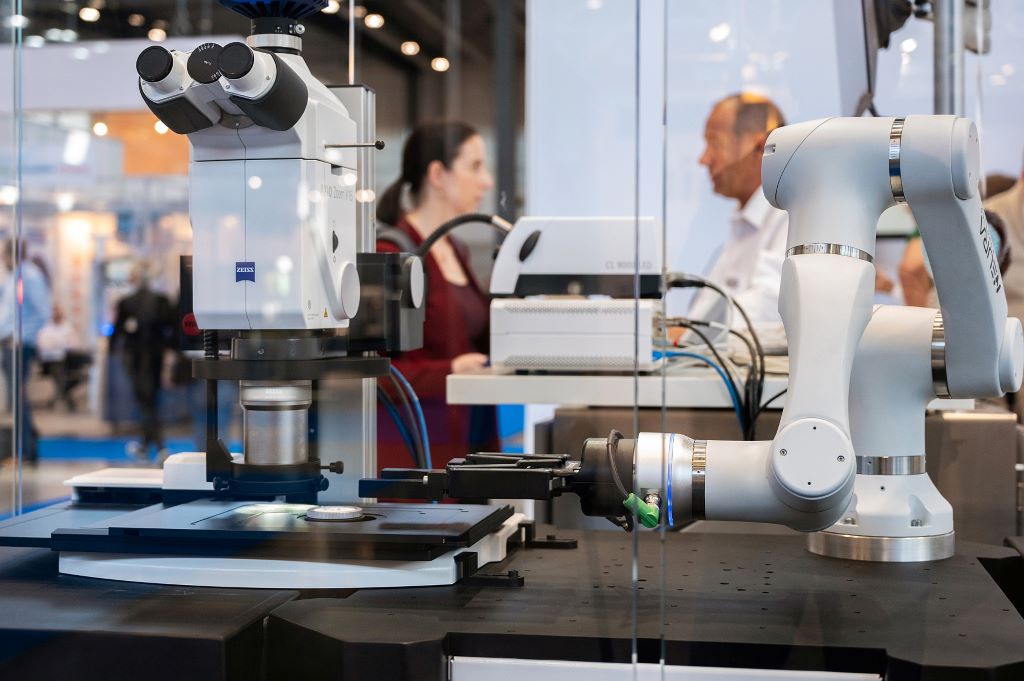
The portfolio includes systems, media, and process technologies for fluid-based processes and energy-efficient drying, as well as solutions for dry cleaning. Cleaning containers and workpiece carriers, technologies for water treatment and bath maintenance, as well as for controlling, monitoring, and regulating cleaning, rinsing, and drying processes, and the achieved cleanliness are further areas. Solutions for automating cleaning, including parts handling, as well as for digitization or the integration of cleaning processes into connected manufacturing environments and the use of AI offer opportunities to counteract the shortage of skilled workers. The spectrum is rounded off by clean and controlled environments, cleaning services, and specialized literature. 'Through the comprehensive offering and the participation of all relevant providers from various segments, users of industrial cleaning technology from all industries can comprehensively inform themselves about development trends, technologies, processes, and procedures,' adds Ramtin Randjbar-Moshtaghin. 'This also includes the optimization of existing processes regarding achievable cleanliness or their more resource- and energy-efficient design.'
Competition-relevant topics and innovations also in the supporting program
The supporting program of this year's parts2clean is also optimally tailored to the current challenges in parts and surface cleaning. In the bilingual p2c.EXPERTFORUM, renowned experts from research and science, as well as from associations and industry, provide knowledge and know-how, as well as benchmark solutions on various topics in simultaneously translated (German <> English) presentations. The special exhibition 'Process Chain Technical Cleanliness', organized together with the CEC (Cleaning Excellence Center), looks at cleaning in conjunction with surrounding manufacturing processes and thus provides the foundation for pragmatic solution approaches. The professional association for industrial parts cleaning e.V. (FiT) is also represented again with a special exhibition area and informative presentations. A crowd puller is the awarding of the 'FiT2clean Award', endowed with 10,000 euros, on October 9, which annually honors outstanding achievements and innovative solutions in industrial component cleaning.
Contact: