
At Formnext 2025, Fraunhofer IWU will present the latest generation of the WEAM tool (Wire Encapsulating Additive Manufacturing). This technology opens up completely new possibilities: components can be manufactured with various integrated electrical functions – and with significantly better performance for sensory and load-bearing tasks than paste-, ink-, and powder-based printing processes. The key lies in the use of standard wires and strands, which guarantee perfect electrical properties due to their homogeneous alloy and constant conductor cross-section.
The decisive advantage lies in the precise control of electrical properties through the choice of alloy and conductor diameter as well as the layout of the circuit combined with a continuous rotation of the tool. This allows functions such as power and data lines, integrated sensors for proximity, load, fill states, temperature, or shielding in terms of electromagnetic compatibility (EMC) to be applied directly to existing components or invisibly integrated through subsequent processes. At Formnext, Fraunhofer IWU presents a series-ready WEAM print head integrated into the manufacturer's CR3D system. The team led by Lukas Boxberger demonstrates the industrial benefits of WEAM using four examples.
Example radome heater for protecting radar sensors in automobiles: maximum design freedom, perfect function, minimal material usage
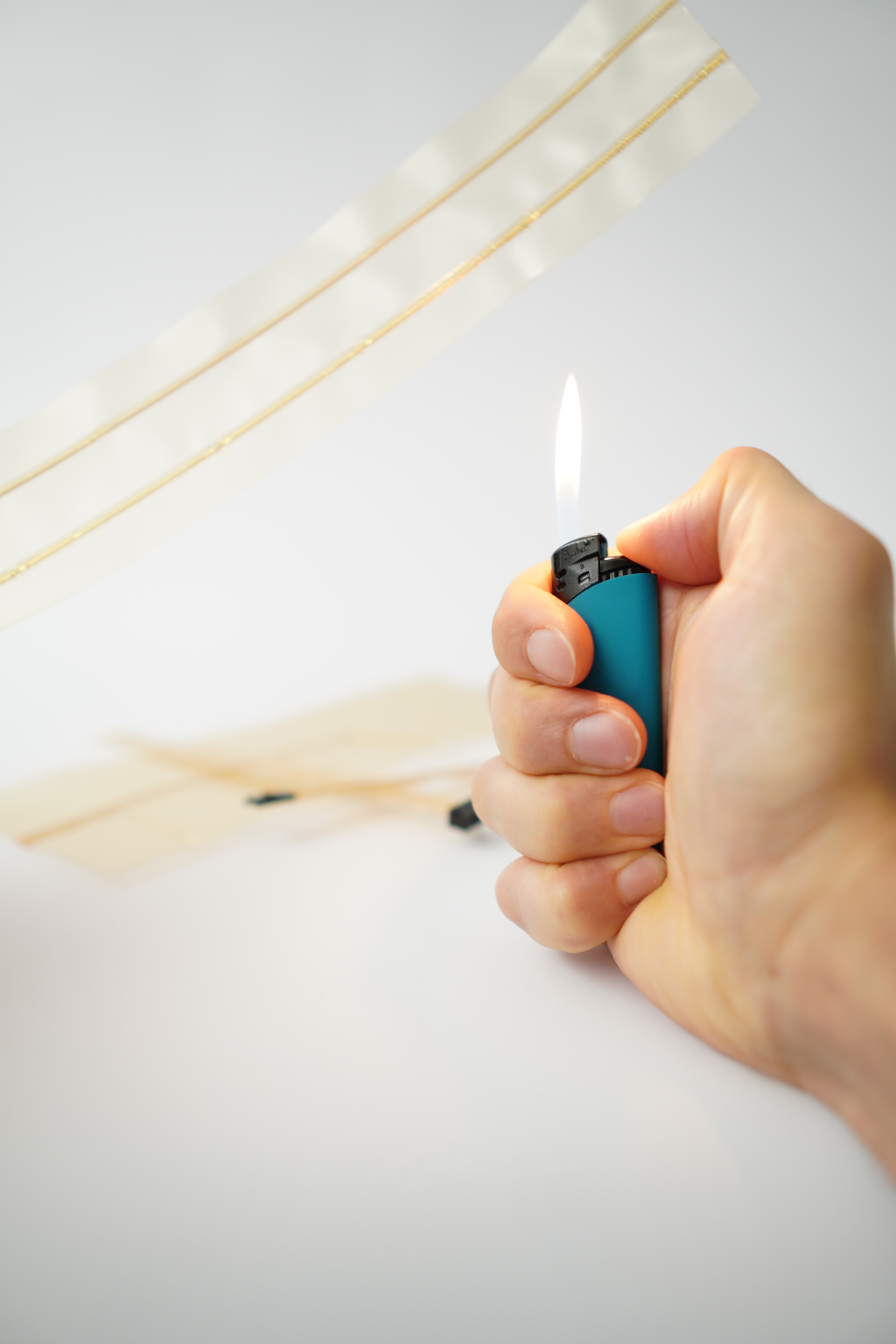
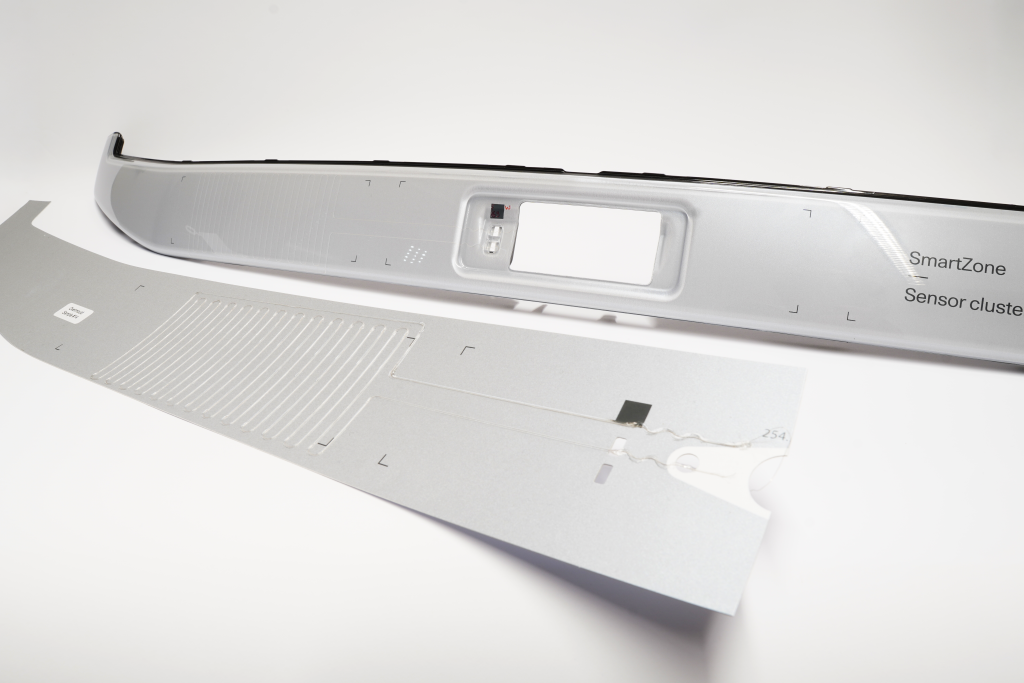
A radome, a combination of RADAR and dome, refers to a weatherproof, structural protective cover that surrounds an antenna and protects it from external influences while remaining permeable to radio waves. It must remain free of ice for reliable operation of radar and sensor systems under extreme weather conditions. Previous solutions relied on heating films or wires embedded via ultrasound, which can only tolerate moderate deformations and thus do not allow for every design. As a demonstrator component, Fraunhofer IWU applied heating conductors directly onto a film for the automotive supplier Nissha using the WEAM process, which was then reshaped and integrated into the component.
The WEAM process ensures that the wire remains exactly in its position even after back-injection – there are no functional losses or delamination issues. Material consumption is very economical, yet a very high heating performance can be ensured.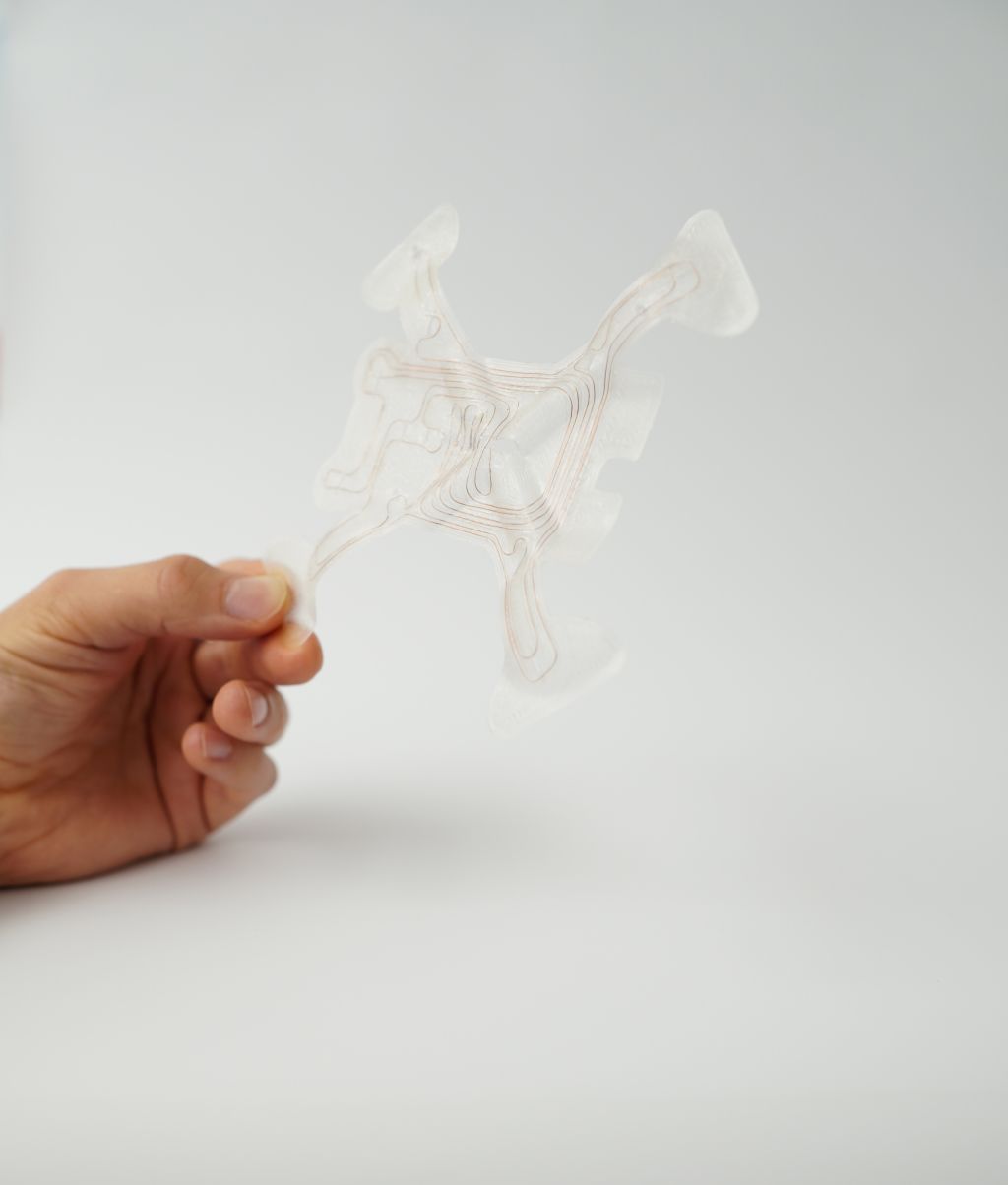
Integrated heating wires in radomes could provide energy-efficient de-icing and thus contribute to higher ranges in battery-electric vehicles, for example. In vehicles, such heating wires can be integrated as close-to-body heat sources in armrests, side elements, or the backs of front seats – significantly reducing energy demand compared to interior heating. In addition to the automotive industry, military vehicles and drones could also benefit from reliable sensors in snow, ice, and extreme temperatures. In airplanes, an anti-icing protection could help reduce maintenance efforts while increasing safety. In many industrial applications, sensor covers for autonomous systems would guarantee reliable function under adverse conditions.
Example highly flexible, stretchable, and 3D-formable circuits
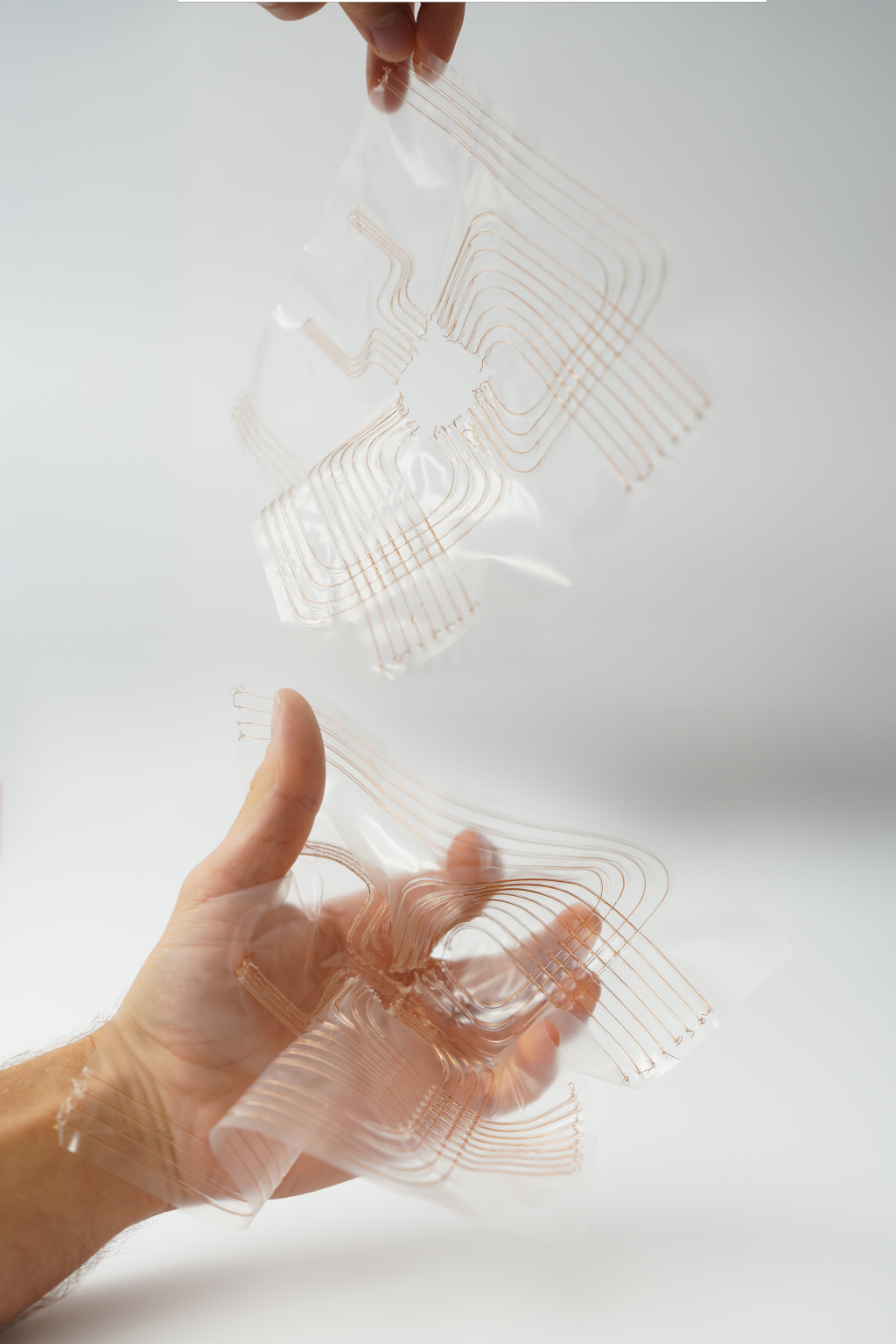
With WEAM, it is possible to apply complex circuit layouts on a 0.1 mm thin thermoplastic polyurethane film (TPU). The conductors can be fully or partially plastic-coated – depending on electrical requirements (e.g., breakdown strength). For connections, the coating can be omitted. Wires can cross and remain electrically isolated. TPU combines the properties of plastic, such as formability and chemical resistance, with those of rubber (elasticity, flexibility); circuits produced in this way can withstand a very high degree of three-dimensional deformation, where conventional flex or stretch circuits with ink-, paste-, or powder-based conductors already fail.
Furthermore, WEAM offers the option to combine different alloys and layouts on a surface to integrate sensors, actuators, and data/power lines at the film level. The polymer coating can be adjusted according to electrical requirements. For perfect contact, the coating can be omitted due to its high insulation. Here, too, the design freedom is nearly limitless. When using a 'TPU hot melt adhesive film,' the printed circuit or a cable harness can be directly 'applied' to various materials (textiles, nonwovens, carpets, wood, metal, etc.). Numerous application areas are conceivable:
- Wearables: Electronics that can be seamlessly integrated like a second skin – for more comfort, fewer break points, and new design options.
- Interior/Construction: Form-flexible surface heating systems, power lines, shy-tech applications (with as inconspicuous embedding as possible) in component-integrated sensors/actuators.
- Automotive: Interior components with integrated electronics or intramodule lines; the demand for cable harnesses could decrease, while design freedom with reduced weight could increase. Additionally, additional modular solutions are conceivable.
- Defense: Sensor films for load and deformation detection, integration of actuators for unlocking mechanisms, intramodule connections, better-protected circuits, and complexly shaped radar antennas are possible.
Example: PFAS-free high-temperature flexible conductors
WEAM enables the production of thermoplastic flexible conductors or circuits that are temperature-resistant up to 260 °C (short-term 300 °C). So far, this has only been achievable with the material polyimide (PI), which is coated with fluorinated materials to fix metallic conductors. With WEAM, this coating is no longer necessary, as the conductor is fixed with the same material as the film substrate.
The 'like-for-like connection' results in advantages such as excellent mechanical stability (the conductor remains intact even under high bending stresses), low material consumption for electrical insulation, and last but not least, high recyclability due to purity of materials. Therefore, WEAM can be considered a sustainable solution for high-temperature applications.
In the automotive and aerospace sectors, the use of such solutions in the engine compartment or near the engine is advantageous, where high temperature resistance is required at low weight. In the defense sector, electronics could be designed to be robust and durable in extreme environments. Mechanical engineering and robotics could benefit from durable, environmentally friendly conductors for high-load areas as well as from delicate surface heating systems.
Example drone: component housing with integrated electrical functions
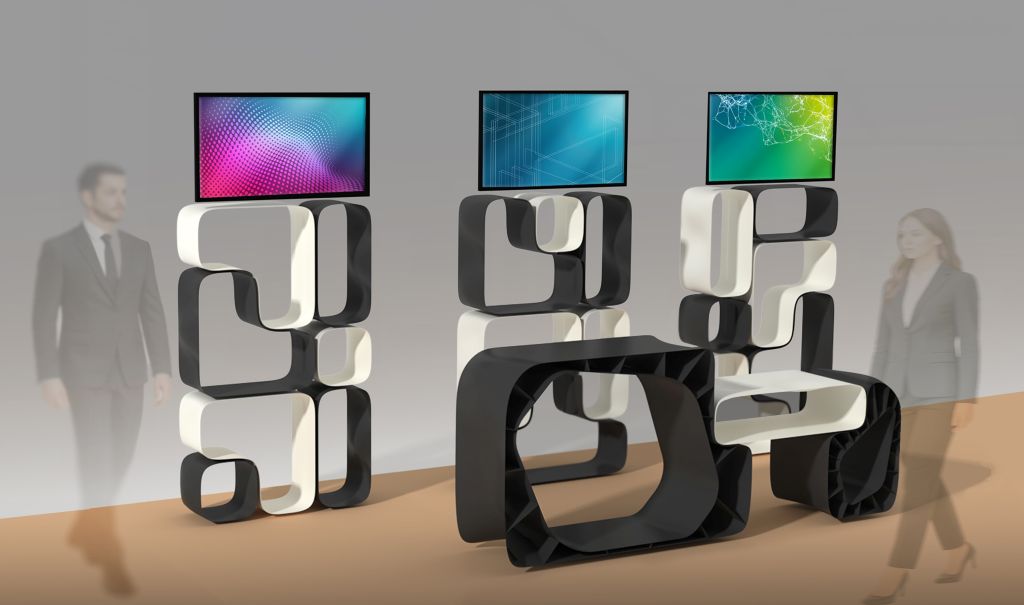 Using the example of a drone housing with integrated electrical functions, Fraunhofer IWU demonstrates that with WEAM, the housing becomes the circuit board – or the circuit board becomes the housing. Functions such as sensors, actuators, electromagnetic shielding, or inductive charging coils can be directly integrated for optimized energy transfer: Electromagnetic shields are no longer bound to fixed mesh widths in this solution and thus provide a constant protective effect even in complex shapes.
Functional component housings create a clear added value in various applications. In power tools and outdoor electronics, housings must withstand extreme loads, protect against penetrating water, or endure impacts. Integrated sensors could be used for user recognition or to determine the load. In the defense sector, cost-effective, robust automation solutions and local, demand-oriented manufacturing are conceivable. Consumer products could be designed to be particularly compact and offer additional functions in reduced space, while being produced cost-effectively and having a longer lifespan.
Contact: